Does Alcohol Lower Testosterone? What UK Men Need to Know
Let’s cut straight to it, because it’s the question you came here for: yes, alcohol can lower your testosterone. But before you pour your beer down the sink, the full answer is a lot more interesting — and a lot more forgiving — than a scary headline suggests.
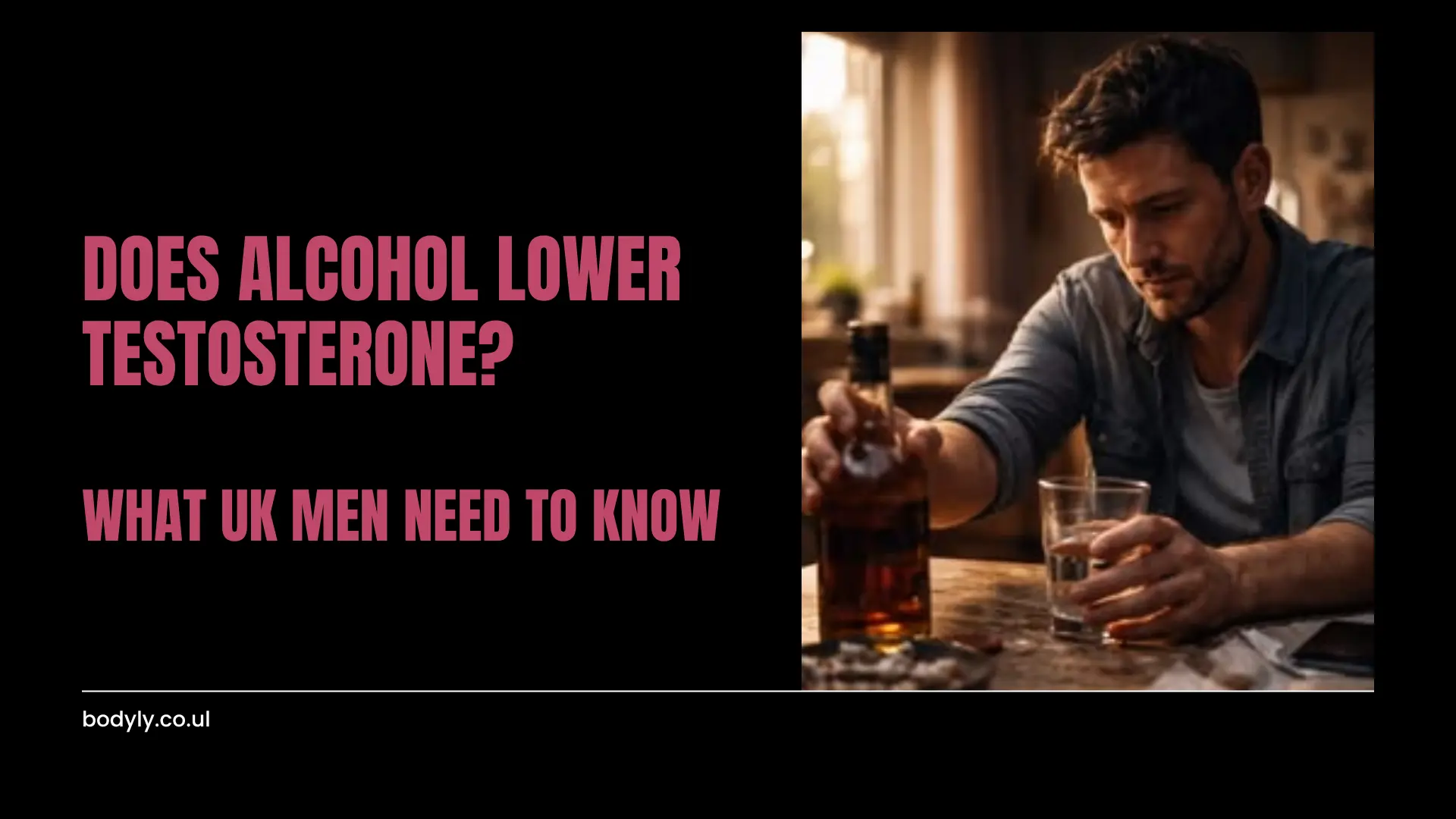
Here’s the truth. A pint on a Friday isn’t the same as a bottle of wine every night, and the difference between them matters enormously for your hormones. Dose, frequency and how much you drink in one go all change the story.
So in this guide I’ll walk you through exactly how alcohol affects testosterone, how much is too much, and — crucially — what you can do to enjoy a drink without wrecking your levels. No preaching, no scaremongering. Just what the evidence actually shows for UK men.
- 1Yes — but dose is everything. An occasional pint barely moves your testosterone; heavy, regular drinking is what causes real, lasting suppression.
- 2How you drink matters as much as how much. Bingeing (8+ units in a session) and daily drinking hit your hormones harder than the same units spread out.
- 3Stay within 14 units a week. The UK guideline — roughly 6 pints or 6 glasses of wine — spread over 3+ days with drink-free days keeps the impact low.
- 4It’s not the beer, it’s the booze. Hops and “beer oestrogen” are largely a myth — total alcohol and the calories that add body fat are what count.
- 5Cutting down works — and fast. Reducing alcohol lets testosterone recover, especially for heavy drinkers, with bonus wins for sleep, body fat and mood.
The Short Answer — Does Alcohol Lower Testosterone?
Yes, alcohol can lower testosterone, but the effect is dose-dependent. Occasional or moderate drinking (within the UK’s 14 units a week) has little lasting impact and may even briefly raise it. Heavy or chronic drinking is what causes significant, longer-term suppression — by damaging the testes, disrupting hormone signals, and raising cortisol and oestrogen.
Yes, alcohol can lower testosterone — but the size of the effect depends almost entirely on how much and how often you drink. This is the nuance most scare-stories miss.
For moderate, occasional drinking, the effect is small and usually temporary. Interestingly, a low-to-moderate amount can even briefly raise testosterone before it settles back.
The real damage comes from heavy and chronic drinking. Sustained excessive intake is where testosterone takes a genuine, lasting hit.
So the takeaway is balanced. The panic over a single pint is overblown, but assuming alcohol is harmless is equally wrong — the dose makes the poison.
| Drinking Pattern | Effect on Testosterone | Impact |
|---|---|---|
| Occasional / light A drink now and then |
Little to no lasting effect — may even briefly rise | Minimal |
| Moderate Within 14 units/week, spread out |
Small, mostly temporary dips; low long-term risk | Low |
| Binge session 8+ units in one sitting (men) |
Sharp short-term drop; can stay low for up to 24 hours | Moderate |
| Heavy / chronic Daily or sustained heavy use |
Deep, lasting suppression; Leydig-cell damage; slow recovery | High |
How Alcohol Affects Testosterone — The Science
Alcohol interferes with testosterone at every level of the system that produces it, which is why the effect is so wide-ranging. There are several mechanisms working at once.
First, it hits production at the source. Chronic alcohol misuse damages the Leydig cells in your testes — the cells responsible for making testosterone — leaving them less able to do their job.
Second, it disrupts the signals from your brain. Alcohol interferes with the release of LH and FSH, the hormones that instruct your testes to produce testosterone in the first place.
Third, it tips your hormonal balance the wrong way. Heavy drinking raises cortisol (your stress hormone) and can increase the conversion of testosterone into oestrogen, both of which suppress your levels.
Fourth, and often underrated, it wrecks your sleep. Because most of your testosterone is produced during sleep, alcohol’s disruption of deep sleep quietly drags your levels down too.
The key distinction is acute versus chronic. A single heavy session causes a short-term dip that recovers, whereas sustained heavy drinking causes the deeper, longer-lasting suppression through inflammation, oxidative stress and cell damage.
How Much Alcohol Is Too Much?
The UK’s official benchmark is the Chief Medical Officers’ low-risk guideline: to keep health risks low, don’t regularly drink more than 14 units a week, spread over three or more days with several drink-free days.
It helps to know what that looks like. Fourteen units is roughly six pints of average-strength (4%) beer, six medium (175ml) glasses of wine, or fourteen single measures of spirits — across a whole week, not a night.
Pattern matters as much as total, though. Binge drinking — defined by the NHS as 8 or more units in a single session for men — is especially harmful, even if your weekly total stays within guidelines.
The gap between occasional and daily drinking is significant. An occasional moderate drink has little lasting hormonal effect, whereas daily drinking gives your body no chance to recover between hits.
As a rough line for your hormones: staying within 14 units, spread out, with drink-free days is “low risk,” while regular heavy sessions or daily drinking is where the real testosterone trouble begins.
Weekly Units Calculator
Tap to add your typical week’s drinks and see where you fall — and what it means for your testosterone. Private & instant.
Add roughly how many of each you drink in a typical week:
Binge Drinking vs. Regular Moderate Drinking
These two patterns damage your testosterone in different ways, and understanding the difference is genuinely useful. A single heavy binge causes a sharp, short-term dip — testosterone can fall within hours and stay suppressed for up to a day.
Chronic drinking is the more serious threat. Sustained heavy intake causes deeper, longer-lasting suppression, and recovery can take months rather than hours.
Daily drinking deserves a special warning. Even in smaller amounts, drinking every day keeps your system under constant low-level pressure and denies it the recovery drink-free days provide.
The bottom line is that your pattern matters as much as your total units. Fourteen units spread sensibly across the week is far kinder to your hormones than the same fourteen units downed over one big weekend.
Does Beer Lower Testosterone More Than Other Drinks?
You may have heard that beer is uniquely bad because hops contain phytoestrogens — plant compounds that mimic oestrogen. It’s a popular claim, but the reality is more reassuring.
The amount of these compounds in a normal beer is very small, and there’s little evidence that ordinary beer drinking meaningfully raises oestrogen or tanks testosterone through hops alone.
What actually matters is your total alcohol intake, not the drink it comes in. Whether it’s beer, wine or spirits, it’s the ethanol and the amount that drives the hormonal effect.
There is one indirect angle worth noting, though. Beer and other drinks carry significant calories, and excess drinking contributes to weight gain — and body fat has its own testosterone-lowering effect, which we’ll come to next.
Which Alcohol Is Worst for Testosterone?
It’s a common question, but the honest answer is that no single type of drink is uniquely bad. Beer, wine and spirits all affect testosterone through the same thing: the ethanol they contain.
What actually matters is the total amount of alcohol and how often you drink it. A large quantity of any drink is worse than a small quantity of another, so total units — not the label — is what counts.
Alcohol, Belly Fat and the Testosterone-Oestrogen Cycle
Alcohol packs a lot of empty calories, and heavy drinking is a well-known contributor to weight gain — particularly the visceral fat that gathers around the middle.
This matters hormonally because body fat isn’t inert. Fat tissue contains an enzyme that converts testosterone into oestrogen, so the more fat you carry, the more testosterone you lose.
That sets up a genuine vicious cycle. Drinking adds fat, fat lowers testosterone, and lower testosterone makes it easier to gain still more fat — round and round it goes.
The good news is that breaking the cycle works on two fronts at once. Cutting back on alcohol reduces both the direct hormonal hit and the fat-driven one, so your testosterone benefits twice over.
Other Ways Alcohol Affects Men’s Health and Hormones
Testosterone is only part of the picture — alcohol touches several areas of men’s health that are worth knowing about. In the bedroom, heavy drinking can dampen libido and contribute to erectile difficulties.
It also affects fertility. Chronic heavy drinking is linked to poorer sperm quality and can interfere with sperm production, which matters if you’re trying to conceive.
The mental side is significant too. Alcohol disrupts sleep, can worsen anxiety and low mood, and the resulting fatigue saps motivation — a knock-on effect that shows up in your training and recovery as well.
For the fuller picture, see our guides on Testosterone and Sexual Health in UK Men and Testosterone and Mental Health in UK Men.
Does Alcohol Affect Sperm and Fertility Too?
Yes. Beyond testosterone, chronic heavy drinking is linked to poorer sperm quality, lower sperm count and disrupted production, which matters if you’re trying to conceive.
As with testosterone, the effect is dose-related and often improves after cutting down. If you and your partner are trying for a baby, reducing alcohol is a sensible, evidence-backed step for both of you.
Can I Drink Alcohol and Still Build Muscle?
You can, but heavy drinking works against you. Alcohol impairs recovery, disrupts sleep, and can blunt muscle protein synthesis, all of which slow your progress in the gym.
Moderate, occasional drinking is unlikely to derail a solid training routine. The men who struggle are usually those combining hard training with regular heavy sessions — the recovery cost simply adds up.
Will Cutting Down Raise Your Testosterone?
Here’s the encouraging part: yes, reducing or quitting alcohol can help your testosterone recover, especially if you’ve been drinking heavily. The body is remarkably good at repairing itself given the chance.
The timeline varies, though, and it’s honest to say so. For a heavy drinker, meaningful recovery can take weeks to months, and correcting deeper damage may take up to a year or longer.
The benefit is proportional to how much you drink. A heavy drinker cutting down will see a far bigger improvement than a moderate drinker, who had little to gain hormonally in the first place.
Best of all, the wins compound. Cutting back improves your sleep, lowers your cortisol and helps you shed body fat — and every one of those independently supports higher testosterone.
Does Alcohol Permanently Lower Testosterone?
For most men, no — the effects of moderate or even occasional heavy drinking are reversible once you cut back. The body is good at recovering given the chance.
The exception is long-term, heavy alcohol misuse, which can cause lasting damage to the testes and, in some cases, permanently reduced production. Even then, cutting down improves overall health and gives your body the best chance to recover what it can.
How Long After Quitting Alcohol Does Testosterone Recover?
There’s no single answer, because it depends on how much and how long you drank. For moderate drinkers, any small dip tends to normalise within days to a couple of weeks.
For heavy or long-term drinkers, recovery is slower and more gradual. Meaningful improvement often takes several weeks to months, and correcting deeper damage can take up to a year or longer.
The encouraging part is that the process starts almost immediately. Better sleep, lower cortisol and gradual fat loss all begin working in your favour within the first alcohol-free weeks.
Does Quitting Alcohol Increase Testosterone?
For heavy drinkers, yes — reducing or quitting alcohol can genuinely raise testosterone back toward healthy levels over time. The heavier your previous intake, the bigger the likely gain.
For light or moderate drinkers, the effect is smaller simply because there was little suppression to reverse. You’ll still benefit from the better sleep and body composition that come with drinking less.
How to Drink Smarter and Protect Your Testosterone
You don’t have to go teetotal to look after your hormones — a few sensible habits do most of the work. Pace yourself, keep several alcohol-free days each week, and above all avoid heavy binge sessions.
Look after the basics around drinking, too. Prioritising good sleep and staying hydrated softens alcohol’s impact, since poor sleep is one of the main ways drinking hurts testosterone.
Support your levels from the other direction as well. Resistance training, a good diet and keeping body fat in check all raise testosterone and help offset the effect of the occasional drink.
A natural support supplement can play a modest role here. Products like Testo Prime are legal, over-the-counter formulas built around vitamin D, zinc and D-aspartic acid — they can support your body’s own production alongside good habits, but they’re not a cure for alcohol-related low testosterone and don’t replace cutting down.
And if you’re wondering where your levels actually stand, get tested. Our guide to Testosterone Testing in the UK walks you through every option.
When Drinking Becomes a Bigger Problem
Sometimes the issue runs deeper than the odd heavy weekend. If you’re drinking daily, struggling to cut down, or noticing it affecting your health, mood or relationships, that’s worth taking seriously.
Persistent low-testosterone symptoms alongside heavy drinking are a clear signal to get checked. A GP can test your levels and, just as importantly, talk through your drinking without judgement.
Help is available and easy to reach in the UK. You can speak to your GP, visit Drinkaware for tools and advice, or call the free Drinkline helpline on 0300 123 1110.
Try to frame cutting down as a win rather than a punishment. Less alcohol means better testosterone, better sleep, a leaner body and a clearer head — it’s one of the highest-return changes a man can make.
Conclusion
So, does alcohol lower testosterone? Yes — but now you know the version with all the nuance intact. An occasional pint is unlikely to move the needle much. Heavy, regular drinking is a different beast entirely, and that’s where your hormones genuinely suffer.
Here’s the empowering part. This is one of the most controllable factors affecting your testosterone. Cut back on the heavy sessions, keep a few alcohol-free days each week, protect your sleep, and your body rewards you — often faster than you’d expect.
You don’t have to give up drinking to look after your testosterone. You just have to be a bit smarter about how you do it. And if you’re a heavy drinker wondering whether it’s worth cutting down? Your hormones — and the rest of your body — will thank you for it.
Curious where your levels stand? Our guide to Testosterone Testing in the UK shows you exactly how to check.
Frequently Asked Questions
Does one night of drinking lower testosterone? A single heavy session can cause a short-term dip, with testosterone falling within hours and staying lower for up to a day. For most men this recovers on its own — it’s regular heavy drinking, not the occasional night, that causes lasting harm.
How much alcohol is safe for testosterone? There’s no perfectly “safe” level, but staying within the UK guideline of 14 units a week, spread over three or more days with drink-free days and no bingeing, keeps the hormonal impact low. Fourteen units is roughly six pints of 4% beer or six medium glasses of wine.
Does beer lower testosterone because of hops? The phytoestrogens in hops exist in such small amounts in normal beer that they’re unlikely to affect your testosterone meaningfully. What matters is your total alcohol intake and the calories, not the type of drink.
Will my testosterone recover if I stop drinking? Yes, particularly if you’ve been drinking heavily. Recovery can take weeks to months depending on how much and how long you drank, and it’s helped along by the better sleep, lower body fat and reduced cortisol that come with cutting down.
Can I drink alcohol and still have healthy testosterone? Absolutely. Moderate, sensible drinking within the UK guidelines has little lasting effect on testosterone, especially if you protect your sleep, stay active and keep your body fat in check.
References
- The effects of alcohol on testosterone synthesis in men: a review — Expert Review of Endocrinology & Metabolism (2023)
- Chronic alcohol consumption influences the gonadal axis in men: a meta-analysis — Andrology (2024)
- UK Chief Medical Officers’ low-risk drinking guidelines — Drinkaware
- Alcohol units — NHS
- How alcohol affects the body — Drinkaware
This article is for general information and is not medical advice. If you’re concerned about your drinking, please speak to your GP or contact Drinkaware / Drinkline on 0300 123 1110. Contains affiliate links; we may earn a commission if you purchase through them, at no extra cost to you.

Tanveer Quraishi, author of Steroids 101 has extensive experience in the field of bodybuilding and has been writing online on various muscle-building and other health topics for many years now. He is not just interested in bodybuilding but is a great football player too. When he is not writing for his site or training at the gym, he loves to spend his time with this wife and kids.