Testosterone and Mental Health in UK Men: Depression, Anxiety, Brain Fog & Mood
Here’s a question I get asked more than almost any other: “Could my hormones be messing with my head?” And it’s a fair one. We talk endlessly about testosterone and muscles, but far less about what it does between your ears.
The truth is, testosterone and mental health are more tangled than most men realise. Low T has been linked to low mood, irritability, anxiety and that frustrating mental haze people call brain fog — and yet these symptoms are so easy to blame on stress, work, or simply “life.”
But is testosterone really the culprit? Sometimes. Often it’s part of a bigger picture, and getting that picture right matters, because the wrong assumption can send you down the wrong path.
In this guide I’ll unpack what the science actually says about testosterone and depression, anxiety, mood and cognition — what’s proven, what’s overhyped, and what you can genuinely do about it. No fear-mongering, no magic bullets. Just an honest look at the hormone-brain connection.
A quick, private reflection tool — not a test or diagnosis. Tick anything that sounds familiar to help you put words to how you’ve been feeling.
Over the last few weeks, have you noticed any of the following? Select any that apply — there are no right or wrong answers, and nothing is scored.
How Testosterone Affects the Male Brain
Most people think of testosterone as a “muscle hormone,” but that badly undersells it. It’s also a neuroactive hormone, meaning it acts directly on the brain and influences how you think and feel.
That’s because your brain is dotted with testosterone receptors. They sit in regions that help govern mood, motivation, memory and emotional regulation — which is why a shortfall can be felt mentally, not just physically.
Testosterone also interacts with your brain’s chemical messengers. It influences dopamine and serotonin, the systems tied to drive, reward and mood, which helps explain the flatness some men describe when their levels drop.
Crucially, this relationship runs both ways. Stress and poor health can lower testosterone, and low testosterone can in turn affect your mood — a loop that makes cause and effect genuinely hard to separate.
So a word of honesty before we go further. Much of the research here shows association rather than proof of cause, so throughout this guide I’ll flag where the science is solid and where it’s still uncertain.
Can Low Testosterone Cause Depression?
There’s a real, documented link between low testosterone and depressive symptoms, and the two share a striking amount of overlap. But “linked” isn’t the same as “caused,” and this is where nuance matters enormously.
The relationship appears to be bidirectional. Low testosterone may contribute to low mood, while depression and the poor sleep, inactivity and stress that come with it can also suppress testosterone.
Part of the confusion is symptom overlap. Fatigue, low libido, poor concentration and low mood appear in both low T and depression, so one can easily masquerade as the other.
| Symptom | Seen in |
|---|---|
| Low mood / sadness | Both |
| Fatigue and low energy | Both |
| Poor concentration / brain fog | Both |
| Irritability | Both |
| Reduced sex drive (libido) | Both |
| Sleep problems | Both |
| Loss of muscle mass / strength | Low T |
| Increased body fat | Low T |
| Persistent guilt or worthlessness | Depression |
| Loss of interest in almost everything | Depression |
The evidence on treatment is genuinely mixed. A large 2019 meta-analysis in JAMA Psychiatry found testosterone treatment was associated with a reduction in depressive symptoms in men, yet other well-run trials found no antidepressant effect at all — so it’s promising, not proven.
- A 2019 JAMA Psychiatry meta-analysis of 27 studies found testosterone treatment was associated with reduced depressive symptoms in men.
- The effect appeared even in some men whose testosterone wasn’t clearly low.
- Low testosterone and depression share many overlapping symptoms, suggesting a real biological link.
- Other well-run trials found testosterone had no meaningful effect on depression.
- Researchers themselves urged caution, citing limited long-term safety data.
- Depression can lower testosterone (not just the reverse), making cause and effect hard to separate.
The sensible takeaway is this. Low testosterone is worth considering in a man with depression, especially alongside physical symptoms, but it should never be assumed to be the cause, and it isn’t a stand-alone treatment for depression.
Testosterone, Anxiety and Stress
To understand testosterone and anxiety, you have to meet its great rival: cortisol, your main stress hormone. The two tend to work in opposition, and when one is high the other is often suppressed.
This is where modern life bites. Chronic, unrelenting stress keeps cortisol elevated, and over time that sustained stress load can drive your testosterone down.
The research on low T and anxiety is less clear-cut than for mood, but there are signals. Some men with low testosterone report heightened anxiety and tension, and restoring healthy levels sometimes eases it.
What emerges is a vicious cycle worth naming. Stress lowers testosterone, low testosterone can worsen how you cope with stress, and the anxiety feeds back into more stress — round and round.
Which reframes stress management entirely. Getting a grip on chronic stress isn’t just good for your mind; it’s one of the most effective things you can do for your testosterone too.
What Is “Brain Fog” and Is Low T to Blame?
“Brain fog” isn’t a medical diagnosis, but every man who’s had it knows exactly what it means. It’s that maddening mix of poor focus, forgetfulness and mental fatigue where your thoughts feel like they’re wading through treacle.
Testosterone does play a role in cognition. Research links low levels with reductions in concentration, verbal memory and mental sharpness, so it’s a plausible contributor to that foggy feeling.
But it’s rarely the only suspect, and often not the main one. Sleep deprivation, chronic stress, poor diet, an underactive thyroid and simple ageing are all heavyweight causes of brain fog in their own right.
That’s exactly why brain fog is a symptom to investigate rather than self-diagnose. Pinning it on testosterone without a test risks missing something more treatable, like a thyroid problem or a sleep disorder.
The rule of thumb: if the fog is persistent and paired with other symptoms — low mood, fatigue, a flagging sex drive — that cluster is worth a proper check-up with your GP.
Low Testosterone Symptoms That Affect Mood
Beyond the big labels of “depression” and “anxiety,” low T tends to show up in smaller, day-to-day ways. A shorter fuse is a common one — irritability and a temper that flares more easily than it used to.
Then there’s the quiet erosion of drive. Many men describe a loss of motivation and get-up-and-go, a sense that the spark or ambition they once had has dimmed.
Low mood itself often arrives without the full weight of clinical depression. It can feel more like a persistent flatness, a reduced sense of wellbeing or enjoyment in things that used to land.
Mental sharpness can slip too. Poor concentration and that foggy thinking round out a picture that’s easy to shrug off but genuinely wearing to live with.
Here’s the catch that makes it tricky. These symptoms overlap with — and can mask — clinical depression and anxiety, which is why they deserve attention rather than dismissal.
For the full symptom picture including the physical and sexual signs, see our companion guide, Testosterone and Sexual Health in UK Men.
Why Are Men Reluctant to Talk About It?
There’s a stubborn stigma around men’s mental health in the UK, and it costs lives. Many men are raised to “man up” and push through, which makes admitting to low mood or anxiety feel like failure.
Hormonal and emotional symptoms are especially easy to bury. It can feel easier to blame tiredness or stress than to say out loud that you don’t feel right in yourself.
That silence carries a real risk: self-diagnosis and self-medication. Some men skip the doctor entirely and buy testosterone online, which is both unsafe and a way of treating a guess rather than a diagnosis.
The better path is almost embarrassingly simple. Get tested and get assessed, rather than guessing — because the answer might be hormonal, might be mental health, or might be both, and only proper checks can tell.
And the scale of this is not small. Suicide remains the biggest killer of men under 50 in the UK, which is exactly why talking, testing and reaching out matter so much.
Getting Tested — Ruling Testosterone In or Out
If you want to know whether testosterone is part of the picture, timing your test is everything. Testosterone peaks in the morning, so you need a blood sample taken before around 11am, ideally repeated on a second day.
Don’t test testosterone in isolation, either. A good workup looks at related markers — thyroid function, vitamin D and others — because these also affect mood and energy and can be the real driver.
You have two routes in the UK. The NHS will investigate where symptoms and low readings line up, while private men’s health clinics offer faster, broader panels for those who want them.
But bloods are only half the story here. Mental health symptoms should be assessed by a GP in their own right, not reduced to a single hormone number, so talk about your mind as well as your levels.
Interpreting the results takes context. A “normal” testosterone reading alongside clear symptoms still deserves a proper conversation rather than a brush-off — your symptoms are data too.
Related reading: SHBG and Testosterone in UK Men, which explains why “usable” free testosterone can be low even when your total looks fine.
Treatment and Support Options
The first principle is the most important: if you have depression or anxiety, those conditions should be treated directly. Talking therapies, GP support and, where appropriate, medication are the front line — not a hormone.
Alongside that, lifestyle changes do genuine double duty. Exercise, good sleep, daylight and a decent diet all support mood and testosterone at the same time, which makes them a rare win-win.
TRT has a place, but a narrow one. Testosterone Replacement Therapy is for men with a confirmed, symptomatic deficiency, prescribed and monitored by a doctor — and even then, expectations should be realistic.
This bears repeating clearly. TRT is not a treatment for depression or anxiety on its own, and starting it in the hope of fixing your mental health, without confirmed low levels, is the wrong move.
What works best is a joined-up approach. Treating your mental health and your hormonal health together — rather than betting everything on one or the other — gives you the best chance of feeling like yourself again.
Naturally Supporting Mood and Testosterone Together
The good news is that the same handful of habits lift both your mood and your testosterone, so your effort compounds. Exercise leads the list — resistance training and regular activity are proven to boost mood and support healthy hormone levels.
Sleep is the foundation beneath all of it. Most of your testosterone is made while you sleep, and poor sleep hammers both your hormones and your mental health, so protecting it pays off twice.
Nutrition matters more than most men think. Vitamin D, omega-3 fatty acids and a balanced diet support brain function and hormone production alike, and correcting a vitamin D shortfall is a common, easy win in the UK’s grey climate.
Two lifestyle levers are worth singling out. Cutting back on alcohol and actively managing stress both protect your testosterone and steady your mood — unglamorous, but they work.
This is also where a well-formulated supplement can play a supporting role. Natural testosterone boosters won’t treat a mental health condition or replace medical care, but for a generally healthy man they can top up the nutrients your body relies on and complement good habits.
Two we’d point UK men toward are Testo Prime and its step-up formula, Testo Prime Gold. Both are legal, over-the-counter, all-natural products — not steroids, not TRT — built around ingredients like vitamin D, zinc and D-aspartic acid to support natural testosterone, energy and drive.
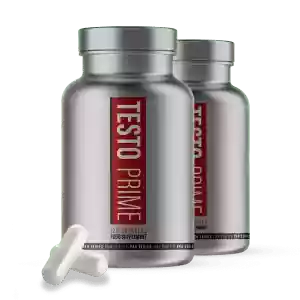
- Legal in the UK — no prescription needed
- Not a steroid and not TRT — 100% natural formula
- Supports your body’s own testosterone production
- Includes vitamin D, zinc & D-aspartic acid
- Formulated to support energy & motivation
- May help support drive and everyday focus
- No known serious side effects
- Lifetime money-back guarantee
Let me be crystal clear about what that means, though. These are support supplements, not medicines: they cannot treat depression, anxiety or clinically diagnosed low testosterone, and they are no substitute for seeing a doctor. Used sensibly alongside the habits above, they’re a safe, side-effect-friendly way to back yourself up.
Testo Prime Gold is the more comprehensive blend, often favoured by older men, while standard Testo Prime suits most people starting out — and both carry a money-back guarantee. Read our full Testo Prime review before deciding.
When to Seek Help — and Where to Turn
Some signs shouldn’t wait. Persistent low mood, ongoing anxiety, hopelessness, or losing interest in things you used to enjoy are all reasons to see your GP sooner rather than later.
And please don’t fall into the “not bad enough” trap. You don’t have to be in crisis to deserve support — catching things early almost always leads to better outcomes.
In the UK, help is genuinely accessible. You can see your GP, or self-refer directly to NHS Talking Therapies for anxiety and depression without needing a referral, often within days.
| Service | Contact | Best for |
|---|---|---|
| Samaritans | 116 123 24/7, free |
Anyone who needs to talk, any time, about anything |
| CALM Campaign Against Living Miserably |
0800 58 58 58 5pm–midnight + webchat |
Men specifically — leading the movement against male suicide |
| NHS Talking Therapies | Self-refer online | Anxiety and depression — no GP referral needed (England) |
| Your GP | Book an appointment | Bloods, assessment and referrals — the best first port of call |
| Emergency (999) / A&E | 999 | When life is at immediate risk |
If things feel urgent or overwhelming, you’re not alone and support is there right now. Samaritans are free on 116 123, any time of day or night, and CALM — the Campaign Against Living Miserably, focused on men — is on 0800 58 58 58 from 5pm to midnight.
Above all, try to reframe what asking for help means. Reaching out isn’t weakness; it’s one of the strongest, most sensible things a man can do, and the men who do it tend to come out the other side.
Conclusion
So, does testosterone shape your mental health? Yes — but it’s one instrument in the orchestra, not the whole symphony. Low T can genuinely drag down your mood, sharpen your irritability and cloud your thinking, yet it rarely acts alone, and it’s rarely the full story.
Here’s what I want you to take away. If your head hasn’t felt right — flat, foggy, on edge — that’s worth taking seriously, and worth getting properly checked rather than guessing. Sometimes the answer is hormonal. Sometimes it’s stress, sleep, or something that deserves real mental health support. Often it’s a mix.
The good news? So much of this responds to the same things: moving your body, sleeping well, easing the pressure, and getting the right help when you need it. Testosterone might be part of your puzzle — but you don’t have to solve it on your own.
If any of this rings true, talk to your GP. Ask about a blood test, but talk about your mind too. You deserve to feel like yourself again.
Frequently Asked Questions
Can low testosterone cause depression?
Low testosterone is linked to depressive symptoms and shares many of them, but the relationship is two-way and complex. It’s worth considering as one factor, though only a doctor can assess whether it’s contributing, and it shouldn’t be assumed to be the sole cause.
Does TRT help with depression and anxiety?
The evidence is mixed. Some studies suggest testosterone treatment can ease depressive symptoms in men, while others show no effect, so TRT is not an established treatment for depression or anxiety and is only appropriate for confirmed testosterone deficiency under medical supervision.
Can low testosterone cause brain fog?
It can contribute, as testosterone influences concentration and memory. But brain fog has many common causes — poor sleep, stress, diet, thyroid problems — so it’s best investigated with a GP rather than blamed on testosterone alone.
Will natural testosterone boosters improve my mood?
Supplements like Testo Prime can supply nutrients that support healthy testosterone and energy in generally healthy men. They can’t treat a mental health condition or diagnosed low testosterone, so they should be seen as general support, not a remedy for depression or anxiety.
How do I get my testosterone tested in the UK?
Ask your GP for a morning blood test (before around 11am), ideally including free testosterone and SHBG, or use a private men’s health clinic. Because mood symptoms have many causes, it’s worth having your mental health assessed at the same time.
References
- Association of Testosterone Treatment With Alleviation of Depressive Symptoms in Men — JAMA Psychiatry (Walther et al., 2019)
- Expert reaction to testosterone treatment and depressive symptoms in men — Science Media Centre
- Testosterone treatment and depression (T4DM trial secondary analysis) — showing no effect on depression
- Where to get urgent help for mental health — NHS
- Mental health helplines — Mind
- Contact Samaritans — 116 123
This article is for general information and is not medical advice. It does not diagnose any condition or replace care from a qualified professional. If you’re struggling with your mental health, please speak to your GP or one of the support services listed above. Contains affiliate links; we may earn a commission if you purchase through them, at no extra cost to you.

Tanveer Quraishi, author of Steroids 101 has extensive experience in the field of bodybuilding and has been writing online on various muscle-building and other health topics for many years now. He is not just interested in bodybuilding but is a great football player too. When he is not writing for his site or training at the gym, he loves to spend his time with this wife and kids.