Anavar Side Effects: Why “The Mild Steroid” Is the Most Dangerous Phrase in the Gym
What are the side effects of Anavar? The visible ones are genuinely lighter than other oral steroids — less bloating, less acne, no aromatisation. That’s exactly the problem. The effects that matter most with oxandrolone are ones you cannot feel: suppressed HDL cholesterol, liver enzyme elevation, and shutdown of your own testosterone production. All three are silent, all three occur in people who report feeling completely fine, and the quiet surface is what persuades users there’s nothing to check.
Every compound has a reputation, and Anavar’s is that it’s the gentle one. That reputation isn’t invented — on the things you can see, it’s largely accurate.
Which is why this page is organised around a single question that most side-effect articles never ask: can you feel it?
Where “Mild” Came From — and What It Originally Meant
The word isn’t wrong. It’s just been detached from what it was describing.
In the clinical literature, oxandrolone’s favourable comparison was on androgenic activity relative to anabolic effect, and on the absence of aromatisation to oestrogen [1].
That’s a statement about two specific properties. It was never a statement about hepatic, cardiovascular or endocrine safety.
What gym culture heard instead
“Mild” travelled without its qualifiers, and picked up new meanings on the way — gentle, beginner-friendly, low-risk, barely a steroid.
The medical history reinforced it. Oxandrolone was prescribed after surgery and burns, and to children with growth delay, which sounds like the profile of something safe.
Those were supervised clinical doses for defined conditions, with monitoring. That’s a different intervention sharing a molecule.
Can You Feel It? The Full Picture
Here’s every documented effect, sorted by whether you’d know it was happening.
| System | What happens | Can you feel it? |
|---|---|---|
| Cholesterol | HDL suppressed, LDL raised. Oral 17α-alkylated compounds do this more aggressively than injectables | NoEntirely silent. Lipid panel only |
| Liver | Enzyme elevation from 17α-alkylation; cholestatic injury with longer or heavier exposure | NoBlood tests, until it’s advanced |
| Natural testosterone | Suppressed. Recovery can take months, and a minority don’t fully return to baseline [4] | AfterwardsSharply — low mood, libido, fatigue |
| Blood pressure | Can rise, though generally less than with heavily aromatising compounds | RarelyNeeds a cuff to detect |
| Kidneys | Raised creatinine is common; genuine injury is reported but far less common | NoBloods only. Creatinine can mislead in lifters |
| Hair | DHT-derived, so male-pattern loss can accelerate in those predisposed | EventuallyGradual — photographs catch it, mirrors don’t |
| Skin | Acne, though typically less than with wetter compounds | YesVisible, and the one people report |
| Mood and sleep | Irritability and disrupted sleep reported, usually milder than harsher compounds | YesThough often attributed to dieting instead |
| Virilisation (women) | Voice deepening, clitoral enlargement, hair changes, menstrual disruption | LateBy which point some changes are established |
Read the right-hand column on its own. Nearly everything serious on that list is invisible — and the three things you’d definitely notice are acne, mood and, eventually, the crash after you stop.
The Lipid Problem, and Why It’s Easy to Misread
This is the effect that deserves the most attention and gets the least.
Anabolic steroids commonly lower HDL — the protective cholesterol — and can raise LDL [11]. Oral 17α-alkylated compounds do it more aggressively than injectables, which puts Anavar squarely in the worse group despite its reputation [2][12].
There’s no symptom. No warning sign, nothing in the mirror, nothing you’d notice in training.
The detail that makes it genuinely confusing
Oxandrolone has a history as a hypolipidemic agent — it was studied specifically for lowering plasma triglycerides in patients with high levels, and it does so reliably [2].
So a lipid panel taken during use can show falling triglycerides alongside suppressed HDL and raised LDL.
Someone glancing at a panel may see triglycerides down and total cholesterol looking unremarkable, and conclude everything is fine.
The number that changed for the worse is HDL, and it’s the one most people don’t look at — or don’t know how to interpret when they do.
If you’re getting bloods, the figure to ask about specifically is HDL, not total cholesterol.
Why HDL matters
HDL is the fraction associated with clearing cholesterol from arterial walls, and low HDL is an independent cardiovascular risk factor.
A temporary dip in a healthy young person is not a catastrophe. Repeated cycles over years are a different proposition, and nobody is tracking the cumulative picture.
The Liver: Reduced Isn’t Zero
Oxandrolone is often described as easier on the liver than other orals, and there’s something to that — but the framing does a lot of damage.
It’s 17α-alkylated. That’s the chemical modification allowing it to survive first-pass metabolism, and it’s precisely what makes oral steroids hepatotoxic [3].
You cannot have one without the other. The modification that makes it work as a tablet is the modification that strains the liver.
What it looks like in practice
Raised ALT and AST first, picked up on a blood test rather than felt. In more serious cases, cholestasis — bile flow slowing, producing jaundice and severe itching.
One complication specific to lifters: hard training raises liver enzymes on its own, which muddies interpretation. That’s a reason to mention training to whoever reads your results, not a reason to dismiss an abnormal figure.
Suppression: “Mild” Doesn’t Mean Non-Suppressive
This one is widely underestimated, largely because the word “mild” gets applied to it too.
Introducing an external androgen tells your body to reduce its own production. That happens with oxandrolone as it does with any anabolic steroid [4].
The degree varies, but the direction doesn’t. It’s not a risk you might avoid — it’s the expected physiological response.
The part that lands hardest
You don’t feel suppression during a cycle, because the external hormone is doing the job. You feel it afterwards, when that hormone clears faster than your own production restarts.
Low mood, low libido, fatigue and strength loss, arriving at exactly the point when the diet ends and the visible results start softening.
Recovery can take months [4]. A minority never fully return to baseline, and there’s no way to know in advance which group you’re in.
The Counterfeit Problem Distorts Everything Above
Here’s a complication that affects how you should read every side-effect report you find online, including the reassuring ones.
Oxandrolone is among the most expensive anabolic steroids to manufacture, which makes substituting something cheaper profitable. Products sold as Anavar have been reported to contain other compounds entirely.
What that does to the evidence base: if a proportion of people taking “Anavar” are actually taking Dianabol or Winstrol, then forum reports of Anavar’s side-effect profile are describing a mixture of compounds. Reports of unexpected bloating are probably a different drug — and reassuring reports of no side effects may be describing an underdosed tablet rather than a gentle compound.
The MHRA’s position on unlicensed medicines is that there’s no guarantee of quality or safety [5], and there’s no way to check a tablet without laboratory testing.
Which means the honest version of “what are Anavar’s side effects” includes an asterisk: these are oxandrolone’s effects, and you can’t be certain that’s what you have. Our look at what results actually show deals with the same problem from the other direction.
The Interaction Nobody Mentions
Oxandrolone has a documented, clinically significant interaction that appears in its prescribing information and almost nowhere else people read.
Warfarin and other anticoagulants
Oxandrolone substantially potentiates warfarin. In clinical use, prescribing guidance describes needing to reduce warfarin doses very considerably when oxandrolone is introduced, with frequent monitoring of clotting times [9].
The mechanism matters less than the size of the effect. This isn’t a theoretical interaction to note and move past — it’s one that requires active dose management under supervision.
Other interactions worth knowing
Diabetes medication. Anabolic steroids can affect glucose handling and insulin sensitivity, so doses of insulin or oral agents may no longer be right.
Other hepatotoxic drugs. Anything else that can damage the liver may add to the risk — including some antibiotics, certain painkillers at high doses, and alcohol [3][9].
Corticosteroids. Combined use can increase fluid retention, which is worth knowing given the compound’s dry reputation.
What to do with this
If you take any regular medication, this is a pharmacist conversation before anything else. Community pharmacists can check interactions without an appointment, and they aren’t required to report you for asking.
And if you’re already taking both, don’t stop the prescribed medicine to solve it. Speak to whoever prescribed it — stopping an anticoagulant abruptly carries its own serious risks.
What Reverses and What May Not
| Effect | Reversibility | Notes |
|---|---|---|
| Raised liver enzymes | Usually | Typically normalise over weeks to months after stopping |
| Lipid changes | Usually | HDL generally recovers — repeated cycles are the concern rather than one |
| Acne | Usually | Deep cystic acne can scar permanently |
| Raised blood pressure | Usually | Worth measuring rather than assuming |
| Testosterone suppression | Months | Recovery times vary widely; a minority don’t fully return |
| Structural liver damage | May not | Associated with heavier or prolonged exposure |
| Male-pattern hair loss | Generally not | Accelerated in those genetically predisposed |
| Virilisation in women | Often not fully | Voice and clitoral changes commonly persist |
The pattern matches every compound in this category. What reverses is metabolic and cosmetic; what may not is structural.
For women specifically, the picture differs enough to need its own treatment — our guide to what the female-friendly marketing leaves out covers which changes come back and which don’t.
“I Ran It Before and Was Fine”
This is the most common reason people run a second cycle, and it’s the weakest reasoning in the whole subject.
It sounds like evidence. It’s actually a statement about what you noticed, on a compound whose serious effects produce nothing to notice.
What a previous cycle actually told you
Without baseline and post-cycle bloods, an uneventful cycle tells you three things: you didn’t get jaundice, you didn’t get visibly ill, and you tolerated it subjectively.
None of those is information about your HDL, your liver enzymes or how completely your testosterone recovered.
Someone whose HDL halved and came back, and someone whose HDL barely moved, report exactly the same experience — because neither felt a thing.
The part that actually compounds
A single cycle’s lipid disruption usually resolves. The concern was never one cycle — it’s what repeated cycles over years do to a cardiovascular system that spends a growing share of its time with suppressed HDL.
Long-term users show cardiac changes that single-cycle users don’t, and nobody is tracking their own cumulative exposure across a decade of on-and-off use.
Liver strain behaves similarly. Repeated exposure with incomplete recovery between rounds is a different proposition from one course, and enzymes returning to normal doesn’t confirm the tissue is unchanged.
The version of the sentence that would mean something
“I ran it before, had baseline bloods, repeated them at the end and eight weeks after, and everything returned to where it started.”
Almost nobody can say that. If you can, you have actual evidence — and it’s still evidence about one cycle rather than about the next one.
If You’re Using: What to Get Checked
This section exists because some readers will already be using, and telling them only “don’t” helps nobody.
A full lipid profile. Total cholesterol, HDL, LDL and triglycerides — and ask specifically about HDL rather than accepting “your cholesterol is fine.”
Liver function tests. ALT, AST, ALP and bilirubin. Mention that you train hard, since that affects interpretation.
A hormone panel. Total testosterone, LH and FSH together show how suppressed you are and whether recovery is happening.
Blood pressure, with a cuff. Not a blood test, but the same category of silent.
The baseline reading matters most and almost nobody takes it. Without one, a later result tells you where you are but not what changed.
What the numbers actually mean
Requesting the tests is half of it. Being able to read them is the part nobody explains, so here’s a rough guide.
| Marker | Typical adult range | What a concerning shift looks like |
|---|---|---|
| HDL cholesterol | Above ~1.0 mmol/L (men), ~1.2 (women) | The number to watch. A fall toward or below the lower limit is the classic oral-steroid pattern |
| LDL cholesterol | Below ~3.0 mmol/L | Rising while HDL falls — the two move in opposite directions, which is worse than either alone |
| Triglycerides | Below ~1.7 mmol/L | May fall on oxandrolone. Falling triglycerides are not reassurance about the rest |
| ALT / AST | Up to ~40 U/L, lab-dependent | Modest elevation is common and often training-related. Several times the upper limit warrants prompt review |
| ALP and bilirubin | Lab-specific | Rising together points toward cholestasis rather than muscle damage — a different and more serious pattern |
| Total testosterone | ~8–29 nmol/L (men) | Low after stopping, with low LH and FSH alongside, indicates ongoing suppression |
| LH and FSH | Lab-specific | Suppressed during use. Still suppressed months after stopping is the finding worth acting on |
| Creatinine / eGFR | Lab-specific | Raised creatinine is common in lifters and often not kidney injury. Cystatin C gives a cleaner picture |
Reference ranges vary between laboratories and by age and sex, so use the range printed on your own report rather than these. Interpretation belongs to your doctor — this is to help you ask better questions, not to replace them.
The lipid pattern: HDL down, LDL up, triglycerides possibly down. Three numbers moving, two of them badly, and the one moving favourably is the one most likely to catch your eye first.
The liver pattern: ALT and AST alone can be training. ALT, AST, ALP and bilirubin rising together is not, and that combination is the one to escalate rather than watch.
Ask for the numbers, not the verdict
“Your bloods are fine” is a clinical judgement made against population norms, and it isn’t wrong — but it flattens exactly the detail you need.
Ask for the actual figures and keep them. An HDL inside the range but at its lower edge means something different if it was near the top six months ago, and you can only see that if you have both.
⚠️ When to seek medical attention promptly
Don’t wait these out:
- Yellowing of the skin or eyes
- Dark urine or pale stools
- Severe or persistent abdominal pain, particularly upper right
- Severe itching without a rash
- Unusual swelling in the legs or abdomen
- Chest pain, or breathlessness at rest
And tell them what you’ve taken. Anabolic steroids don’t appear on a standard toxicology screen, so unless you say so, a clinician is investigating symptoms without the information that explains them. Possession for personal use isn’t a criminal offence in the UK — our guide to the UK legal position sets that out — and NHS staff are there to treat you.
The first four on that list are the cholestatic pattern described above, arriving as symptoms rather than as numbers on a printout. By the time jaundice or severe itching is present, the blood test that would have caught it earlier is several weeks overdue.
The Legal Alternative
If what you wanted was the lean, dry look without a controlled drug, Anvarol is the product most often suggested — and the honest framing matters.
It contains no androgen and no hormone of any kind, so none of the effects on this page apply to it. It also won’t reproduce oxandrolone’s results, and doesn’t claim to.
The Legal Alternative: Anvarol
A food supplement, not a drug — with expectations set by this article rather than the marketing.
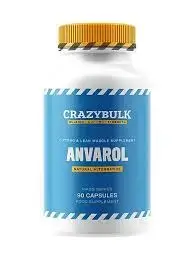
Anvarol — CrazyBulk
Cutting-phase supplement · 3 capsules daily · £49.99 per month
- No hormones at all — so no suppression, no liver strain from 17α-alkylation, no lipid shift
- No virilisation risk, which makes it usable by women
- Legal to buy and possess, with every dose published on the label
- PeakATP at 120 mg is the ingredient doing the real work
- Contains soy and milk — worth knowing before ordering
- Won’t reproduce Anavar, and works alongside a deficit rather than instead of one
For a Full Cutting Phase
A single product covers one part of the problem. A cut has several, and the hard part isn’t losing weight — it’s holding onto muscle and strength while you do.
🔥 CrazyBulk Cutting Stack — Four Products, One Phase
Anvarol plus three supporting formulas · saves over 20% versus buying separately
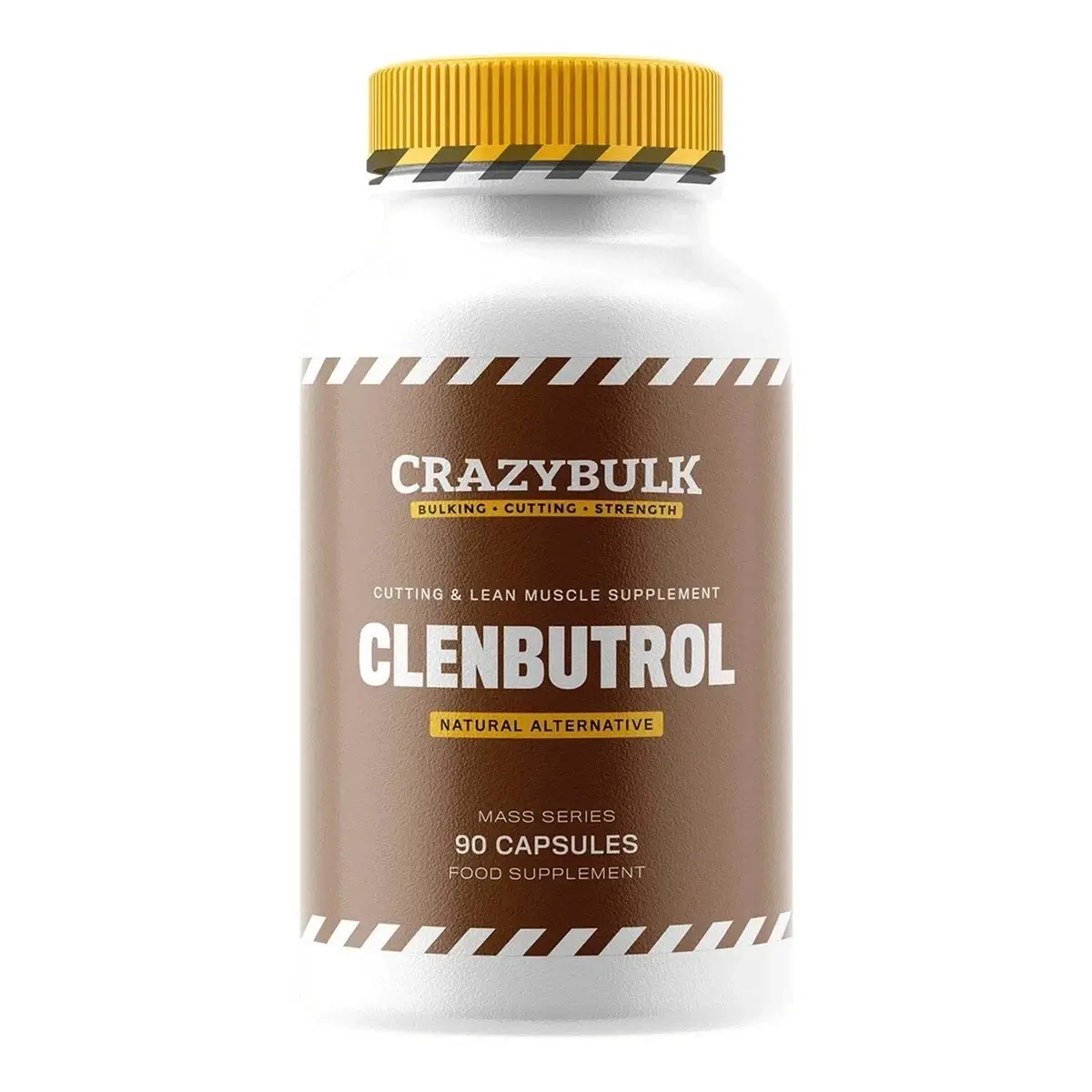
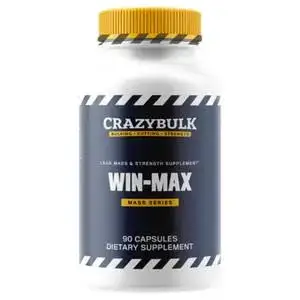
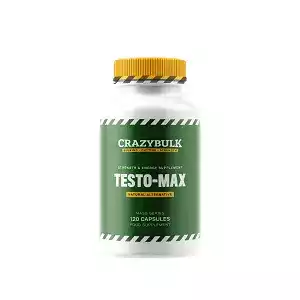
Why it’s structured this way. Anvarol and Win-Max target retention, Clenbutrol addresses energy expenditure, and Testo-Max covers the hormonal decline that comes with extended dieting.
The commercial case. One stack covers four weeks; CrazyBulk recommends two for an eight-week phase. At £179.99 one-time or £116.99 on subscription it’s cheaper than four separate bottles, with the same 60-day guarantee.
And the caveat. Four supplements don’t multiply into a steroid-like result. Clenbutrol contains 200 mg of caffeine per serving, so keep your daily total in view — our assessment of that formula covers it. If training and diet aren’t sorted, a stack won’t fix that either.
FAQ
Is Anavar safe?
No anabolic steroid is safe in the sense people mean. Its visible side effects are lighter than other orals, but liver strain, HDL suppression and testosterone shutdown all occur — and none of them produce symptoms you’d notice.
What are Anavar’s side effects in men?
Suppressed testosterone, altered cholesterol, liver enzyme elevation, accelerated hair loss in those predisposed, acne and sleep or mood changes. The first three are the serious ones and all three are silent.
Is Anavar bad for your liver?
It’s 17α-alkylated, which is what makes many oral steroids hepatotoxic. Less strain than some other orals is not the same as none, and enzyme elevation is common during use.
Does Anavar suppress testosterone?
Yes. “Mild” describes androgenic activity and aromatisation, not suppression — your own production is suppressed and recovery can take months [4].
Why do some people report no side effects?
Because the serious ones are invisible without blood tests, and because a proportion of products sold as Anavar aren’t oxandrolone at all. “I felt fine” is consistent with several very different situations.
Can you take Anavar with other medication?
Check first, and warfarin is the important one — oxandrolone substantially potentiates anticoagulants, which in clinical use requires large dose reductions and frequent monitoring. Diabetes medication and other liver-processed drugs also warrant a pharmacist conversation.
How long do Anavar side effects last?
Liver and lipid changes usually normalise over weeks to months. Suppression takes longer, hair loss in predisposed men generally doesn’t reverse, and virilisation in women often doesn’t fully reverse.
References
- Kicman AT. Pharmacology of anabolic steroids. Br J Pharmacol. 2008;154(3):502–521. https://pubmed.ncbi.nlm.nih.gov/18500378/
- Oxandrolone and plasma triglyceride reduction: effect on triglyceride-rich and high density lipoproteins. PubMed. https://pubmed.ncbi.nlm.nih.gov/7316782/
- LiverTox: Clinical and Research Information on Drug-Induced Liver Injury — Anabolic Steroids. NIDDK / NCBI Bookshelf. https://www.ncbi.nlm.nih.gov/books/NBK548931/
- Anawalt BD. Diagnosis and Management of Anabolic Androgenic Steroid Use. J Clin Endocrinol Metab. 2019;104(7):2490–2500. https://academic.oup.com/jcem/article/104/7/2490/5310131
- Medicines and Healthcare products Regulatory Agency (MHRA) — GOV.UK. https://www.gov.uk/government/organisations/medicines-and-healthcare-products-regulatory-agency
- Anabolic Steroid Use Disorder. StatPearls / NCBI Bookshelf. https://www.ncbi.nlm.nih.gov/books/NBK538174/
- The Misuse of Drugs Act 1971 (Modification) Order 1996, SI 1996/1300 — legislation.gov.uk. https://www.legislation.gov.uk/uksi/1996/1300/made
- NHS — Anabolic steroid misuse. https://www.nhs.uk/conditions/anabolic-steroid-misuse/
- DailyMed — Oxandrin (oxandrolone) tablets: prescribing information, including drug interactions (warfarin), hepatic warnings and adverse reactions. US National Library of Medicine. https://dailymed.nlm.nih.gov/dailymed/drugInfo.cfm?setid=f622616e-4c11-4149-bf00-5ea5ce97800b
- Handelsman DJ. Androgen Physiology, Pharmacology, Use and Misuse. In: Endotext [Internet]. NCBI Bookshelf. https://www.ncbi.nlm.nih.gov/books/NBK279000/
- Thompson PD, Cullinane EM, Sady SP, et al. Contrasting effects of testosterone and stanozolol on serum lipoprotein levels. JAMA. 1989;261(8):1165–1168. https://pubmed.ncbi.nlm.nih.gov/2915439/
- High density lipoproteins during hypolipidemic therapy: a comparative study of four drugs. PubMed. 1980. https://pubmed.ncbi.nlm.nih.gov/7362696/
- Piatkowski T, et al. The world’s first anabolic-androgenic steroid testing trial: a two-phase pilot combining chemical analysis, results dissemination and community feedback. Addiction. 2025. https://pmc.ncbi.nlm.nih.gov/articles/PMC12128565/
- Magnolini R, et al. Fake anabolic androgenic steroids on the black market — a systematic review and meta-analysis on qualitative and quantitative analytical results found within the literature. BMC Public Health. 2022. https://pmc.ncbi.nlm.nih.gov/articles/PMC9288681/
This article is for information and harm-awareness. It provides no dosing information, does not identify sellers, and is not medical advice — if you’re experiencing symptoms after taking anything described here, seek medical attention. NHS services treat these issues without judgement.

Tanveer Quraishi, author of Steroids 101 has extensive experience in the field of bodybuilding and has been writing online on various muscle-building and other health topics for many years now. He is not just interested in bodybuilding but is a great football player too. When he is not writing for his site or training at the gym, he loves to spend his time with this wife and kids.