Low Testosterone Under 40: Why It’s Happening to Younger Men in the UK
Low testosterone used to be considered an older man’s problem. Something that crept in after 50, quietly slowing things down. But that picture is changing — and fast.

Research shows a nearly 25% drop in average testosterone levels among men aged 15 to 40 over just a 20-year period. That’s not ageing. That’s something else entirely. If you’re in your 20s or 30s and feeling exhausted, flat, and not quite yourself, your hormones might be worth a closer look. Here’s what’s actually going on.
Is Low Testosterone in Young Men Really on the Rise?
Yes — and the data is hard to ignore.
A 2021 study of over 4,000 men found that average total testosterone levels dropped from around 605 ng/dL in 1999–2000 to just 451 ng/dL by 2015–2016. That’s a significant generational shift, and it can’t be explained by ageing alone.
UK data tells a similar story. Analysis of over 20,000 blood test results shows that men over 50 are now more likely to have healthy testosterone levels than younger men. That’s a striking reversal of what you’d expect and a sign that lifestyle and environmental factors are increasingly overriding the natural age-related pattern.
Low testosterone is no longer just a midlife concern. It’s becoming a young man’s issue too.
What Counts as Low Testosterone in Men Under 40?
Before diving into causes, it helps to know the numbers.
The NHS generally considers normal testosterone to be between 10 and 30 nmol/L, with deficiency classified below 8 nmol/L. However, some UK clinicians argue that for men under 50, a more meaningful target is above 15 nmol/L — almost double the NHS lower threshold — to support optimal energy, recovery, libido, and physical function. Find out how to get your testosterone levels checked at the NHS.
For younger men, anything below that functional range is worth investigating, especially when paired with persistent symptoms. A number on its own never tells the whole story — symptoms matter just as much as the result.
Causes of Low T in Under-40s vs Over-40s
| Cause | Under 40 | Over 40 |
|---|---|---|
| Primary driver | Lifestyle, environmental & medical factors | Natural age-related decline (~1% per year from mid-30s) |
| Obesity & body fat | Major driver — rising obesity rates in younger men accelerating decline | Contributes but typically compounds existing age-related drop |
| Poor sleep | High impact — shift work, screen use & stress disrupting REM sleep | Relevant but age-related sleep changes also play a role |
| Chronic stress | Significant — financial, career & relationship stress elevating cortisol | A factor, but cortisol patterns tend to stabilise post-50 |
| Endocrine disruptors | Increasingly significant — lifelong exposure to BPA, phthalates | Relevant across all ages; cumulative exposure worsens with time |
| Medical causes | More likely — pituitary disorders, Klinefelter syndrome, testicular injury | Less common; age-related decline usually primary explanation |
| Reversibility | High — most causes are lifestyle-driven and treatable | Partial — lifestyle helps but age-related decline continues |
| Fertility impact | Critical consideration — TRT can suppress sperm production | Less commonly a concern for older men |
Note: causes often overlap across age groups. A blood test and full clinical assessment is the only reliable way to identify the underlying cause.
Why Is This Happening? The Main Causes in Under-40s
Unlike older men, where natural age-related decline is the primary driver, low testosterone in younger men almost always has an identifiable cause — or a combination of several. Here’s what the research points to.
Lifestyle Factors & Their Impact on Testosterone
| Lifestyle factor | Effect on testosterone | Impact | What to do |
|---|---|---|---|
| Excess body fat | Converts testosterone to oestrogen; suppresses production | Lowers T | Even 5–10% weight loss can meaningfully raise levels |
| Poor sleep (<6 hrs) | Disrupts REM sleep cycles where most T is produced | Lowers T | Aim for 7–9 hours; keep a consistent sleep schedule |
| Chronic stress | Elevates cortisol, which directly suppresses testosterone | Lowers T | Mindfulness, exercise & reducing workload help lower cortisol |
| Heavy alcohol use | Suppresses testosterone production; raises oestrogen | Lowers T | Stay within UK guidelines (14 units/week max) |
| Processed food diet | Drives weight gain, insulin resistance & nutrient deficiencies | Lowers T | Prioritise whole foods, healthy fats & adequate protein |
| Resistance training | Stimulates testosterone production; builds muscle mass | Raises T | 3–4 sessions per week of compound lifting (squats, deadlifts) |
| Zinc & magnesium intake | Both essential for testosterone synthesis; deficiency linked to low T | Raises T | Eat red meat, nuts, seeds & leafy greens; consider supplementing |
| Vitamin D levels | Low vitamin D consistently linked to lower testosterone | Raises T | Supplement with 1,000–2,000 IU daily, especially in UK winters |
| Sedentary lifestyle | Reduces muscle mass, worsens metabolic health & lowers T | Lowers T | Break up sitting time; aim for 8,000–10,000 steps daily |
Note: lifestyle changes alone may not be sufficient for clinically diagnosed testosterone deficiency. Always consult your GP for a proper assessment.
Obesity and a Sedentary Lifestyle
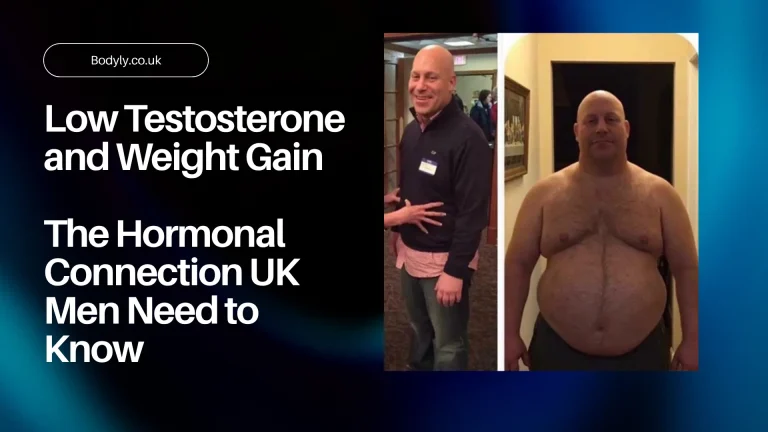
This is probably the biggest driver. Excess body fat — particularly around the abdomen — converts testosterone into oestrogen, directly reducing hormone levels. It’s a frustrating cycle: low testosterone encourages fat storage, and more fat further suppresses testosterone.
A sedentary lifestyle compounds the problem. Physical inactivity reduces muscle mass and metabolic health, both of which play a role in healthy hormone production. And with desk-based working now the norm for much of the UK workforce, this is a growing issue for men well below 40.
Poor Sleep
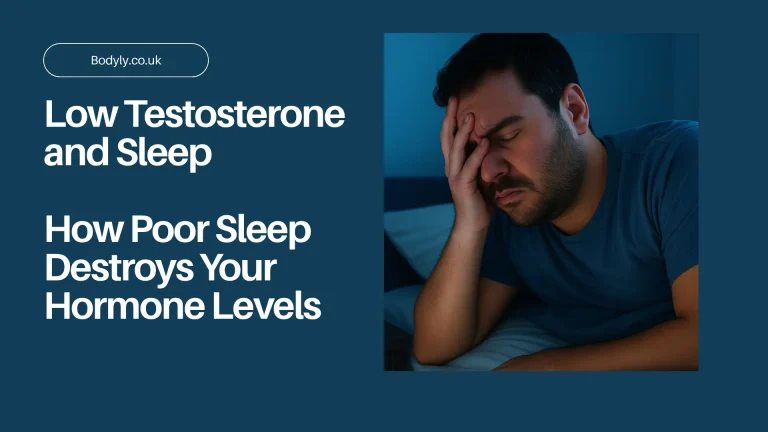
Sleep is when the majority of testosterone production happens. The link is direct and well-established — testosterone release is closely tied to REM sleep cycles, and disrupted or insufficient sleep can significantly blunt production.
The problem is that poor sleep is increasingly common among younger men. Shift work, late-night screen use, high stress levels, and irregular schedules all chip away at sleep quality.
Even a week of sleeping fewer than five hours a night has been shown to reduce testosterone levels noticeably. Lack of sleep is one of the most underestimated causes of low T in this age group.
Chronic Stress and Mental Health
Stress and testosterone are in direct competition. When cortisol — the body’s primary stress hormone — is chronically elevated, testosterone production gets suppressed. The two hormones essentially compete for the same biological resources.
For younger UK men navigating financial pressures, career stress, relationship strain, and the long tail of post-pandemic mental health challenges, cortisol levels are often running higher than they should be. Over months and years, this sustained cortisol elevation takes a measurable toll on testosterone.
Endocrine-Disrupting Chemicals
This is a newer but increasingly concerning area of research. Everyday chemicals found in plastics, food packaging, cosmetics, and agricultural products — including BPA, phthalates, and atrazine — are endocrine disruptors. They interfere with the body’s hormone signalling at a fundamental level.
Exposure to these chemicals is difficult to avoid in modern life, and the cumulative effect is thought to be one reason why testosterone levels have been declining across generations, not just within individuals as they age. It’s a population-level shift that lifestyle changes alone can’t fully address.
Diet and Nutritional Deficiencies
What you eat has a direct impact on hormone production. Diets high in processed foods, refined sugars, and seed oils have been linked to lower testosterone, partly through their effect on weight gain and insulin resistance, and partly because they tend to crowd out the nutrients testosterone production actually depends on.
Zinc, magnesium, and vitamin D are three of the most important. Zinc deficiency in particular is strongly associated with reduced testosterone production. Vitamin D deficiency is also extremely common in the UK due to limited sunlight, and low vitamin D levels have been consistently linked to lower testosterone across multiple studies.
Alcohol and Recreational Drugs
Heavy alcohol use directly suppresses testosterone production and increases oestrogen levels. Even moderate but consistent drinking — the kind that’s normalised in British social culture — can have a meaningful hormonal impact over time.
Cannabis use is also worth flagging. Regular cannabis use has been associated with lower testosterone levels and reduced sperm quality, though the research is still developing. Anabolic steroid use — even in the past — can cause long-term suppression of natural testosterone production, sometimes permanently.
Medical Causes That Shouldn’t Be Ignored
For some younger men, there’s an underlying medical cause that needs proper investigation rather than lifestyle tweaks.
Pituitary gland disorders can interfere with the hormonal signals that tell the testicles to produce testosterone. Testicular injury or infections — including mumps orchitis — can directly damage testosterone-producing cells. Genetic conditions like Klinefelter syndrome affect testosterone production from birth.
If you’re under 40 with low T and no obvious lifestyle explanation, it’s worth pushing for a proper investigation to rule these out. The treatment approach differs significantly depending on whether the cause is primary or secondary.
Symptoms of Low T in Younger Men: What to Watch For
The symptoms are the same regardless of age, but younger men are often more likely to dismiss them or attribute them to stress and overwork.
Persistent fatigue that sleep doesn’t fix, reduced motivation, brain fog, and low mood are often the first signs. Physical changes — reduced muscle gain despite training, increased body fat particularly around the middle, and slower recovery — are common in active men. Sexual symptoms including low libido, fewer morning erections, and reduced satisfaction tend to follow.
The key is recognising that these symptoms together, particularly when they persist over months, aren’t just “life.” They’re worth investigating.
Symptoms Checklist — Physical, Mental & Sexual
| Physical | Mental & emotional | Sexual |
|---|---|---|
| Persistent fatigue despite good sleep | Low mood or depression | Reduced sex drive |
| Difficulty building or maintaining muscle | Brain fog & poor concentration | Erectile dysfunction |
| Unexplained weight gain (especially belly fat) | Irritability & mood swings | Fewer morning erections |
| Slower recovery after exercise | Loss of drive & motivation | Reduced fertility / sperm quality |
| Reduced bone density | Anxiety & increased stress sensitivity | Reduced ejaculation volume |
| Loss of body or facial hair | Poor sleep & restlessness | Decreased sexual satisfaction |
Note: these symptoms can have other causes. If several apply to you and have persisted for months, speak to your GP and request a testosterone blood test.
What Can You Do About It
The good news is that for most under-40s, the causes of low testosterone are significantly more reversible than they are in older men.
Start with lifestyle. Even a 5–10% reduction in body weight in overweight men can meaningfully raise testosterone levels. Prioritising 7–9 hours of quality sleep per night, cutting back on alcohol, and introducing regular resistance training are all evidence-backed starting points.
Sort your diet. Focus on whole foods, healthy fats, and adequate protein. Consider getting your vitamin D, zinc, and magnesium levels checked — supplementing deficiencies in these can make a noticeable difference.
Manage stress properly. Not just talking about it, but actually building habits that reduce cortisol — consistent sleep schedules, exercise, time away from screens, and real social connection.
See your GP. If symptoms persist despite lifestyle changes, get a blood test. Be specific about your symptoms, how long you’ve had them, and the impact on your daily life. Younger men can and do get diagnosed with testosterone deficiency, and treatment options exist.
Fertility matters. If you’re under 40 and low testosterone is confirmed, raise the question of fertility with your doctor. Standard TRT suppresses natural sperm production. Alternatives like HCG therapy can treat low testosterone while preserving fertility — but this needs to be a conversation with a specialist, not an afterthought.
A Note on Natural Support: Testosil
For men making lifestyle changes and looking for additional natural support, some explore testosterone support supplements alongside their routine. Testosil is the one that comes up regularly in this space. It’s built around KSM-66 ashwagandha — one of the more studied natural ingredients for supporting testosterone and reducing cortisol — alongside D-aspartic acid, fenugreek extract, zinc, and magnesium.

For younger men addressing borderline levels through lifestyle rather than prescribed treatment, it’s worth researching as a complementary option. It’s not a substitute for a proper diagnosis, and it won’t fix a clinical deficiency — but for men optimising their hormone health holistically, it may support the process. Always check with your GP before starting any supplement.
Check out more on Testosil by clicking here.
Final Thoughts
Low testosterone under 40 is real, it’s increasingly common, and it’s not something to brush off as stress or overwork. The causes in younger men are largely lifestyle-driven — which is actually encouraging, because most of them are reversible.
If you’ve been running on empty for months, struggling to build muscle, or feeling like your motivation has completely disappeared, take it seriously. Get tested. Make the changes. And don’t assume this is just what your 30s feel like — because it doesn’t have to be.

Tanveer Quraishi, author of Steroids 101 has extensive experience in the field of bodybuilding and has been writing online on various muscle-building and other health topics for many years now. He is not just interested in bodybuilding but is a great football player too. When he is not writing for his site or training at the gym, he loves to spend his time with this wife and kids.