Low Testosterone and Sleep: How Poor Sleep Destroys Your Hormone Levels
Here’s something that might surprise you. That exhausted, flat, low-energy feeling you’ve been putting down to a busy life? Sleep might be doing far more damage than you realise — not just to your energy, but to your hormones.
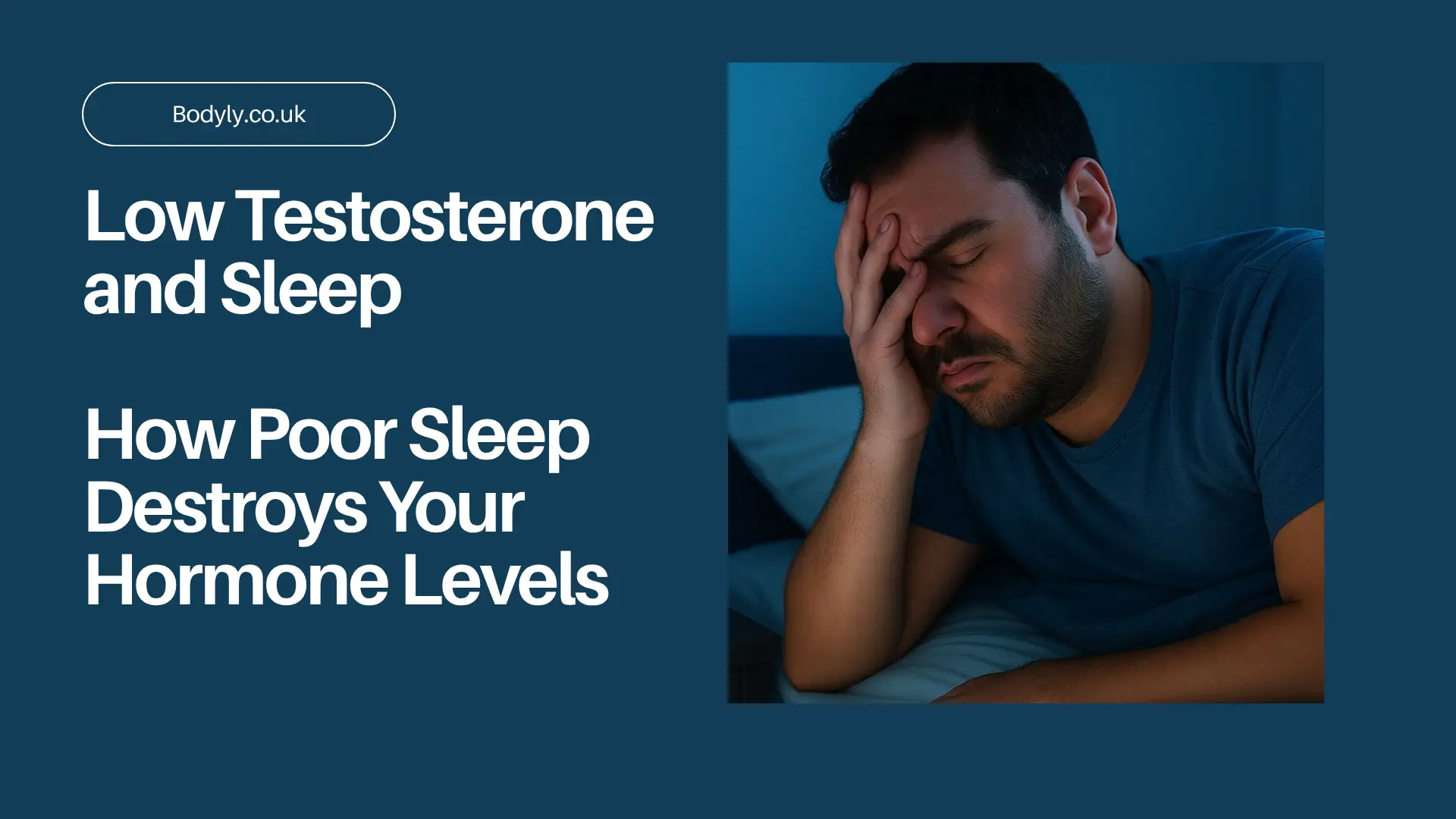
Research by Numan found that 71% of UK men are regularly failing to sleep through the night, with the average man getting just 6 hours and 35 minutes — well below the NHS recommended minimum of 7 hours. And the hormonal consequences of that shortfall are significant.
Poor sleep doesn’t just leave you tired. It actively suppresses testosterone production, and the less testosterone you have, the worse you sleep. It’s a cycle that quietly wreaks havoc on your health, and most men have no idea it’s happening.
The Science Behind Sleep and Testosterone Production
To understand why sleep matters so much for testosterone, you need to know when your body actually makes it.
The majority of daily testosterone production happens during sleep — specifically during REM and slow-wave sleep cycles. Testosterone levels peak in the early morning, typically around 8am, which is why NHS blood tests for testosterone deficiency are always scheduled before midday. That morning peak depends almost entirely on the quality of sleep you got the night before.
When sleep is cut short or disrupted, those production cycles get interrupted. The body simply doesn’t get the time it needs to complete the hormonal work that happens overnight. The result is a measurable drop in testosterone the following day — and over weeks and months of poor sleep, that drop becomes cumulative.
How Much Can Poor Sleep Actually Lower Testosterone?
The numbers are more striking than most men expect.
Research has shown that just one week of sleeping five hours per night can lower daytime testosterone levels by up to 15%. That’s not a minor fluctuation — that’s a clinically meaningful drop that can push borderline levels into deficiency territory. And given that nearly 60% of UK adults are regularly sleeping six hours or less, according to a 2024 survey of 15,000 people, this is a very real issue for a very large number of men.
Studies also confirm that actual nighttime sleep length is one of the strongest independent predictors of morning testosterone levels. In other words, how long and how well you sleep is one of the most powerful factors controlling your hormone levels — arguably more immediately controllable than age, genetics, or most medical conditions.
Sleep duration vs testosterone impact — what each sleep level does to your hormones
| Sleep duration | Testosterone impact | What you’ll likely feel | Verdict |
|---|---|---|---|
| Under 5 hours | Up to 15% drop in daytime testosterone — significant enough to push borderline levels into deficiency range | Severe fatigue, brain fog, low mood, near-zero libido, poor gym performance | Critical |
| 5–6 hours | Measurable testosterone suppression — cortisol stays elevated overnight, disrupting production cycles | Persistent tiredness, reduced motivation, irritability, slower recovery after exercise | Poor |
| 6–7 hours | Mild but consistent hormonal impact — below the NHS minimum; cumulative effect builds over weeks | Low-level fatigue, mood dips, reduced sharpness — easy to dismiss as “just life” | Below target |
| 7–8 hours | Meets NHS minimum — supports healthy testosterone production cycles through REM and slow-wave sleep | Stable energy, good mood, normal libido — hormonal baseline maintained | Good |
| 8–9 hours | Optimal for testosterone — full sleep cycles completed, morning testosterone peak at its highest | Strong energy, sharp focus, good recovery, healthy sex drive — hormones working for you | Optimal |
Source: Based on published sleep and testosterone research including Leproult & Van Cauter (2011) and NHS adult sleep recommendations. Individual results vary depending on age, health status, and sleep quality.
Related Articles:
- Low Testosterone and Weight Gain: The Hormonal Connection UK Men Need to Know
- Low Testosterone Under 40: Why It’s Happening to Younger Men in the UK
The Vicious Cycle: How Low T Makes Sleep Worse
Here’s where the problem compounds itself. Low testosterone doesn’t just result from poor sleep — it actively makes sleep worse. The two conditions feed directly into each other.
Men with low testosterone commonly report difficulty falling asleep, frequent nighttime awakenings, and less time spent in deep, restorative sleep. Testosterone contributes to muscle tone throughout the body, including the muscles that keep the airway open during sleep. When levels drop, airway stability can be affected — which is one reason why low testosterone is closely linked to sleep-disordered breathing and obstructive sleep apnoea (OSA).
OSA is itself a significant driver of testosterone suppression. The repeated breathing interruptions disrupt sleep architecture, prevent deep sleep cycles from completing, and directly inhibit pituitary function — reducing the hormonal signals that tell the testicles to produce testosterone in the first place. It’s a particularly nasty loop: low T worsens airway function, airway dysfunction disrupts sleep, disrupted sleep suppresses testosterone further.
If you’re a UK man who snores heavily, wakes feeling unrefreshed, or is frequently exhausted despite apparently adequate time in bed, it’s worth raising OSA with your GP. It’s significantly underdiagnosed in the UK and its hormonal consequences are rarely discussed in standard appointments.
Cortisol: The Hidden Third Player
Sleep, testosterone, and cortisol are all locked together in a hormonal triangle — and understanding cortisol’s role explains why poor sleep does so much damage so quickly.
Based on published circadian hormone research. Values are illustrative of relative patterns, not absolute nmol/L readings. NHS testosterone tests are scheduled before 11am to capture the natural morning peak.
Cortisol follows a natural daily rhythm. It should be lowest during the night, allowing testosterone production to proceed uninterrupted, then rise sharply in the early morning to help you wake up and face the day. Poor sleep completely disrupts this pattern. When you’re sleep-deprived, cortisol levels stay elevated at night — precisely when they should be at their lowest.
This matters because cortisol and testosterone are in direct competition. Elevated cortisol actively suppresses testosterone production. So poor sleep creates a double hit: it reduces the time available for testosterone synthesis, and it floods the system with a hormone that suppresses production at the same time. Research confirms that when cortisol levels are chronically high, the positive relationship between sleep and testosterone quality essentially breaks down entirely.
What Chronic Sleep Deprivation Does to Your Body Long-Term
A few bad nights won’t cause lasting damage. But chronic sleep deprivation — which is increasingly the reality for a huge proportion of UK men — is a different matter.
Over time, consistently low testosterone driven by poor sleep leads to progressive muscle loss, increasing body fat (particularly visceral belly fat), worsening insulin sensitivity, and declining mood and cognitive function. The NHS recognises poor sleep as a significant public health concern, and RAND Europe has estimated that the UK loses up to £37 billion a year in economic productivity due to insufficient sleep — a figure that reflects just how widespread and serious the problem has become.
For men already in the borderline testosterone range, chronic sleep deprivation can be the tipping point that pushes them into symptomatic deficiency. And because the symptoms of low T and sleep deprivation overlap so heavily — fatigue, low mood, poor concentration, reduced libido — many men simply accept the way they feel without ever connecting it back to their sleep.
Signs Your Sleep Is Hurting Your Testosterone — Symptom Checklist
| Symptom | Poor sleep driving it | Low testosterone driving it | Primary cause |
|---|---|---|---|
| Persistent fatigue despite time in bed | Disrupted REM cycles prevent restorative sleep | Low T reduces energy production and motivation | Both |
| Waking frequently during the night | Elevated cortisol keeps the nervous system alert | Low T reduces muscle tone, affecting airway stability | Both |
| Low sex drive / reduced libido | Sleep deprivation blunts dopamine and desire | Testosterone is the primary driver of male libido | Mainly low T |
| Brain fog and poor concentration | Lack of deep sleep impairs memory consolidation | Low T reduces cognitive sharpness and focus | Both |
| Irritability and low mood | Sleep deprivation spikes cortisol and emotional reactivity | Low T directly affects mood regulation and emotional stability | Both |
| Poor gym performance / slow recovery | Muscle repair happens during deep sleep — less sleep = less recovery | Low T reduces muscle protein synthesis and strength | Both |
| Weight gain around the middle | Poor sleep disrupts hunger hormones, increasing fat storage | Low T slows metabolism and increases visceral fat | Both |
| Heavy snoring / waking unrefreshed | Classic signs of obstructive sleep apnoea (OSA) | Low T reduces upper airway muscle tone, worsening OSA | Mainly sleep |
| Falling asleep easily during the day | Chronic sleep debt causes excessive daytime sleepiness | Low T contributes to persistent fatigue and low drive | Both |
Note: symptoms often overlap between poor sleep and low testosterone. A morning testosterone blood test via your GP is the only reliable way to confirm which is the primary driver.
Practical Steps to Protect Your Testosterone Through Better Sleep
The good news is that sleep is one of the most modifiable factors in your hormonal health. Small, consistent improvements in sleep quality can have a measurable impact on testosterone levels within weeks.
Prioritise sleep duration. The NHS recommends 7 to 9 hours for adults. Treat this as a non-negotiable health target, not a luxury. Getting consistently below 7 hours is enough to meaningfully suppress testosterone over time.
Keep a consistent sleep schedule. Going to bed and waking at the same time every day — including weekends — anchors your circadian rhythm. This directly supports the natural testosterone production cycle that peaks overnight and into the early morning.
Cut back on evening alcohol. Many UK men use alcohol to wind down, but it significantly disrupts sleep architecture — reducing REM sleep and deep sleep even if it helps you fall asleep initially. The hormonal cost of regular evening drinking is real and often underestimated.
Reduce evening screen use. Blue light from phones and screens suppresses melatonin — the hormone that signals to your body it’s time to sleep. The NHS recommends avoiding screens for at least 30 to 60 minutes before bed. It sounds basic, but the research on its impact is consistent.
Keep your bedroom cool and dark. Core body temperature needs to drop slightly for deep sleep to occur. A cool, dark room supports this process — and blackout blinds are worth the investment for UK winters where light pollution and early summer mornings both disrupt sleep.
Talk to your GP about snoring or poor-quality sleep. If you wake feeling exhausted regardless of how long you’ve slept, if your partner reports heavy snoring or witnessed breathing pauses, or if you fall asleep very easily during the day, raise it with your GP. OSA is underdiagnosed and very treatable — and addressing it can have a significant positive effect on testosterone levels.
Sleep Fixes & Their Hormonal Impact
| Sleep fix | What to do | Hormonal benefit | Timeframe to notice change |
|---|---|---|---|
| Consistent sleep schedule | Same bedtime and wake time every day including weekends | Anchors circadian rhythm — restores natural overnight testosterone production cycle | 1–2 weeks |
| Hit 7–9 hours per night | Treat sleep as a non-negotiable NHS-recommended health target | Allows full REM and slow-wave cycles — where most testosterone is produced | Days to 1 week |
| Cut evening alcohol | Avoid alcohol within 3 hours of bedtime; stay within UK guidelines (14 units/week) | Restores REM sleep architecture; reduces oestrogen conversion that alcohol triggers | 3–5 days |
| Reduce evening screen use | No phones or screens 30–60 minutes before bed (NHS recommendation) | Protects melatonin production — the hormone that signals testosterone production to begin overnight | 1–2 weeks |
| Cool, dark bedroom | Keep room at 16–18°C; use blackout blinds especially in UK summer months | Supports core body temperature drop needed for deep sleep and optimal overnight T production | Immediate |
| Address OSA with your GP | Raise heavy snoring or unrefreshing sleep with your NHS GP; ask about a sleep study referral | Treating OSA restores pituitary signalling and LH pulse — directly raising testosterone production | Weeks after treatment starts |
| Manage evening stress / cortisol | Wind-down routine: reading, light stretching, journalling — anything that lowers mental arousal | Lowers overnight cortisol — removes the primary hormonal blocker of nighttime testosterone synthesis | 1–3 weeks |
| Magnesium supplementation | 200–400mg magnesium glycinate or citrate before bed | Supports sleep onset and depth AND directly involved in testosterone synthesis — dual benefit | 2–4 weeks |
Note: lifestyle changes work best as a combined approach rather than in isolation. If symptoms persist after improving sleep, speak to your GP about a testosterone blood test.
Getting Tested: When to See Your GP
If you’ve been sleeping poorly for months and you’re also experiencing symptoms of low testosterone — persistent fatigue, low libido, mood changes, poor gym performance, or brain fog — it’s worth getting a testosterone blood test.
Be specific with your GP about both your sleep problems and your hormone symptoms together. The connection between the two isn’t always raised in standard NHS consultations, and making the link explicit gives your doctor a clearer picture of what might be driving your symptoms. NHS testosterone testing requires a morning blood test — ideally before 11am — and at least two samples taken on separate occasions to confirm a result.
If your levels come back in the borderline range, lifestyle interventions — particularly improving sleep — are often the first recommendation before any medical treatment is considered. That’s not a brush-off. For many men, it genuinely works. Addressing sleep alone has been shown to raise testosterone levels meaningfully, particularly when sleep duration was the primary issue.
A Note on Natural Support: Testosil
Sleep and testosterone are two sides of the same coin — fix one and you often improve the other. But for men going through that process, some look for additional nutritional support while they rebuild better sleep habits.

Testosil is worth a mention here specifically because of its cortisol-reducing credentials. Its primary ingredient, KSM-66 ashwagandha, has been clinically studied for its ability to reduce cortisol levels — the same stress hormone that, as this article explains, actively suppresses testosterone during poor or disrupted sleep. For men whose hormone issues are tied to chronic stress and elevated cortisol as much as sleep disruption itself, that mechanism is directly relevant.
The formula also includes magnesium, which plays a dual role — it’s involved in testosterone synthesis and is one of the few supplements with evidence for improving sleep quality, particularly sleep onset and depth. That makes it a genuinely relevant ingredient for men navigating the sleep-testosterone connection specifically, rather than just a general “T-booster” ingredient list.
As always, it’s not a substitute for medical assessment or for fixing the underlying sleep issues. But as part of a broader lifestyle approach, it’s one of the more thoughtfully formulated options in this space. Read detailed review of Testosil by clicking here.
Final Thoughts
Most UK men know sleep matters. Far fewer realise just how directly it controls their testosterone levels — or that the exhaustion, low mood, and declining performance they’re living with could be significantly driven by a hormonal shortfall that a better night’s sleep could start to reverse.
The NHS recommends 7 to 9 hours. Most UK men aren’t getting close. If that’s you, fixing your sleep isn’t just about feeling less tired — it could be one of the most powerful hormone interventions you make all year. Start there. Then get tested if symptoms persist. The answers are often closer than you think.

Tanveer Quraishi, author of Steroids 101 has extensive experience in the field of bodybuilding and has been writing online on various muscle-building and other health topics for many years now. He is not just interested in bodybuilding but is a great football player too. When he is not writing for his site or training at the gym, he loves to spend his time with this wife and kids.