Clenbuterol for Women: What Actually Happens
Is clenbuterol safe for women? No, and the reason is different from what most people expect. Unlike anabolic steroids, clenbuterol isn’t androgenic — it doesn’t deepen the voice or cause the virilising changes women are usually warned about. That absence gets read as relative safety, and it’s the wrong conclusion. The danger here is cardiac, and the cardiology evidence points the other way: women have a longer baseline QT interval, are more susceptible to drug-induced QT prolongation, and account for around two-thirds of reported torsades de pointes cases associated with QT-prolonging cardiovascular drugs. Clenbuterol also drives blood potassium down, and low potassium is itself a recognised trigger for that arrhythmia.
Search this and you’ll find pages listing “female dosages” as though the question were one of adjustment. This article doesn’t publish doses, and the reason isn’t squeamishness — it’s that the underlying assumption is wrong.
The assumption is that a smaller person needs a smaller amount and is then in the same position as a man. On the specific risk that matters most with this compound, the cardiology literature says otherwise.
Why This Question Has a Different Answer From the Steroid One
Most warnings aimed at women concern anabolic steroids, and they concern virilisation — voice deepening, facial hair, changes that don’t fully reverse. Those warnings are accurate, and our guide to what steroids do to women sets them out.
Clenbuterol isn’t in that category. It’s a beta-2 adrenergic agonist, not a hormone, and it doesn’t act on androgen receptors. It won’t masculinise anyone.
So women researching it encounter a genuine relief: none of the effects they were most afraid of apply. And that relief becomes the reason they proceed, which is exactly the wrong inference to draw.
The risk hasn’t disappeared. It’s moved — from the endocrine system to the heart — and it’s the one area where the evidence suggests women are worse off rather than better.
What the Cardiology Evidence Says About Sex Difference
This is the section no other page on this query has, and it’s the heart of the article.
Certain drugs prolong the QT interval — the time the heart’s ventricles take to recharge between beats. Excessive prolongation can trigger torsades de pointes, a form of ventricular tachycardia that can progress to fibrillation and sudden cardiac death.
Women start from a different baseline. The rate-corrected QT interval is longer in women than in men by roughly 2–6%, a difference attributed to what cardiologists call reduced repolarisation reserve — less margin before a drug pushes the interval into dangerous territory [1].
| Finding | What it means here |
|---|---|
| Longer baseline QTc in women | Less margin before a drug’s effect becomes clinically significant |
| Greater susceptibility to drug-induced QT prolongation | Reported with QT-prolonging drugs, and not explained by differences in drug levels alone [2] |
| ~2 in 3 drug-induced torsades cases occur in women | One of the most pronounced sex differences in adverse drug reactions [3][4] |
| Electrolyte abnormality is a known risk factor | Directly relevant, because this compound lowers potassium |
| Body-size adjustment may not remove the sex difference | In a quinidine study, size-based adjustment was unlikely to remove the greater QT response in women [5] |
Read the last row against the “female dosage” pages. Their entire logic is that a smaller amount produces a proportionate risk — and on this specific mechanism, that reasoning has been tested and found wanting.
The Potassium Problem, and Why It Matters More Here
Beta-2 agonists shift potassium from the bloodstream into cells, producing hypokalaemia — and the published clenbuterol cases document it, with levels far below the normal range in patients who required treatment.
Potassium is what allows cardiac muscle to fire in a coordinated rhythm. Low potassium is listed among the recognised risk factors for torsades de pointes, alongside female sex, bradycardia and certain medications [6].
So this compound doesn’t just carry a cardiac risk in a population already predisposed to it. It actively produces one of the conditions that predisposes people to it.
That’s the mechanism, and it’s covered in more depth in our breakdown of what clenbuterol does to the heart, which goes through the published case reports [7].
Where this becomes genuinely dangerous
Restriction, purging and laxative or diuretic use all lower potassium independently. So does prolonged vomiting from any cause.
A person doing any of those and taking a beta-2 agonist is stacking two mechanisms that push potassium in the same direction, against a baseline that’s already more arrhythmia-prone.
This isn’t a hypothetical combination. It’s a common one, because the compound is marketed for exactly the goal that draws people into those behaviours.
Your Cycle Changes the Picture
The sex difference described above isn’t a fixed trait that applies equally on every day of the month. It moves — and the reason is the same hormones that produce it in the first place.
Why oestrogen and progesterone matter here
Cardiac repolarisation — the recharging phase measured by the QT interval — is influenced by sex hormones. Research using cardiomyocytes found that oestradiol lengthened the relevant duration while the androgen dihydrotestosterone shortened it [2].
That’s the mechanism behind the whole sex difference. Testosterone appears to shorten the QT interval and confer some protection in men; oestrogen pushes in the opposite direction [1].
Because sex hormones vary across the menstrual cycle, the response to a QT-prolonging drug can vary too [8].
What that means practically
Drug-induced QT response can vary across the menstrual cycle, so tolerating a QT-prolonging exposure once does not establish that a later exposure will be safe. The size and clinical importance of that variation are uncertain, and it has not been established specifically for clenbuterol. The pregnancy/postpartum paragraph also cites [10], but the reference list currently stops at [9]. Add the long-QT pregnancy/postpartum source to the reference list rather than leaving the citation unresolved.
The pregnancy and postpartum wrinkle
The same hormonal logic produces a documented clinical pattern. Research on women with long QT syndrome found lower arrhythmia risk during pregnancy and elevated risk in the postpartum period, attributed to the contrasting effects of oestradiol and progesterone and to the hormonal shifts after birth [9].
That’s a specific population with a specific condition, so it doesn’t transfer directly. But it demonstrates the principle at work: hormonal state materially alters cardiac vulnerability, and the postpartum window — when many women are under pressure about weight — is not the reassuring end of that range.
Hormonal contraception
Honest answer: this is under-researched. Hormonal contraception alters circulating oestrogen and progesterone, and those hormones influence repolarisation — but the specific interaction between contraception and drug-induced QT risk hasn’t been characterised well enough to state anything firm.
What can be said is that it’s another variable, in a picture that already has more of them for women than for men, and that nobody selling clenbuterol has accounted for it.
Pregnancy, Contraception and Trying to Conceive
This section exists because it’s almost entirely absent from pages on this topic, and because the people it applies to often don’t know it applies to them yet.
Pregnancy
Human pregnancy data for clenbuterol are limited and do not establish its safety [10][11]. It has never held a human licence in the UK, so it has not been through a UK assessment for use in pregnancy.
“No evidence of harm” and “evidence of no harm” are different statements. Limited human studies exist, including evidence that clenbuterol crosses the placenta, but they are not sufficient to establish safety [10][11].
The part that catches people out
Many pregnancies aren’t recognised for several weeks. A compound taken for weight loss during that window is taken by someone who doesn’t yet know the question applies to her.
That’s not a hypothetical: weight-loss compounds are used disproportionately by women of reproductive age, and clenbuterol’s long half-life means exposure persists for days after a last dose — the arithmetic is in our guide to how long it stays in your system.
Breastfeeding
Also not established. Human data on breastfeeding are lacking, and the sensible position for any unlicensed compound is that it shouldn’t be taken while breastfeeding.
Trying to conceive
If you’re trying to conceive, the honest advice is to leave it out of the picture entirely — and that applies to stimulant-based legal supplements too, most of which carry pregnancy and breastfeeding cautions on the label for the same reason.
If you’re already pregnant and have taken something you’re now worried about, speak to your midwife or GP rather than searching. They can give you an actual assessment, and they are not there to judge you for asking.
Why There’s No “Female Dose” Here
Pages answering this question with numbers are answering a question that doesn’t have a good answer, and it’s worth being precise about why rather than simply declining.
No safe dose has been established for anyone. Clenbuterol has never held a human licence in the UK — its UK licences are veterinary. There’s no clinical dosing standard for a person to scale down from.
The product is unverifiable. With no lawful UK supply, the strength on a label is a claim rather than a measurement, which our look at how people obtain it covers. Precision applied to an unknown quantity is theatre.
It accumulates. The plasma half-life is around 35 hours, so doses stack rather than clear between them — the arithmetic is in our guide to how long it stays in your system.
And the sex difference isn’t explained by body size alone. The QT research above shows that scaling by body weight cannot be assumed to scale the risk down proportionately.
Where the Reputation Came From
Clenbuterol’s association with women isn’t accidental, and it isn’t clinical. It was built by celebrity-adjacent coverage in the 2000s, when tabloids attached it to rapid weight loss in public figures and gave it the “size zero pill” label.
That framing did something specific: it moved a veterinary bronchodilator into the beauty pages, where drugs are discussed in terms of results rather than pharmacology.
What it never included was the clinical literature. That literature is a run of cardiac presentations — atrial fibrillation, raised troponin, myocardial infarction in people with clean coronary arteries — and it has never been part of the story that made the compound famous.
What the research actually found about fat loss
Worth knowing before weighing any of this: randomised controlled trials in healthy adults have not shown a fat-loss advantage from clenbuterol. A two-week trial found no effect on fat mass despite a measurable gain in lean mass [12], and a newer eight-week resistance-training trial likewise found no greater fat loss than placebo [13]. Our look at what results actually look like covers the earlier trial in full.
Which reframes the entire trade. The cardiac risk is documented; a fat-loss benefit has not been demonstrated in the randomised trials above.
What to Watch For, and When to Get Help Urgently
If you’ve taken clenbuterol, these are the symptoms that warrant emergency care rather than waiting:
- Chest pain, tightness or pressure
- A heartbeat that feels irregular, or stays fast at rest
- Fainting or near-fainting
- Severe or widespread muscle cramping, particularly with weakness
- Shortness of breath at rest
- Confusion, agitation or seizure
Two of those — fainting and palpitations — are the classic presentation of the arrhythmia this article has been describing, and they are not symptoms to sleep on.
Tell them what you’ve taken. Clenbuterol doesn’t appear on a standard hospital toxicology screen, so unless you say so, clinicians are investigating symptoms without the piece of information that explains them. Possession for personal use isn’t a criminal offence in the UK — the position is set out in our guide to the UK law on it — and NHS staff are there to treat you.
If You’ve Already Used It: What to Ask For
The section above covers what needs emergency care. This one is for someone who feels broadly fine but has used clenbuterol and wants to know what’s worth checking.
| Ask for | Why it matters on this page |
|---|---|
| An ECG | The most directly relevant test given everything above. It shows rhythm disturbances and the QT interval itself — neither of which you can feel reliably. |
| Potassium and electrolytes | A simple blood test, and the one most likely to return something actionable given how consistently hypokalaemia appears in the case literature. |
| Blood pressure | Sustained elevation produces no symptoms. A cuff is the only way to know. |
| Blood glucose | Raised glucose appears alongside low potassium in most reported presentations. |
How to have the conversation
Say what you’ve taken, and for how long. Clenbuterol doesn’t appear on a standard toxicology screen, so without that information a GP is interpreting results without the thing that explains them.
Ask for the actual numbers. A potassium result inside the reference range but at its lower edge is worth watching over time, and you can only do that if you know what it was.
Mention anything else relevant. Restriction, purging, laxatives or diuretics all affect the same electrolytes, and a clinician working without that context may miss the pattern entirely.
If an abnormal result comes back, that’s information rather than a verdict. Most of these changes improve after stopping — and the ones that don’t are considerably better caught early than discovered later.
If this is about more than a training goal
A meaningful share of the people searching this aren’t athletes. They’re women looking for rapid weight loss, sometimes during a period when eating has become difficult or distressing.
If that’s closer to your situation, the honest thing to say is that a cardiac stimulant is a poor answer to it — and a particularly dangerous one, because restriction and purging lower potassium independently of anything you take.
Beat, the UK’s eating disorder charity, runs a free helpline and online support [14].
0808 801 0677 beateatingdisorders.org.uk
A GP appointment is also a legitimate route, regardless of how you feel about explaining it, and regardless of your weight — eating disorders occur at every body size and don’t require a particular one to be taken seriously [15].
What Works Instead
The goals behind this question — less body fat, more definition, more energy in training — are achievable without a beta-2 agonist, just more slowly.
A moderate calorie deficit, resistance training two to four times a week, protein at roughly 1.6–2.2 g per kg of body weight, and sleep. That combination produces around 0.5–1 kg of fat loss a week, which is unglamorous and durable.
Creatine monohydrate at 3–5 g daily is the one supplement with strong evidence behind it, and it works identically in women. It has no cardiac stimulant activity and costs roughly a coffee a month.
The Legal Alternative
If a legal thermogenic is what you’re after, Clenbutrol is the best-known UK option — and the honest framing matters as much here as anywhere.
It contains no beta-2 agonist, so it carries none of the receptor-driven cardiac mechanism above. It also contains 200 mg of caffeine per serving, which is a real stimulant dose with its own cautions — and if you have a heart condition, high blood pressure or a history of disordered eating, that’s a conversation with a GP before a purchase.
The Legal Alternative: Clenbutrol
A food supplement, not a drug — with expectations set by this article rather than the marketing.
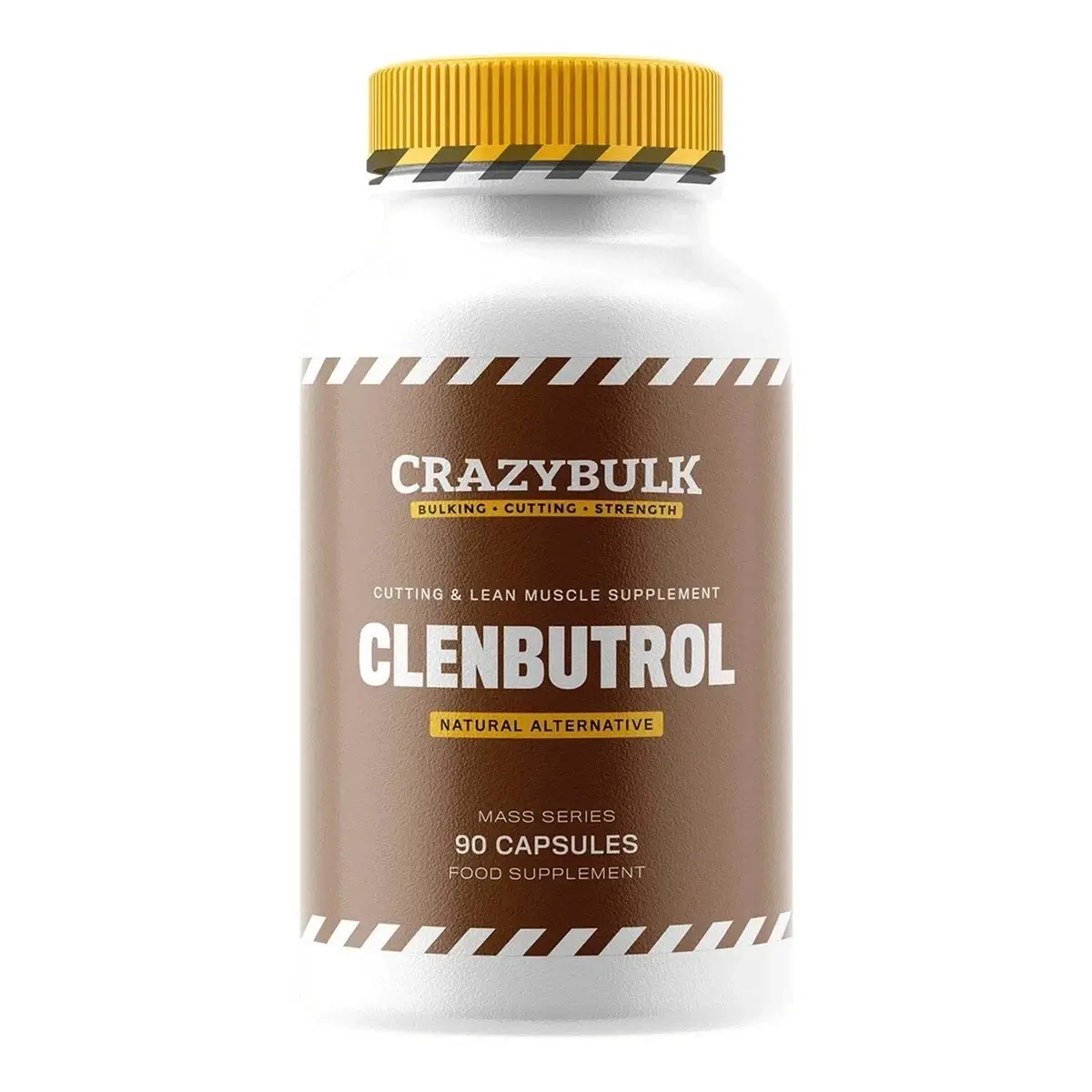
Clenbutrol — CrazyBulk
Thermogenic supplement · 4 capsules daily · £49.99 per month
- No beta-2 agonist — so none of the receptor-driven cardiac mechanism described above
- No androgens, so no virilisation risk either
- Legal to buy, possess and use in the UK, with every dose printed on the label
- 60-day money-back guarantee
- Contains 200 mg caffeine — a real stimulant dose, and a reason to check with a GP first
- Won’t replicate clenbuterol, and works alongside a calorie deficit rather than instead of one
FAQs
Is clenbuterol safe for women?
No. It doesn’t virilise, which is what most people mean when they ask — but the cardiac risk is where the danger sits, and women are more susceptible to drug-induced QT prolongation and account for around two-thirds of reported torsades de pointes cases associated with QT-prolonging cardiovascular drugs.
What’s the female dose of clenbuterol?
There isn’t one, and this article doesn’t publish numbers. No safe dose has been established for fat loss or bodybuilding. Clenbuterol has never held a human licence in the UK — its UK licences are veterinary. There’s no clinical dosing standard for a person to scale down from.
Does clenbuterol cause virilisation?
No. It’s a beta-2 agonist rather than an androgen, so it doesn’t deepen the voice or produce the changes associated with anabolic steroids. That’s precisely why it gets misread as safe.
Why do women get more side effects from it?
On the cardiac side, the difference is baseline physiology rather than dose — a longer QT interval and less repolarisation reserve. The compound’s tendency to lower potassium then compounds a risk factor women already carry.
Is clenbuterol the “size zero pill”?
That label came from tabloid coverage in the 2000s rather than from clinical evidence. The research record for this compound is largely a series of cardiac case reports, and the randomised trials that exist found no fat-loss advantage.
Can it be used safely with medical supervision?
Not in the UK — it has no human licence here, so no doctor can prescribe or monitor it for weight loss. If you want medically supervised support with weight, that’s a GP conversation about the options that do exist.
References
- James AF, Choisy SC, Hancox JC. Sex, drugs and arrhythmia: are gender differences in risk of torsades de pointes simply a matter of testosterone? Cardiovascular Research, 2003. https://academic.oup.com/cardiovascres/article/57/1/1/373183
- Sex-Related Differences in Drug-Induced QT Prolongation and Torsades de Pointes: A New Model System with Human iPSC-CMs. Toxicological Sciences, 2019. https://academic.oup.com/toxsci/article/167/2/360/5106018
- Is Gender a Risk Factor for Adverse Drug Reactions? Drug Safety. https://link.springer.com/article/10.2165/00002018-200124080-00002
- Benton RE, et al. Greater quinidine-induced QTc interval prolongation in women. Clin Pharmacol Ther. 2000. https://pubmed.ncbi.nlm.nih.gov/10801251/
- Prescribed drugs and comorbidities as risk factors for Torsades de Pointes arrhythmia: a Swedish population-based cohort study. https://www.ncbi.nlm.nih.gov/pmc/articles/PMC12816018/
- Case report and review of clenbuterol cardiac toxicity. Journal of Cardiology Cases, 2013. https://www.sciencedirect.com/science/article/pii/S1878540913001011
- Hostrup M, et al. Clenbuterol induces lean mass and muscle protein accretion, but attenuates cardiorespiratory fitness and desensitizes muscle β2-adrenergic signalling. The Journal of Physiology, 2025. https://physoc.onlinelibrary.wiley.com/doi/10.1113/JP289023
- Beat — UK eating disorder charity. https://www.beateatingdisorders.org.uk/
- NHS — Eating disorders. https://www.nhs.uk/mental-health/feelings-symptoms-behaviours/behaviours/eating-disorders/overview/
This article is for information and harm-awareness. It deliberately provides no dosing information, does not identify sellers, and is not medical advice. If you’re experiencing chest pain, palpitations or fainting after taking anything described here, seek emergency care. If you’re struggling with eating or body image, Beat’s helpline is 0808 801 0677 and NHS services treat these issues without judgement.

Tanveer Quraishi, author of Steroids 101 has extensive experience in the field of bodybuilding and has been writing online on various muscle-building and other health topics for many years now. He is not just interested in bodybuilding but is a great football player too. When he is not writing for his site or training at the gym, he loves to spend his time with this wife and kids.