Dianabol for Women: Why the Answer Is No (UK Guide)
Should women take Dianabol? No. Dianabol is a potent androgen, and in women androgens cause virilisation — voice deepening, clitoral enlargement, facial hair growth, male-pattern hair loss and menstrual disruption. Some of those effects reverse when use stops. The voice and clitoral changes are reported as largely irreversible, and no dose has been established as safe. There is no “women’s protocol” that removes the risk, because the mechanism causing the muscle gain is the same one causing the masculinisation.
Search this question and you’ll find forum threads suggesting low doses, short cycles, and “safer” alternatives that supposedly spare women the worst of it. Almost none of it comes from anyone who has treated the consequences.
This article takes the question seriously rather than dismissively, because the women asking it usually have real goals and deserve real information. The answer is still no — here’s exactly why, and what the research actually documents.
Why Dianabol Affects Women Differently
Every anabolic steroid is an anabolic-androgenic steroid. The two halves aren’t separable features you can order individually — they’re the same molecule acting on androgen receptors wherever it finds them.
In men, those receptors sit in tissues already shaped by testosterone, so the visible change is mostly more of what’s there. In women, the same signal reaches tissues that have never seen male-range androgen levels, and it reshapes them.
That’s the whole explanation for why this question has a different answer by sex. Not squeamishness, not gatekeeping — a receptor distribution that turns “muscle building” into “masculinisation” in a body that runs on a fraction of the androgen exposure.
Dianabol compounds this by being orally active and potent. It is also C17-alpha alkylated, the modification most closely associated with anabolic-steroid liver injury [1].
What Virilisation Actually Involves
The clinical term covers a specific cluster of changes. In women using anabolic steroids, documented effects include temporal hair recession, hirsutism, acne, irregular or absent periods, breast atrophy, deepening of the voice, clitoral enlargement, reduced body fat and increased muscle mass [2].
Notice that the last two — the ones people want — sit in the same list as the ones they don’t. That’s not a coincidence of presentation; it’s a single physiological process described from different angles.
The voice
Androgens thicken the vocal folds, and thickened folds produce a lower pitch. The change typically begins with instability and timbre shifts before the pitch itself drops — and by then the structural change is under way.
A published case report tracked a woman’s voice over 20 years after anabolic steroid use and found the masculinised changes — lowered pitch, reduced fundamental frequency, vocal fold thickening — persisted despite stopping [3]. Two decades is a long time to test the “it’ll reverse” theory.
Clitoral enlargement
Clitoromegaly is among the most commonly reported virilising effects, and among the least likely to fully resolve [2]. Qualitative research interviewing women who used steroids found this change generated significant shame and reduced self-esteem.
Menstrual and reproductive disruption
Periods often become irregular or stop entirely. Some women in that research used the absence and return of menstruation as their own crude safety gauge for when to start another cycle — a method with no clinical basis whatsoever.
Dianabol should not be used during pregnancy. Amenorrhoea is not contraception: androgen use does not reliably prevent pregnancy and may affect fetal genital development. Anyone who is pregnant or may be pregnant should stop using it and seek medical advice.
Hair, skin and everything visible
Facial and body hair growth, acne, and male-pattern hair loss at the temples are common. Hair can be removed and acne treated, which is why the researchers found women processed these more easily than the voice — the effects that can be managed cosmetically are the ones that hurt least [4].
What Reverses and What Doesn’t
This is the table that should exist on every page discussing this question, and rarely does.
| Effect | Reversibility | Notes |
|---|---|---|
| Voice deepening | Largely permanent | Vocal fold thickening is structural; documented as persisting decades after stopping |
| Clitoral enlargement | Often permanent | May partially regress; full resolution is not reliable |
| Male-pattern hair loss | Often permanent | Follicles lost at the temples generally don’t return |
| Facial and body hair | Partial | May lessen after stopping; often needs ongoing removal |
| Menstrual disruption | Usually reverses | Timing varies; prolonged absence warrants medical review |
| Acne | Usually reverses | Deep cystic acne can leave permanent scarring |
| Water retention and weight | Reverses | Leaves within weeks — and takes much of the “gain” with it |
| Liver enzyme elevation | Usually reverses | Typically normalises over weeks to months after stopping |
The pattern is worth stating plainly. The effects that reverse are the cosmetic and metabolic ones; the effects that don’t are the ones that change your body permanently.
The “Low Dose” and “Milder Compound” Arguments
Two arguments circulate to make this seem manageable, and both fail on the same point.
The first is dose. There is no established safe dose of any anabolic steroid for women — sensitivity varies so widely between individuals that a dose one woman tolerates for months produces voice changes in another within weeks.
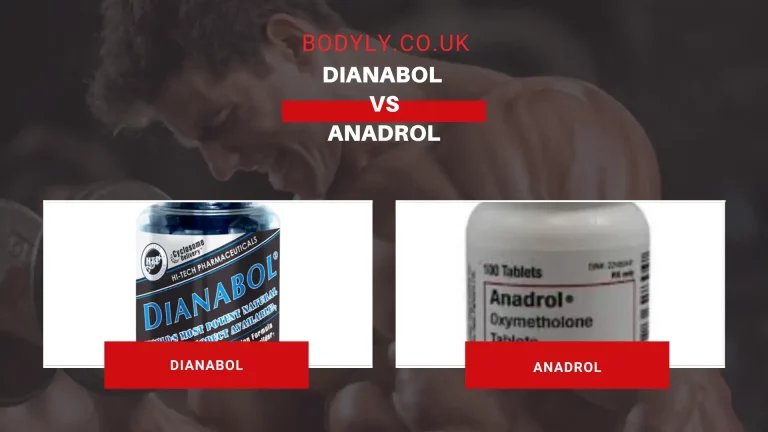
The second is compound choice. Anavar and Anadrol both carry reputations as “female-friendly,” and both reputations are folklore — every anabolic steroid is an androgen, and androgens virilise [5].
What ‘milder’ actually means is a lower or slower virilising effect at a given exposure. That is not a guarantee of safety, and individual response remains unpredictable.
And there’s a monitoring problem underneath both arguments. You cannot hear your own voice changing in real time — other people notice before you do, which is precisely why the change is so often discovered too late.
What Women Actually Use — and Why That List Isn’t a Safe List
If you research this topic for more than ten minutes you’ll meet the same three or four compound names, presented as the women’s options. Pretending they don’t exist would leave you to find them somewhere worse, so here’s the honest map.
Anabolic steroids are conventionally described with an androgenic rating alongside their anabolic rating, and the compounds women are pointed toward are the ones with lower androgenic ratings relative to their anabolic effect [6]. Oxandrolone (Anavar) and methenolone (Primobolan) are the usual two; stanozolol (Winstrol) appears often despite carrying substantial androgenic activity.
Here’s what that ranking actually represents. It is a gradient of how quickly and severely virilisation tends to appear — not a line between compounds that masculinise and compounds that don’t.
Every one of them is an androgen. A lower androgenic rating may reduce or delay virilising effects, but it does not eliminate the risk. These ratings are largely based on animal studies and cannot reliably predict an individual woman’s response.
Dianabol sits at the wrong end of this gradient entirely — strongly androgenic, orally hepatotoxic, and heavily aromatising. Which is why even people who use steroids and accept the risks don’t recommend it to women, as covered in the next section.
One more thing the gradient can’t account for. Black-market products may contain a different compound from the one on the label, so a woman choosing a “milder” option has no way to verify she isn’t taking something considerably more androgenic — the risk calculation she thinks she’s making isn’t the one she’s actually making.
This site doesn’t publish doses or protocols for any of these compounds. If you’re already using one, the monitoring section below and the medical guidance further down are the useful parts of this page.
Where Dianabol Specifically Ranks
Even among people who use steroids and accept the risks, Dianabol isn’t the compound recommended to women — and the reasoning is worth understanding rather than taking on faith.
It’s strongly androgenic, so virilisation risk is high. It’s a C17-alpha alkylated oral, so it adds a recognised liver-injury risk. And it aromatises heavily, driving water retention and blood pressure elevation [6].
Then there’s the honest arithmetic about what you’d actually be buying. Controlled trials in trained men found much of Dianabol’s rapid weight gain was water rather than muscle — the same finding covered in our before-and-after guide.
So the trade on offer is permanent masculinisation risk in exchange for a physique change that is substantially fluid and leaves when you stop. Stated that plainly, it isn’t a close call.
How to Monitor Yourself (If You’re Already Using)
This section exists because a share of the people reading this page have already started, and telling them only “don’t” helps nobody. The single most useful fact here: you will not reliably notice your own voice changing.
Your voice reaches your ears partly through bone conduction, so your internal reference drifts along with the change. Other people hear it first — which is why the change is so often discovered by a colleague’s comment rather than by the person it’s happening to.
The weekly voice recording
Record 30 seconds on your phone every week: the same passage, read at a normal volume, in the same room. Date each file and keep them together.
Comparing this week’s recording to one from six weeks ago may make pitch drift easier to notice than relying on live self-perception. It’s free and takes a minute, but it cannot guarantee that a change will be detected before it becomes permanent.
The early warning signs to know
Early androgen-related voice changes can include hoarseness, vocal instability, timbre changes or reduced pitch. Any new voice change warrants stopping and seeking medical advice. These features do not follow a validated sequence, and stopping promptly does not guarantee full reversal.
What else to track, and how
Photograph your hairline monthly under the same lighting, front and both temples. Temporal recession is gradual enough that mirrors don’t register it and photographs do.
Log your periods, including any change in cycle length or flow, and note the date they stop if they do. Some women in the research used the return of menstruation as a home-made safety signal — that has no clinical basis, but a written record is genuinely useful information for a doctor.
Track blood pressure if you can, since Dianabol’s water and sodium retention drives it upward and you won’t feel a rise. Note new acne, its location and whether it’s cystic, and any changes in libido or mood.
The one thing monitoring cannot do is make any of this safe. It shortens the delay between a change starting and you knowing about it, which is worth having — and it is not a substitute for the medical assessment below.
Which tests to ask for
Going in with a specific request tends to produce a more useful appointment than going in with a general worry. Tell your GP what you’ve taken, for how long, and roughly at what dose — then ask about the following.
Liver function tests (LFTs). Dianabol is a C17-alpha alkylated oral, so abnormal results can occur during use [1]. These often improve after stopping, although recovery can take longer after significant injury. A baseline reading and repeat testing are more informative than either alone.
A full lipid profile. Anabolic steroids suppress HDL — the protective cholesterol — while raising LDL, and oral compounds do this more aggressively. Nothing about this is symptomatic, so bloods are the only way to see it.
Full blood count. Androgens can raise haematocrit, thickening the blood. Worth checking, and simple to include alongside the rest.
Reproductive hormone panel. Testosterone, LH, FSH, oestradiol and prolactin together show how much your own hormonal axis has been disrupted and whether it’s recovering. If periods have stopped, this panel is the one that explains why.
Blood pressure and a thyroid check. Blood pressure because steroid-driven fluid retention pushes it up silently; thyroid function because its symptoms overlap heavily with what you might otherwise attribute to a cycle or its aftermath.
Two practical notes. Ask for copies of your results rather than just being told they’re “fine” — a value inside the reference range but at its edge is worth watching over time, and you can only do that with the numbers.
And if your periods have been absent for three months or more, say so explicitly rather than treating it as a side issue. Prolonged amenorrhoea has implications for bone density as well as fertility, and it’s the finding most likely to change what your GP does next.
The UK Legal Position
Dianabol is a Class C controlled drug. Possession and use for personal purposes are not criminal offences, but supplying it and importing it by post or courier are illegal — and ordering from an overseas website is postal importation.
Penalties for supply reach 14 years’ imprisonment and an unlimited fine. Full detail, including the personal-carry exception, is in our UK legality guide.
One further consequence lands harder here than most people expect. Black-market products sold as one compound may contain another entirely — so a woman intending a “milder” compound has no way to verify she isn’t taking something considerably more androgenic.
If You’ve Already Used It
This section matters more than the rest of the article, and most pages on this topic skip it.
Stop and speak to a GP. NHS services treat steroid-related health issues without judgement, and early assessment matters most for the effects that become permanent with continued exposure.
Voice changes warrant referral to a specialist — speech and language therapy can help with control and technique even where pitch doesn’t return. Menstrual disruption lasting more than a few months, persistent acne, and any liver symptoms all warrant investigation rather than waiting.
And a note on how this often goes: women in the qualitative research were rarely open about their use, which delayed help-seeking and deepened the shame. A GP has heard considerably stranger things this week, and the consultation is confidential.
What Actually Works Instead
The goals behind this question — more muscle, better definition, more strength — are entirely achievable without androgens, just slower.
Progressive resistance training two to four times a week with real load progression builds meaningful muscle in women, and it does so without touching the androgen receptor. Protein at roughly 1.6–2.2 g per kg of body weight supports it, alongside a modest calorie surplus for building or a small deficit for definition.
Creatine monohydrate at 3–5 g daily is the one supplement with strong evidence behind it, and it works identically in women. It has no androgenic activity, no virilisation risk, and costs about as much per month as a coffee.
A Note on Legal “Dianabol Alternatives”
Where these products do and don’t fit for a female reader.
Supplements marketed as legal Dianabol alternatives — D-Bal and similar — are food supplements, not steroids. They contain no androgens, carry no virilisation risk, and will not replicate steroid results.
Two honest caveats before you consider one:
- They are formulated and marketed primarily for men, and most contain ingredients aimed at supporting male hormonal profiles — check the label against your own goals rather than assuming relevance.
- Their formulas commonly include ashwagandha, which has been associated with rare cases of liver injury [7], and safety in pregnancy or breastfeeding is not established.
For most women reading this page, the honest advice is that training, protein and creatine will do more than any of them.
FAQs
Can women take a low dose of Dianabol safely?
No safe dose has been established for women, and individual sensitivity varies enormously — effects can appear at exposures another person tolerates. Because the changes most likely to be permanent are also the hardest to self-monitor, “low dose” offers delay rather than protection.
Is Anavar safer than Dianabol for women?
It’s less androgenic, which may reduce or delay virilising effects — but it remains an androgen and still carries virilisation risk. Lower risk is not no risk, and the ‘female-friendly steroid’ framing is gym folklore rather than pharmacology.
Will my voice go back to normal if I stop?
Voice deepening from anabolic steroids is reported as largely irreversible, including in a case followed over 20 years. Speech and language therapy can help with control and technique, so a referral is worth pursuing even though pitch typically doesn’t return.
What about women bodybuilders who clearly use steroids?
Many do, and many have experienced exactly the effects this article describes — the visible physique is the part that gets photographed, not the voice, the hair loss or the regret documented in research interviews.
Can Dianabol affect fertility?
Menstrual disruption is common and androgen exposure interferes with normal reproductive hormone signalling. Cycles usually return after stopping, but persistent absence of periods warrants medical assessment rather than waiting it out.
References
- LiverTox: Clinical and Research Information on Drug-Induced Liver Injury — Androgenic Steroids. NIDDK / NCBI Bookshelf. https://www.ncbi.nlm.nih.gov/books/NBK548931/
- Anabolic Steroid Use Disorder. StatPearls / NCBI Bookshelf. https://www.ncbi.nlm.nih.gov/books/NBK538174/
- Bensoussan Y, Anderson J. Case report: The long-term effects of anabolic steroids on the female voice over a 20-year period. Clin Case Rep. 2019. https://onlinelibrary.wiley.com/doi/full/10.1002/ccr3.2084
- Havnes IA, et al. Anabolic-androgenic steroid use among women — A qualitative study on experiences of masculinizing, gonadal and sexual effects. Int J Drug Policy. 2020. https://www.sciencedirect.com/science/article/pii/S0955395920302164
- NHS — Anabolic steroid misuse. https://www.nhs.uk/conditions/anabolic-steroid-misuse/
- Kicman AT. Pharmacology of anabolic steroids. Br J Pharmacol. 2008;154(3):502–521. https://pubmed.ncbi.nlm.nih.gov/18500378/
- Björnsson HK, et al. Ashwagandha-induced liver injury: A case series from Iceland and the US Drug-Induced Liver Injury Network. Liver Int. 2020;40(4):825–829. https://pubmed.ncbi.nlm.nih.gov/31991029/
- GOV.UK — Controlled drugs list (Misuse of Drugs legislation). https://www.gov.uk/government/publications/controlled-drugs-list–2
- CDC — Testosterone Use and Risk for Pregnancy. 2024 U.S. Selected Practice Recommendations for Contraceptive Use. https://www.cdc.gov/contraception/hcp/usspr/testosterone-pregnancy-risk.html
- Huang G, Pencina KM, Coady JA, Beleva YM, Bhasin S, Basaria S. Functional voice testing detects early changes in vocal pitch in women during testosterone administration. J Clin Endocrinol Metab. 2015;100(6):2254–2260. https://pmc.ncbi.nlm.nih.gov/articles/PMC4454796/
This article is for education and harm-awareness. It does not provide instructions for using anabolic steroids and nothing here is medical advice — if you’re experiencing effects from steroid use, speak to your GP; NHS services treat steroid-related health issues without judgement.

Tanveer Quraishi, author of Steroids 101 has extensive experience in the field of bodybuilding and has been writing online on various muscle-building and other health topics for many years now. He is not just interested in bodybuilding but is a great football player too. When he is not writing for his site or training at the gym, he loves to spend his time with this wife and kids.