Where to Buy Dianabol in the UK — and Why Every Route Is a Problem
Where can you buy Dianabol in the UK? Nowhere lawfully. It’s a prescription-only medicine with no UK marketing authorisation, so no pharmacy can dispense it and no retailer can sell it to you legally. Every route people actually use — a gym contact, an overseas website, social media, a “UK-based” seller — involves someone committing a supply or importation offence, and none of them can tell you what’s genuinely in the tablet. This article explains what’s wrong with each route rather than pointing you at any of them.
This page isn’t going to give you a supplier. If that’s what you searched for, it’s worth knowing why the answer doesn’t exist rather than assuming we’re being coy.
There is no lawful retail route to Dianabol in this country — not a legal one that’s hard to find, but none at all. What exists instead is a set of routes people use anyway, each with its own specific problem, and those problems are what this article is about.
Why There Is No Legal Route
Two separate bits of law close the door, and it helps to see them as distinct.
The first is drug control. Anabolic steroids are Class C controlled drugs under the Misuse of Drugs Act 1971 [1], which makes supplying them an offence carrying up to 14 years’ imprisonment and an unlimited fine [2].
The second is medicines regulation. Dianabol is a prescription-only medicine with no UK marketing authorisation, meaning it isn’t licensed for sale here at all — and it has no standard role in modern UK clinical practice, so a prescription isn’t something you can realistically obtain.
Put together, those produce an unusual situation. Possessing Dianabol for personal use isn’t a criminal offence, but there is no lawful way to acquire what you’re lawfully allowed to possess.
The Routes People Actually Use
Below is each route, what’s legally wrong with it, and what’s practically wrong with it. The two are rarely the same problem.
1. Someone at the gym
The traditional route, and the one people assume is lower-risk because it’s face-to-face. Legally it’s the opposite of low-risk for the seller: handing over tablets is supply, whether money changes hands or not.
Practically, a gym seller sits at the end of a chain they didn’t manufacture and can’t verify. They’re repeating what they were told about the product, one link further from any lab than the person who told them.
Verdict: Supply offence for them, unverifiable product for you, and a personal relationship that makes it awkward to ask hard questions.
2. An overseas website
The most common route, and the one with the clearest legal problem. Personal importation is lawful only in personal custody — carried by you, through customs — and a 2012 amendment specifically prohibited importation by post, courier or freight.
So a parcel arriving at your address is postal importation, which is an offence regardless of who it’s for. Packages are seized at the border, and the site takes no responsibility when they are.
Verdict: The delivery itself is the illegal act — and it’s how virtually every online order arrives.
3. A site that says it’s UK-based
“UK-based” is doing rhetorical work here rather than legal work. A domestic seller supplying a Class C drug without a prescription is committing the supply offence outright, so being closer to you doesn’t reduce anyone’s exposure — it concentrates it.
Many sites using that framing ship from elsewhere anyway, which puts you back in postal importation territory without the courtesy of saying so.
Verdict: A phrase that sounds like reassurance and functions as marketing. No UK address makes an unlicensed medicine licensed.
4. Social media and messaging apps
Sellers on these platforms operate behind accounts that can be deleted in seconds, which is the entire appeal from their side. There’s no persistence, no accountability, and nothing to return to if a product turns out to be something else.
The transaction is still a supply offence, and the payment methods typically requested offer no recourse whatsoever.
Verdict: The least accountable route available, and the one most exposed to simple fraud on top of everything else.
5. Buying it abroad and bringing it back
This is the one route with a genuine legal wrinkle: UK law permits importing steroids for personal use when you carry them yourself, in person [2]. That exception is real and often misunderstood.
What it doesn’t do is make the purchase abroad lawful under the other country’s law, and penalties elsewhere are frequently harsher than here. Nor does it tell you anything about what you bought.
Verdict: Lawful to carry in under UK rules; the foreign purchase and the unverified product are separate problems the exception doesn’t touch.
6. A pharmacy, with a prescription
The only lawful supply route in principle, and effectively closed in practice. A pharmacist can dispense a prescription-only medicine against a valid prescription — but Dianabol isn’t routinely prescribed in the UK and has no marketing authorisation here.
Where a genuine hormonal problem exists, what a GP can prescribe is testosterone replacement for diagnosed hypogonadism, which is a different clinical proposition from a bodybuilding oral.
Verdict: Lawful, and not available for this purpose. If you suspect low testosterone, this is the route worth pursuing — via a blood test, not a website.
Every Route at a Glance
| Route | Legal status | The real problem |
|---|---|---|
| Gym contact | Supply offence | Unverifiable chain; awkward to question |
| Overseas website | Postal import offence | Seizure risk; no recourse; unknown product |
| “UK-based” seller | Supply offence | Reassuring phrase with no regulatory meaning |
| Social media / messaging | Supply offence | Disposable accounts; fraud exposure |
| Carried in personally | Permitted in UK | Foreign law applies; product still unverified |
| Pharmacy with prescription | Lawful | Not prescribed for this — effectively unavailable |
| Legal supplements | Lawful | Not steroids; results are far more modest |
The Problem That Survives Every Route
Legal exposure varies between the routes above. The verification problem doesn’t — it’s identical whichever one you pick, and it’s the part people think about least.
Because no regulated UK supply exists, everything in circulation comes from unlicensed manufacturing with no oversight. The MHRA’s position on unlicensed medicines is straightforward: there is no guarantee of quality or safety [3].
In practical terms that means three unknowns you can’t resolve. Whether the compound is what the label says, whether the dose is what the label says, and whether anything else came along with it.
That third unknown matters more than the first two. Anabolic steroids are already hepatotoxic [4], and contaminants add an unpredictable second problem to a compound that already strains the liver by design.
The tells people rely on don’t work
Holograms, batch codes and QR verification portals are all reproducible by whoever printed the box. A verification page controlled by the seller verifies the seller’s own claim, which is circular.
Nor does the product “working” tell you what it is. Feeling stronger and heavier within a fortnight is consistent with any number of orally active androgens, several of which are considerably harsher than the one you think you bought — and it’s also consistent with water retention, which our before-and-after guide covers in detail.
The only genuine verification is laboratory testing, which almost nobody does. Some harm-reduction services in the UK offer drug checking; a pharmacy will not test a black-market tablet for you.
What Happens if a Package Is Intercepted
Border Force does seize these parcels. What follows varies with circumstances, so anyone telling you confidently what will happen to you specifically is guessing.
What can be said accurately is where the law sits: postal importation is an offence, and possession for personal use is not. Those two facts sit uneasily together in exactly the situation an intercepted parcel creates.
If you find yourself dealing with a seizure notice or a police contact, that’s a solicitor question rather than a forum question. Free initial legal advice is available in the UK, and drug offences are an area where early advice genuinely changes outcomes.
The Question Underneath the Question
Most people searching for where to buy this aren’t drug enthusiasts. They want to look a particular way, or they’ve stalled, or they’re getting older and something feels off.
Each of those has a route that doesn’t involve any of the problems above.
If you’ve stalled in the gym, the usual causes are training that stopped progressing, calories that aren’t where you think they are, and sleep. Unglamorous, but they account for most plateaus.
If you’re tired, low and losing muscle despite training, that’s a blood test and a GP conversation about testosterone — a route that’s lawful, free at the point of use, and produces an actual diagnosis rather than a guess.
If you want the fastest legal option, that’s the supplement route below, with the honest caveat that it won’t replicate a steroid and doesn’t pretend to.
The Legal Alternative Route
Two products reviewed on this site position themselves as Dianabol alternatives. The honest framing matters more here than anywhere: they are food supplements, not steroids, and they will not reproduce steroid results.
What they do offer is a genuinely different trade — legal to buy and possess, no supply or importation offence involved, no hormonal shutdown, no post-cycle period, and a product whose ingredients are printed on the label and sold by a company with an address.
One transparency note that applies to both: their formulas include ashwagandha, which has been associated with rare cases of liver injury [5]. A different order of risk from an oral steroid’s built-in hepatotoxicity — but not zero, because no honest supplement claim is.
Two Legal Alternatives Reviewed on This Site
Food supplements, not steroids — legal in the UK, with expectations set by this article rather than the ads.
Two Legal Alternatives Reviewed on This Site
Food supplements, not steroids — legal in the UK, with expectations set by this article rather than the ads.
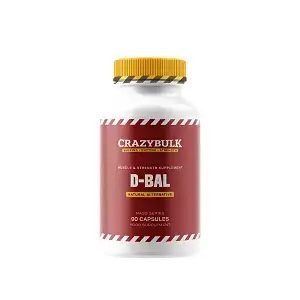
D-Bal — CrazyBulk
- Formulated to support muscle growth, protein synthesis, strength and recovery
- No oral-steroid liver toxicity and no hormonal suppression
- No banned ingredients listed; money-back guarantee
- Bought openly, from a company with a published address — and no Dianabol-level results
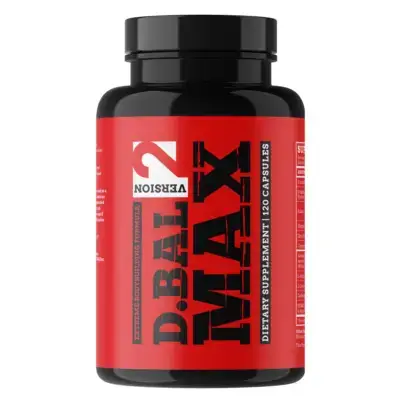
D-Bal Max — Wolfson Brands
- UK-made formula built around magnesium, ashwagandha, L-arginine and L-lysine
- Positioned for strength, performance and recovery support
- No oral-steroid liver toxicity; official-website sales with a money-back guarantee
- Same honest ceiling: a supplement, not a steroid substitute
FAQ
Can you buy Dianabol legally in the UK at all?
Only from a pharmacist against a valid prescription — and since Dianabol has no UK marketing authorisation and isn’t routinely prescribed, that route is effectively closed. Every other seller is committing a supply offence, even though you as the possessor are not.
Is it illegal to order Dianabol online for personal use?
Yes. Importation by post, courier or freight is an offence even when it’s for you alone — the personal-use exception applies only when you carry the product yourself through customs.
Do sellers get caught, or is it mainly buyers?
The serious offences in this area target supply and importation, which is where sellers sit. Simple possession for personal use isn’t an offence at all, so the legal weight falls on acquisition rather than on having it.
How can I tell if Dianabol is fake?
Realistically, you can’t without laboratory testing. Holograms, batch codes and seller-run verification pages can all be produced by whoever made the packaging, and feeling an effect doesn’t confirm which compound produced it.
Are “legal Dianabol” supplements actually legal to buy?
Yes — products like D-Bal are food supplements rather than controlled drugs, so buying, selling and possessing them is lawful in the UK. They are also not steroids and shouldn’t be expected to perform like one.
References
- Misuse of Drugs Act 1971 — legislation.gov.uk. https://www.legislation.gov.uk/ukpga/1971/38/contents
- Drugs penalties (Class C) — gov.uk. https://www.gov.uk/penalties-drug-possession-dealing
- Medicines and Healthcare products Regulatory Agency (MHRA) — gov.uk. https://www.gov.uk/government/organisations/medicines-and-healthcare-products-regulatory-agency
- LiverTox: Clinical and Research Information on Drug-Induced Liver Injury — Anabolic Steroids. NIDDK / NCBI Bookshelf. https://www.ncbi.nlm.nih.gov/books/NBK548931/
- Björnsson HK, et al. Ashwagandha-induced liver injury: A case series from Iceland and the US Drug-Induced Liver Injury Network. Liver Int. 2020;40(4):825–829. https://pubmed.ncbi.nlm.nih.gov/31991029/
- NHS — Anabolic steroid misuse. https://www.nhs.uk/conditions/anabolic-steroid-misuse/
- Misuse of Drugs Regulations 2001, Schedule 4 Part II — legislation.gov.uk. https://www.legislation.gov.uk/uksi/2001/3998/schedule/4
- Release — Steroids and the law. https://www.release.org.uk/drugs/steroids/law
This article is for information and harm-awareness. It does not identify sellers, sources or suppliers, and nothing here is legal or medical advice — if you’re facing a seizure notice or police contact, speak to a solicitor, and if you’re worried about steroid use or symptoms of low testosterone, speak to your GP. NHS services treat these issues without judgement.

Tanveer Quraishi, author of Steroids 101 has extensive experience in the field of bodybuilding and has been writing online on various muscle-building and other health topics for many years now. He is not just interested in bodybuilding but is a great football player too. When he is not writing for his site or training at the gym, he loves to spend his time with this wife and kids.