Is Clenbuterol Legal in the UK? What the Law Actually Says
Is clenbuterol legal in the UK? Partly. It’s a Class C controlled drug, added to the Misuse of Drugs Act in 1996, and it has never been licensed for human use here — only in veterinary medicines. Possessing it for your own personal use is not a criminal offence, but supplying it carries up to 14 years’ imprisonment and an unlimited fine, and having it posted to you is an importation offence even when it’s for you alone. The only lawful way to bring it into the country yourself is to carry it through customs in person.
Search this question and you’ll get three different answers, at least one of which is wrong. Some pages say it’s outright illegal, some say it’s completely legal to buy, and several state the supply penalty as seven years.
The actual position is more specific than any of those, and it’s written down. This article works through the legislation itself — what clenbuterol is classed as, when it was classed that way, and what each activity around it actually carries.
Clenbuterol and UK Law at a Glance
| Activity | Status | Detail |
|---|---|---|
| Possessing it for personal use | Not an offence | Schedule 4 Part II exemption applies to medicinal-form personal possession |
| Using it yourself | Not an offence | No offence of personal use in UK drug law |
| Supplying or sharing it | Offence | Up to 14 years and an unlimited fine — money need not change hands |
| Selling it | Offence | Supply offence, plus medicines legislation breaches |
| Having it posted or couriered to you | Offence | Importation by post, courier or freight excluded from the personal exemption |
| Carrying it in yourself through customs | Permitted | Personal custody only, for your own use — foreign law still applies where you bought it |
| Getting it on prescription | Not available | No human licence in the UK; veterinary licences only |
| Using it in competitive sport | Banned | WADA prohibited at all times; multi-year bans issued by UKAD |
Not legal advice. Penalties are maximums and outcomes depend on circumstances — see the references at the end for the primary legislation.
Where the Class C Status Actually Comes From
Most articles assert that clenbuterol is Class C and move on. It’s worth seeing the instrument, because the detail explains something the assertion doesn’t.
Clenbuterol was added to Part III of Schedule 2 of the Misuse of Drugs Act 1971 — the Class C list — by the Misuse of Drugs Act 1971 (Modification) Order 1996, made on 15 May 1996 and in force from 1 September that year [1].
That single Order is where UK performance-drug law largely begins. It brought in the anabolic and androgenic steroids as a group — methandienone, stanozolol, oxandrolone, testosterone and the rest — along with growth hormones and chorionic gonadotrophin.
That single adrenoceptor stimulant is clenbuterol. It’s the only compound on the 1996 list that isn’t a steroid or a hormone, which is worth knowing for a practical reason.
Clenbuterol isn’t an anabolic steroid, and people frequently assume that means it falls outside steroid law. It doesn’t — it was written into the same Order, on the same day, and carries the same Class C consequences.
Why Possession Isn’t an Offence
Class C possession normally carries up to two years. Clenbuterol is an exception, for the same reason anabolic steroids are.
It sits in Schedule 4 Part II of the Misuse of Drugs Regulations 2001, which removes the possession offence where the drug is in medicinal form and held for personal use [2]. The legislation was aimed at the trade rather than the individual.
So a person with clenbuterol tablets at home, for their own use, is not committing a criminal offence in the UK. That is a genuine and often-misreported feature of the law.
It is also where the legality ends. Everything involved in getting those tablets into that drawer is treated differently.
Supply: The 14-Year Figure, and Why It Catches People
Supplying or producing a Class C drug carries a maximum of 14 years’ imprisonment, an unlimited fine, or both [3]. Several pages currently ranking for this question say seven — they’re wrong, and it’s a useful indicator of how carefully those pages were written.
The bigger misunderstanding is what supply means. It doesn’t require a transaction.
Handing a few tablets to a training partner is supply. Splitting an order between friends is supply. No money has to change hands for the offence to be complete.
Selling it adds a second layer of problems on top, because clenbuterol is a prescription-only medicine with no human licence — so a seller is breaching medicines legislation as well as the Misuse of Drugs Act.
Importation: The Rule Almost Everyone Gets Wrong
This is the part that turns a lawful possession into an offence, and it’s the single most useful thing on this page.
UK law permits personal importation of Schedule 4 Part II substances — but only in personal custody. That means physically carrying the product yourself, through customs, in your own luggage.
So the tablets in someone’s hand can be lawful while the way they got there was not. That distinction is invisible on the product, and it’s the reason “possession is legal” is such a misleading half-truth when repeated on its own.
The same rule applies across this category, which we cover in detail for the equivalent situation in our Dianabol UK legality guide.
Is There Any Prescription Route?
No, and this is where clenbuterol differs from testosterone, which does have legitimate UK clinical uses.
Clenbuterol has never been licensed for human use in the UK. Its UK licences are veterinary — it’s the active ingredient in medicines for respiratory conditions in cattle and horses, available only on prescription from a vet [4].
In some other countries it’s prescribed as a bronchodilator for asthma. That has never been the case here, so there is no UK doctor who can lawfully prescribe it to you for fat loss, or for anything else.
Which means the pharmacy route — the one lawful supply route for a prescription-only medicine — is closed in practice as well as in theory.
How Clenbuterol Compares to Other Class C Performance Drugs
Clenbuterol’s position makes more sense alongside the compounds it’s usually mentioned with — and one of the comparisons genuinely surprises people.
| Compound | Controlled? | Possession | Supply | Human prescription |
|---|---|---|---|---|
| Clenbuterol | Class C | Not an offence (personal use) | Up to 14 years | None — veterinary licences only |
| Anabolic steroidsDianabol, testosterone, etc. | Class C | Not an offence (personal use) | Up to 14 years | Testosterone yes, for diagnosed hypogonadism; Dianabol no |
| Growth hormonesomatropin, HGH | Class C | Not an offence (personal use) | Up to 14 years | Yes, for specific diagnosed conditions |
| SARMsostarine, RAD-140, etc. | Not controlled | Not an offence | Not a drug-supply offence — but unlicensed medicine rules apply | None — unlicensed |
The first three lines are effectively identical, and for a reason: clenbuterol, the anabolic steroids and the growth hormones were all added to Class C by the same 1996 Order. That’s why the legal framework is the same even though the pharmacology isn’t remotely similar.
The fourth line is the one that catches people out. SARMs are not controlled under the Misuse of Drugs Act at all — which frequently gets reported as “SARMs are legal in the UK.”
That’s a half-truth of the same kind as “possession is legal.” They aren’t controlled drugs, but they are unlicensed medicines, so selling them for human consumption breaches medicines legislation regardless of the Misuse of Drugs Act.
The practical distinction worth taking away: with clenbuterol and steroids, the criminal exposure sits in supply and importation. With SARMs, the exposure sits with the seller under medicines law. Neither is a green light for the buyer, and both leave you with an unverifiable product.
Clenbuterol in Sport: Banned at All Times
If you compete in any sport under UK Anti-Doping’s jurisdiction, the legal position above is almost irrelevant, because the sporting rules are stricter than the criminal law.
Clenbuterol is listed under Section 1.2 of the WADA Prohibited List as an anabolic agent, and it is a non-specified substance prohibited at all times — in and out of competition [5].
UKAD acts on it. In 2023 a British triathlete received a three-year ban following anti-doping rule violations for possession and use of clenbuterol, after being found with a blister pack of tablets.
Note what that case turned on: possession, which isn’t a criminal offence, is still an anti-doping violation. The two systems have different rules, and the sporting one is harsher.
The Risk the Law Doesn’t Touch
Everything above concerns legal exposure. There’s a separate problem the law says nothing about, and it may matter more.
Because there’s no lawful UK supply, everything in circulation comes from unlicensed manufacturing with no regulatory oversight. The MHRA’s position on unlicensed medicines is straightforward: there’s no guarantee of quality or safety [6].
In practice that means three unknowns you can’t resolve: whether the compound is what the label says, whether the dose is what the label says, and whether anything else came with it.
That third one matters most with clenbuterol specifically. It’s a beta-2 adrenergic agonist with a long elimination half-life and documented cardiovascular effects — raised heart rate, palpitations, tremor and, in overdose cases, cardiac events requiring hospital treatment. An unknown dose of a compound like that is a materially different proposition from an unknown dose of a vitamin.
Three Claims You’ll See That Aren’t Right
“Clenbuterol isn’t a steroid, so steroid law doesn’t apply.” It isn’t a steroid — it’s a beta-2 agonist. But it was added to the Class C list in the same 1996 Order as the steroids and carries the same consequences.
“Supply carries up to 7 years.” Class C supply carries a maximum of 14 years. The seven-year figure appears on multiple pages and doesn’t correspond to the offence.
“It’s legal to buy for personal use.” Possession is lawful; buying is not the same act. Every purchase involves someone committing a supply offence, and if it arrives by post, an importation offence too.
What Actually Happens If a Package Is Intercepted
This is the question people search at two in the morning, and almost no page answers it properly. What follows is the general framework — not a prediction about your case, because outcomes turn on circumstances no article can see.
The parcel is seized, and usually you hear about it by post
Border Force examines international post and intercepts controlled drugs entering the UK. Where a package is seized, the usual first contact is a written notice sent to the delivery address explaining what was taken and why.
That letter is a notice of seizure, not a charge. It tells you the goods have been detained and sets out the process for challenging that if you want to — which, for a controlled drug, almost nobody does.
Seizure and prosecution are different decisions
Goods being seized does not automatically mean a prosecution follows. Whether a case is pursued depends on the evidence, the quantity, and whether the circumstances suggest supply rather than personal use.
The Crown Prosecution Service applies a two-stage test to any charging decision: whether there is enough evidence for a realistic prospect of conviction, and whether prosecuting is in the public interest [7]. Both stages have to be met.
What that means in practice is that a single small quantity addressed to an individual sits at the weakest end of the spectrum for a supply charge — and the importation offence, while real, is not automatically pursued in every case.
What changes the picture
Quantity is the obvious one. A volume beyond what any individual would plausibly use for themselves invites the inference of supply, and supply is the offence that carries fourteen years.
Repetition is the other. Multiple seizures to the same address establish a pattern, and a pattern is exactly the kind of evidence a supply case is built on.
So is anything else found alongside it — packaging materials, scales, lists, messages. Those things speak to intent, and intent is what separates the two very different offences in play.
What to do if it happens
Don’t reorder. If a first parcel was intercepted, a second to the same address turns an isolated event into a pattern — which is the single worst thing you can do to your own position.
Don’t respond to the notice without advice. Challenging a seizure means asserting ownership of a controlled drug in writing, which is a decision to make with a solicitor rather than alone at a kitchen table.
Get legal advice early if there’s police contact. Free initial advice is available in the UK, and if you’re interviewed under caution you’re entitled to free legal representation at the police station regardless of income — that entitlement is not means-tested and not something to decline out of politeness.
Say nothing informally. “Just explaining” to an officer at the door is how the evidential picture gets filled in. The advice to wait for a solicitor exists because it works.
Nothing here is legal advice, and it cannot account for the facts of any individual case. If you are dealing with a seizure notice or police contact, speak to a solicitor.
The Consequences Nobody Mentions
Articles on this topic stop at the sentence in the statute. For most people the more relevant question is what a conviction would actually touch — and that’s a wider set of things than the fine.
Criminal record and DBS checks
A conviction for a drug offence appears on a basic DBS check until it becomes spent, and on standard and enhanced checks for considerably longer. Enhanced checks are standard for roles involving children or vulnerable adults, which covers a large share of teaching, care and healthcare work.
Rehabilitation periods depend on the sentence rather than the offence, so a conditional discharge and a custodial sentence sit very differently on that timeline [8].
Professional registration
Regulated professions require self-reporting of convictions and often of police cautions. The GMC, NMC, HCPC, SRA and teaching regulators all treat a drug conviction as a fitness-to-practise matter to be considered rather than an automatic bar.
The reporting obligation is the part people underestimate. Failing to disclose is frequently treated more seriously by a regulator than the underlying offence would have been.
Armed forces, police and security roles
Applications to the police, armed forces and roles requiring security clearance involve detailed disclosure of drug history — often going beyond convictions to include use. A seizure notice may not be a conviction, but it exists as a record.
Travel and visas
Some countries ask about drug convictions on visa or entry applications, and the United States in particular takes a strict view of drug-related history at the border. An ESTA application asks about controlled substance offences, and answering it wrongly is its own problem.
Insurance and employment declarations
Many employment contracts require disclosure of criminal convictions, and some insurance products ask the same question. Non-disclosure can void a policy or breach a contract independently of whatever the original offence was.
Why this matters for the risk calculation
The realistic exposure for a personal user is a seized parcel rather than a courtroom — the law is built to target supply chains, and that’s where enforcement effort goes.
But the tail risk isn’t the fine. It’s a record that follows a career into places most people never think about when they’re comparing prices on an overseas website, and that’s the part worth weighing before anything is ordered.
This section describes general frameworks, not individual outcomes. Disclosure requirements vary by profession, employer and country — check the specific rules that apply to you, and take legal advice where it matters.
Related Reading in This Guide
The law is one part of the picture. If you’re weighing this compound up, the pages that matter most are our breakdown of what it does to the heart, which works through the published cardiac case reports, and what results actually look like, which covers the randomised trial that found no fat-mass effect.
On the practical side: why every purchase route is a problem covers acquisition, how long it stays in your system covers half-life and detection, and the anti-doping position sets out real UKAD cases and what a ban involves.
Two audience-specific pages complete the set — what actually happens to women, where the risk profile differs, and our ranking of the legal options sold in the UK.
The Legal Alternative Route
Given that there’s no lawful way to buy clenbuterol in the UK, the practical question for most people reading this is what’s actually available.
Clenbutrol, from CrazyBulk, is the best-known legal alternative — and the honest framing matters here. It is a food supplement, not a drug, and it contains no beta-2 agonist. It will not do what clenbuterol does.
What it does contain is a well-dosed thermogenic formula with every dose printed on the label: 200 mg of caffeine, 800 mg of cayenne, green tea extract and L-tyrosine. The evidence for catechin-caffeine thermogenesis is real but modest — roughly a 4–5% increase in daily energy expenditure, which helps a calorie deficit rather than replacing one.
The Legal Alternative: Clenbutrol
A food supplement, not a drug — with expectations set by this article rather than the marketing.
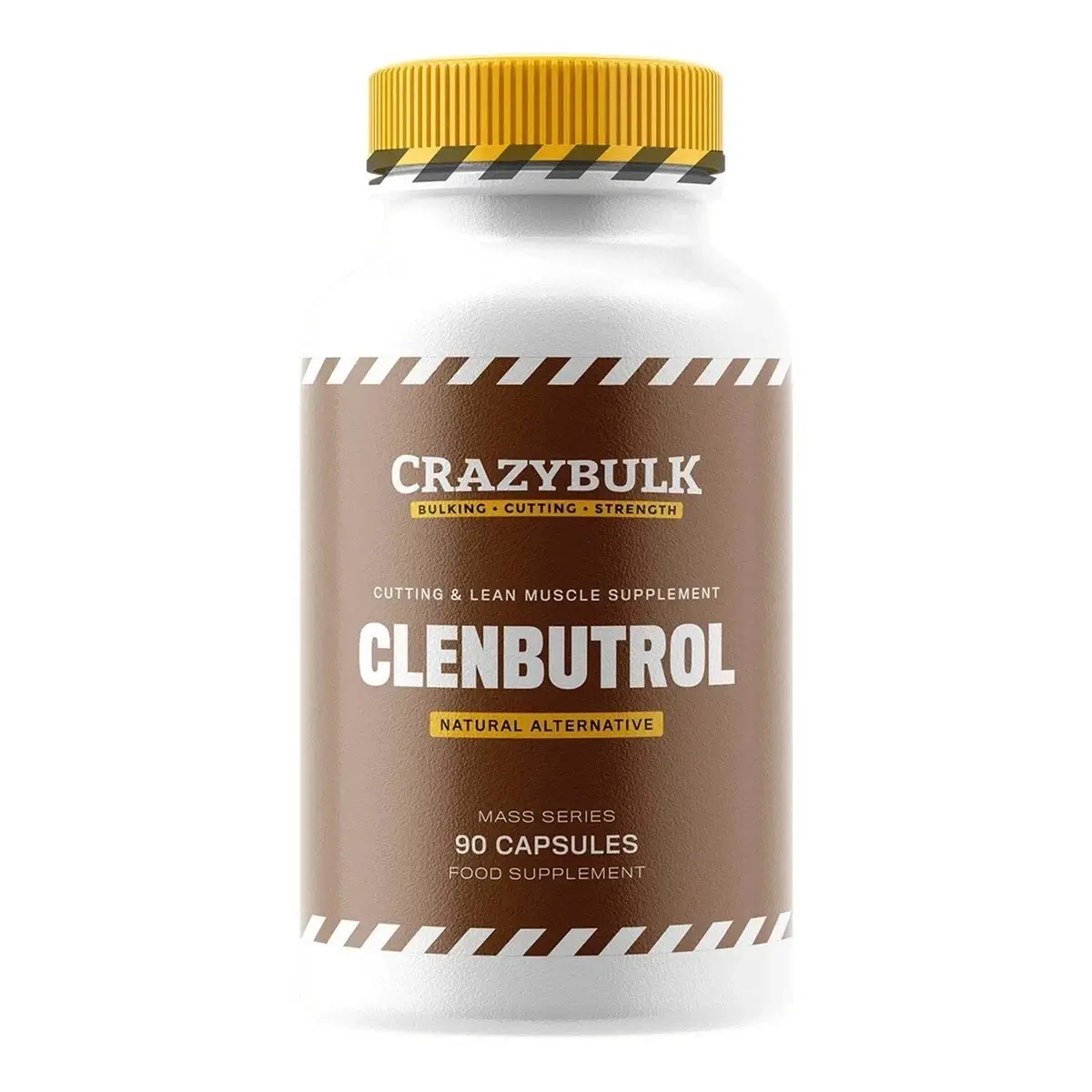
Clenbutrol — CrazyBulk
Thermogenic supplement · 4 capsules daily · £49.99 per month
- Legal to buy, possess and use in the UK — no supply or importation offence involved
- Every dose disclosed on the label, from a company with a published address
- No beta-2 agonist and no prescription-only ingredients
- 60-day money-back guarantee
- Will not replicate clenbuterol — and works alongside a calorie deficit, not instead of one
FAQ
Is clenbuterol illegal in the UK?
It’s a Class C controlled drug, but the offences are narrower than “illegal” suggests. Possession for personal use isn’t an offence; supplying it and importing it by post are, with supply carrying up to 14 years.
Can I buy clenbuterol legally in the UK?
No. There’s no human licence for it here, so no pharmacy can dispense it and no retailer can lawfully sell it — every seller is committing a supply offence even though you as the possessor are not.
Is it legal to order clenbuterol online for personal use?
No. Importation by post, courier or freight is an offence even when it’s solely for you — the personal exemption applies only when you carry it yourself through customs.
What class drug is clenbuterol in the UK?
Class C, added by the Misuse of Drugs Act 1971 (Modification) Order 1996 and described in that legislation as an adrenoceptor stimulant. It sits alongside the anabolic steroids despite not being one.
Can a doctor prescribe clenbuterol in the UK?
Not for humans. Its UK licences are veterinary, for respiratory conditions in cattle and horses, so there is no lawful human prescription route.
Will I fail a drug test after taking clenbuterol?
In tested sport, almost certainly — it’s prohibited at all times under the WADA list and UKAD has issued multi-year bans for it. Its long half-life means detection windows extend well beyond the point at which effects have worn off.
References
- The Misuse of Drugs Act 1971 (Modification) Order 1996, SI 1996/1300 — legislation.gov.uk. https://www.legislation.gov.uk/uksi/1996/1300/made
- Misuse of Drugs Regulations 2001, Schedule 4 — legislation.gov.uk. https://www.legislation.gov.uk/uksi/2001/3998/schedule/4
- Drugs penalties — GOV.UK. https://www.gov.uk/penalties-drug-possession-dealing
- Clenbuterol — Hansard, House of Commons, 7 June 1993 (UK veterinary licensing). https://hansard.parliament.uk/Commons/1993-06-07/debates/fe96f92e-a208-4484-b81a-5da27c9170c3/Clenbuterol
- UK Anti-Doping — British triathlete receives three-year ban for possession and use of clenbuterol. https://www.ukad.org.uk/news/british-triathlete-louis-walker-receives-three-year-ban-for-possession-and-use-of-clenbuterol
- Medicines and Healthcare products Regulatory Agency (MHRA) — GOV.UK. https://www.gov.uk/government/organisations/medicines-and-healthcare-products-regulatory-agency
- Misuse of Drugs Act 1971 — legislation.gov.uk. https://www.legislation.gov.uk/ukpga/1971/38/contents
- Release — Steroids and the law. https://www.release.org.uk/drugs/steroids/law
- NHS — Anabolic steroid misuse. https://www.nhs.uk/conditions/anabolic-steroid-misuse/
This article is for information and harm-awareness. It does not identify sellers or sources, does not provide dosing information, and is not legal or medical advice — if you’re facing a seizure notice or police contact, speak to a solicitor, and if you’re worried about the health effects of anything you’ve taken, speak to your GP. NHS services treat these issues without judgement.

Tanveer Quraishi, author of Steroids 101 has extensive experience in the field of bodybuilding and has been writing online on various muscle-building and other health topics for many years now. He is not just interested in bodybuilding but is a great football player too. When he is not writing for his site or training at the gym, he loves to spend his time with this wife and kids.