Clenbuterol and UK Anti-Doping: Bans, Testing and the Contamination Defence
Will clenbuterol fail a UK drug test? Almost certainly, if you’re tested. It’s listed under Section 1.2 of the WADA Prohibited List as an anabolic agent, it’s a non-specified substance prohibited at all times — in and out of competition — and UK Anti-Doping has issued bans of three and four years for it. But the more important point is that a test isn’t required at all: one British triathlete was banned for three years after tablets were found in his car and he admitted use, with no positive sample involved. Possession alone is a violation, and intelligence reporting catches people who are never tested.
Most pages on this subject explain that clenbuterol is banned in sport and stop there. That’s true and it’s the least useful part of the answer.
What actually matters is how cases arise, what happens when they do, and why the contamination defence — the one everyone has heard of — has never worked in a British case. All three of those are answerable from published UKAD decisions.
Where Clenbuterol Sits on the Prohibited List
The classification matters, because it determines how a case is handled before anyone considers the circumstances.
Clenbuterol is listed under Section 1.2 of the WADA Prohibited List as an anabolic agent — grouped with the anabolic steroids rather than with the beta-2 agonists in Section 3, despite being pharmacologically a beta-2 agonist [1].
It is prohibited at all times, in competition and out, so there is no window in which it becomes permissible.
And it is a non-specified substance. That’s the technical term doing the most work: specified substances are those more likely to have entered a sample innocently, and they attract more flexible sanctions. Non-specified substances start from a presumption of a longer ban.
| Classification | What it means in practice |
|---|---|
| Section 1.2 — anabolic agent | Grouped with anabolic steroids for sanctioning purposes, despite being pharmacologically a beta-2 agonist |
| Prohibited at all times | No permitted window; out-of-competition testing applies year-round, including off-season |
| Non-specified substance | Sanctions start from a higher baseline — four years rather than the more flexible range applied to specified substances |
| Use, possession or presence | Each is a separate violation — a test isn’t required for a case to exist |
Who These Rules Actually Apply To
Most people reading this assume anti-doping is something that happens to professionals. That assumption is the reason the rules catch people who never thought they were covered.
The Walker case is the clearest illustration
He was an age-group athlete, not a funded professional — competing in the male 25–29 category at duathlon championships. He still received a three-year ban, later extended, under the same rules that apply to Olympians.
British Triathlon’s own statement following the case set out the position plainly: all Home Nation members, and any athlete or athlete support personnel who is a member of its affiliate organisations or licensees — including clubs, teams, associations and academies — are bound by the UK Anti-Doping Rules [2].
What that means in practice
You are probably covered if you
- Hold a membership or licence with a national governing body
- Belong to a club affiliated to one — including at recreational level
- Enter events organised or recognised by a governing body, including age-group and masters categories
- Coach, train or support athletes who fall into any of the above
- Compete internationally in age-group representative categories
Notice the fourth item. Athlete support personnel — coaches, physios, club officials — are bound too, and can face their own violations.
The exception that isn’t one
If you train purely in a commercial gym, belong to no club and enter no affiliated events, the anti-doping rules genuinely don’t reach you. The criminal law still does, and the health consequences apply to everyone regardless of membership status.
But “I’m only an amateur” is not the shield people assume. The rules follow affiliation, not ability — and a parkrun-adjacent club membership can be enough to bring someone inside them.
Three UK Cases, and What Each One Shows
These are published UKAD decisions rather than reconstructions, and each illustrates a different route to a ban.
Louis Walker — triathlon
3 years, extended to 4.5The case that best demonstrates how little testing has to do with it. In February 2023 UKAD received intelligence through its confidential reporting route, Protect Your Sport, after a blister pack of clenbuterol tablets was found in the athlete’s car and reported by those close to him [2].
Interviewed by UKAD in April 2023, he admitted both using and possessing the substance, having researched it online and wanted to lose weight during a difficult period. He was provisionally suspended in September 2023 and charged with use and possession — not with a positive test.
His early admission reduced the sanction from four years to three. It was later extended by a further 18 months after UKAD established he had competed in a road race during the ban, pushing his return to 2028 [3].
Nigel Levine — athletics
4 yearsThe conventional route. The GB sprinter and European relay champion tested positive following an out-of-competition test in November 2017 and received a four-year ban backdated to his provisional suspension that December [4].
Two details are worth drawing out. The test was out-of-competition, which is where a substance prohibited at all times is most often caught. And the sanction was four years — the full non-specified starting point, without the reduction an early admission can bring.
Ryan Snowden — rugby league
3 yearsThe supplement case, and the most relevant one for readers who don’t consider themselves dopers. The rugby league player returned findings for both ostarine and clenbuterol, and told UKAD the substances had come from a supplement he had taken [5].
He admitted the violations promptly, which reduced the asserted four-year period to three. The explanation shortened the ban; it did not prevent one.
Strict Liability, Explained Properly
This is the principle that makes anti-doping feel unfair, and understanding why it exists makes the case outcomes make sense.
Under strict liability, an athlete is responsible for any prohibited substance found in their sample. Intent, knowledge and fault are not elements of the violation — they’re arguments about the sanction.
The reason is practical rather than punitive. If intent had to be proven, every case would turn on what an athlete says they believed, and the system would be unworkable.
What Happens After an Adverse Finding
The process is more structured than most athletes realise, and knowing the sequence matters because several stages have deadlines and rights attached to them.
1. Notification
The athlete receives a notice letter setting out the alleged violation and the evidence. This is the formal start — and in an intelligence-led case rather than a test-led one, it may come months after the underlying events.
2. Provisional suspension
For a non-specified substance like clenbuterol, a provisional suspension is normally imposed at notification. Its practical effect is immediate: no competing, from that day.
One useful detail from the Walker case — UKAD has stated that in alleged use and possession cases a provisional suspension is not mandatory, and that it cannot suspend an athlete while an investigation is still open [3]. That’s why gaps appear between a report and any visible action.
3. The B sample
Where the case rests on analysis, the athlete may request testing of the B sample, and may attend or send a representative. If the B sample doesn’t confirm the A, the case normally falls.
In a possession or admission case there is no sample to challenge, which removes this stage entirely.
4. Independent review and charge
Before formally notifying an athlete of an alleged violation, UKAD refers the completed investigation file to an independent reviewer for a determination. Only once that’s done can a charge follow.
5. Response, hearing or acceptance
The athlete may admit the violation and accept the consequences, or contest it before the National Anti-Doping Panel. Accepting promptly is what produced the one-year reductions in the cases above.
6. Decision, publication and appeal
Decisions are published, which is why these cases are a matter of public record. Appeals run to the National Anti-Doping Panel appeal tribunal, and in some circumstances onward to the Court of Arbitration for Sport.
The Contamination Defence
Clenbuterol occupies unusual territory in anti-doping, because it genuinely does turn up in people who never took it.
It was used illegally as a livestock growth promoter, and where that ban isn’t enforced, residues reach the food chain. WADA has recorded more than a thousand confirmed meat-contamination cases across Mexico, China, Guatemala, Colombia, Peru and Ecuador [6].
The scale is not marginal. At the 2011 Under-17 World Cup in Mexico, more than a hundred players tested positive, alongside a majority of a non-athlete control group — no sanctions followed, because the contamination was undeniable at that scale.
Why WADA introduced a threshold
In 2019 WADA established a minimum reporting level of 5 ng/mL for clenbuterol. Below that concentration a finding isn’t reported as an adverse analytical finding, precisely to stop dietary residues generating violations.
That solved part of the problem and created an odd side effect, which our look at what the research actually shows touches on from a different angle: detectability and reportability are no longer the same thing.
Why it still rarely works
The most famous attempt remains Alberto Contador’s. The Tour de France winner tested positive in 2010 at a concentration far below the reporting standards later introduced, argued the source was a contaminated steak, and traced the meat to a specific supplier.
The Court of Arbitration for Sport rejected the explanation, imposed a two-year ban and stripped him of the 2010 title.
The lesson generalises. A contamination defence requires more than plausibility — it requires evidence connecting a specific exposure to a specific sample, and in most cases that evidence doesn’t exist even when the account is true.
How Cases Actually Start
Athletes tend to assume testing is the only exposure. The UK record suggests otherwise.
Intelligence reporting. UKAD’s Protect Your Sport line takes confidential reports, and the Walker case began with one. Partners, coaches, training partners and club-mates all have the number.
Out-of-competition testing. Because clenbuterol is prohibited at all times, testers can arrive outside the competitive season. That’s how the Levine case arose.
Possession discovered any other way. Possession is a standalone violation under the rules. No sample is needed for a case to exist — which is the single most underappreciated fact in this article.
And a criminal-law footnote worth knowing: possession of clenbuterol for personal use is not a criminal offence in the UK, even though it is an anti-doping violation. The two systems have different rules, and the sporting one is stricter — a distinction our guide to the UK legal position works through in full.
If You’re Tested and You’ve Used It
This page is not a guide to avoiding detection, and anyone offering one for a modern LC–MS/MS assay is selling something. What can usefully be said is how the process works.
What a Ban Actually Means Day to Day
“Three years” is an abstraction until you see what ineligibility covers. It is considerably broader than not entering races.
| During a period of ineligibility | Permitted? |
|---|---|
| Competing in any event organised or recognised by a signatory or affiliated body | No |
| Competing at a lower level, or in a different sport | No |
| Coaching or assisting another athlete in any capacity | No |
| Participating in club or team activity organised by an affiliated body | No |
| Authorised anti-doping education or rehabilitation programmes | Yes |
| Training alone, unaffiliated | Generally yes |
Summarised from the participation prohibition set out in the UK Anti-Doping Rules. Specific terms vary by case — anyone serving a sanction should check their own decision letter rather than rely on a summary.
Why this section exists
Because one of the cases above turned on precisely this. After receiving a three-year ban, the athlete entered a road race recognised by a national governing body during his period of ineligibility. UKAD charged him with violating the participation prohibition and imposed an additional 18 months, pushing his return from 2026 to 2028 [3].
A local 10k is not obviously “sport” in the sense people picture when they hear the word ban. It was recognised by a governing body, which was enough.
The parts nobody mentions
It’s public. Decisions are published and reported, so the sanction is discoverable by employers, sponsors and anyone who searches your name — indefinitely.
It covers support roles. Coaching a junior team or helping at a club session falls inside the prohibition.
It doesn’t pause. Injury, illness or a season out doesn’t stop the clock, and the period runs from the provisional suspension rather than from the decision.
And the return isn’t automatic. Athletes may be subject to testing requirements before and after reinstatement.
Practical Guidance for Tested Athletes
Use batch-tested supplements. Schemes such as Informed Sport test individual production batches. That’s not a guarantee, but it’s the difference between managing a known risk and ignoring it — and the Snowden case is what ignoring it looks like.
Check everything, including the innocuous. Global DRO lets athletes check medications against the Prohibited List by country.
Be careful abroad. Meat contamination is a real phenomenon in specific countries, and some national federations have advised athletes about eating out in higher-risk regions before major championships.
Assume out-of-competition testing. Anything prohibited at all times can be caught at any time, including off-season.
The Legal Alternative
If the appeal of clenbuterol was fat loss during a training block, the relevant fact is straightforward: it carries a detection window of at least a week from a single dose, a three-to-four-year sanction, and a mechanism whose cardiac effects are documented in our breakdown of what it does to the heart.
Legal thermogenics avoid the anti-doping exposure because they contain no prohibited substance. Clenbutrol is the best-known UK option — a caffeine-led supplement rather than a beta-2 agonist, with correspondingly modest effects.
The Legal Alternative: Clenbutrol
A food supplement, not a drug — with expectations set by this article rather than the marketing.
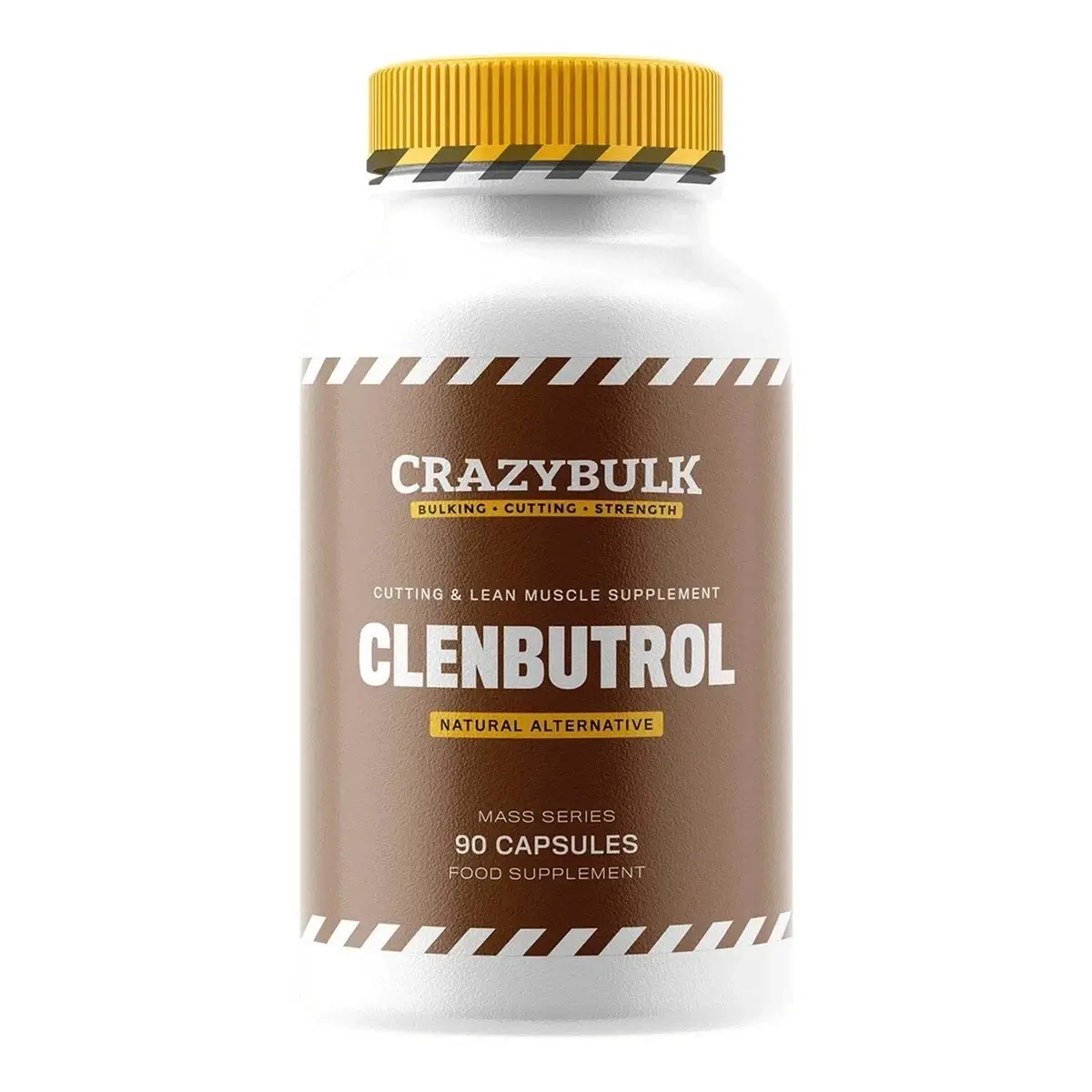
Clenbutrol — CrazyBulk
Thermogenic supplement · 4 capsules daily · £49.99 per month
- No banned ingredients listed — and no beta-2 agonist to detect
- Legal to buy, possess and use in the UK
- Every dose printed on the label, from a company with a published address
- 60-day money-back guarantee
- Contains 200 mg caffeine, a real stimulant dose with its own cautions
- Won’t replicate clenbuterol, and works alongside a deficit rather than instead of one
FAQ
Is clenbuterol banned by WADA?
Yes — under Section 1.2 of the Prohibited List as an anabolic agent, and it’s a non-specified substance prohibited at all times, in and out of competition.
How long is a ban for clenbuterol in the UK?
Published UKAD cases show three and four years. The starting point for a non-specified substance is four; prompt admission has reduced that to three in several cases.
Can you be banned without failing a test?
Yes. Use and possession are violations in their own right — one British triathlete was banned for three years after tablets were found and he admitted use, with no positive sample involved.
Does the contaminated meat defence work?
Rarely. It requires evidence tying a specific exposure to a specific sample, and Alberto Contador lost two years and a Tour title despite tracing the meat to a supplier. No British case has succeeded on it.
What is the 5 ng/mL reporting level?
A threshold WADA introduced in 2019, below which a clenbuterol finding isn’t reported as an adverse analytical finding — brought in because dietary residues were producing positives in athletes who had taken nothing.
Can a supplement cause a clenbuterol positive?
Contamination is a documented route to a violation, and one UKAD case involved a player who attributed his finding to a supplement. He received three years. Batch-tested products are the only meaningful mitigation.
References
- LawInSport — British Triathlete Louis Walker receives three-year ban for possession and use of clenbuterol. https://www.lawinsport.com/topics/news/item/british-triathlete-louis-walker-receives-three-year-ban-for-possession-and-use-of-clenbuterol
- UK Anti-Doping — British Triathlete Louis Walker receives three-year ban for possession and use of clenbuterol. https://www.ukad.org.uk/news/british-triathlete-louis-walker-receives-three-year-ban-for-possession-and-use-of-clenbuterol
- UK Anti-Doping — Triathlete Louis Walker receives additional 18-month ban from sport. https://www.ukad.org.uk/news/triathlete-louis-walker-receives-additional-18-month-ban-sport
- The Scotsman — GB sprinter Levine lands four-year ban for doping. https://www.pressreader.com/uk/the-scotsman/20181121/282308206146020
- UK Anti-Doping — Rugby League player Ryan Snowden banned for three years for Anti-Doping Rule Violation. https://www.ukad.org.uk/news/rugby-league-player-ryan-snowden-banned-three-years-anti-doping-rule-violation
- WADA — response on clenbuterol cases and the minimum reporting level. https://www.wada-ama.org/en/news/wada-responds-questions-received-new-york-times-related-clenbuterol-cases-involving-chinese
- Solheim SA, et al. Single-dose administration of clenbuterol is detectable in dried blood spots. Drug Testing and Analysis, 2020. https://analyticalsciencejournals.onlinelibrary.wiley.com/doi/abs/10.1002/dta.2872
- The Misuse of Drugs Act 1971 (Modification) Order 1996, SI 1996/1300 — legislation.gov.uk. https://www.legislation.gov.uk/uksi/1996/1300/made
All case details are drawn from decisions and announcements published by UK Anti-Doping and from contemporaneous reporting. This article is for information only and is not legal advice — athletes facing an anti-doping charge should seek specialist representation. It does not provide dosing information and is not a guide to evading testing.

Tanveer Quraishi, author of Steroids 101 has extensive experience in the field of bodybuilding and has been writing online on various muscle-building and other health topics for many years now. He is not just interested in bodybuilding but is a great football player too. When he is not writing for his site or training at the gym, he loves to spend his time with this wife and kids.