Clenbuterol Side Effects: The Cardiovascular Ones Matter Most
What are the side effects of clenbuterol? The ones people notice are tremor, palpitations, insomnia, headaches, sweating and muscle cramps. The ones that put people in hospital are cardiac: the published case reports describe supraventricular tachycardia, atrial fibrillation, raised troponin, myocardial infarction with clean coronary arteries, and severely low potassium. Because clenbuterol has an unusually long half-life, all of it lasts days rather than hours — and the cramps most users blame on taurine are more plausibly explained by the low potassium the drug itself causes.
The side-effect list you’ll find on most pages reads like a caffeine warning: jitters, sweating, trouble sleeping. All true, and all beside the point.
The published clinical literature on clenbuterol is not a list of inconveniences. It’s a run of case reports from cardiac intensive care units, and that gap between what people expect and what actually lands them in hospital is what this article is about.
What the Case Reports Actually Describe
This is the part almost no article about clenbuterol includes, and it’s the most informative material available. These aren’t hypothetical risks — they’re published, peer-reviewed accounts of what happened to specific people.
A systematic review searching the literature from 1990 to 2021 pulled together 23 studies covering 24 athletes with adverse events. The reported complications included supraventricular tachycardia, atrial fibrillation, hypotension, chest pain, myocardial injury, myocarditis, myocardial ischaemia, myocardial infarction, cardiomyopathy, hyperglycaemia — and death.
The review’s own conclusion is the line worth keeping: cardiac complications were the most commonly occurring adverse events. Not tremor, not insomnia. The heart.
Why the Heart Is the Target
The reason isn’t bad luck or contamination. It’s the mechanism working exactly as it should.
Clenbuterol is a beta-2 adrenergic agonist. Beta-2 receptors sit in airway smooth muscle, which is why it works as a bronchodilator — but they also sit in cardiac tissue, and the drug doesn’t distinguish.
So the same receptor activity that produces the metabolic effect also raises heart rate, increases the force of contraction, and creates conditions for arrhythmia. Users describe it as feeling “wired”; a cardiologist would call it sustained sympathetic stimulation.
Which leads to the point that matters most for anyone weighing this up: the fat-loss effect and the cardiac effect are the same effect. There is no dose that activates one without the other, and no supplement stack that filters it. The mechanistic detail is covered in our clenbuterol vs Clenbutrol comparison.
The Potassium Problem — and What It Explains
One finding recurs in nearly every published case, and it ties several loose threads together.
Beta-2 agonists drive potassium from the bloodstream into cells. The result is hypokalaemia — low blood potassium — and the case reports document levels far below the normal range, with 2.0 mmol/L in one instance.
That number is not a mild abnormality. Potassium at that level warrants urgent correction, because potassium is what makes cardiac muscle fire in a coordinated rhythm.
So the low potassium and the arrhythmias in these cases aren’t two separate problems. One drives the other, which is why the standard treatment is intravenous fluids, a beta-blocker and potassium replacement.
Which brings us to cramps
Gym forums have a settled answer to clenbuterol cramps: it depletes taurine, so take taurine. That explanation has been repeated for two decades and it isn’t the best-supported one.
This matters practically rather than academically. If your cramps are potassium-driven, taurine won’t fix them — and the underlying electrolyte disturbance that’s causing them is the same one that destabilises heart rhythm.
Treating a symptom of hypokalaemia with a supplement, while leaving the hypokalaemia in place, is a bad trade. Cramps are worth taking seriously precisely because of what they may be signalling.
The Full Side-Effect Picture
| Effect | Reverses? | Detail |
|---|---|---|
| Tremor and shaking | Yes | Beta-2 activity in skeletal muscle; typically the first thing users notice |
| Palpitations and raised heart rate | Yes | Persistent while the drug is active — which means days, not hours |
| Insomnia | Yes | Long half-life means timing the dose doesn’t rescue sleep the way it does with caffeine |
| Muscle cramps | Yes | Plausibly hypokalaemia rather than taurine depletion — worth investigating rather than supplementing |
| Low potassium (hypokalaemia) | With treatment | Documented as low as 2.0 mmol/L; drives arrhythmia risk |
| Raised blood glucose | Usually | Hyperglycaemia appears alongside hypokalaemia in most reported cases |
| Anxiety and agitation | Yes | Sympathetic stimulation; severe toxicity has presented with psychosis |
| Atrial fibrillation / SVT | Often, with treatment | Among the most frequently reported serious events |
| Myocardial injury or infarction | May not | Documented with normal coronary arteries; heart muscle damage can persist |
| Cardiomyopathy | May not | Reported in the systematic review of athlete cases |
The pattern is the same one that runs through this whole category. The effects you can feel are mostly the ones that resolve; the effects you can’t feel are the ones that may not.
Why the Half-Life Makes All of This Worse
Clenbuterol was designed as a long-acting bronchodilator, and that design decision shapes the entire risk profile.
With a half-life measured in tens of hours rather than a few, effects don’t wear off across an evening. Tremor, insomnia and elevated heart rate persist for days, which is why users often describe symptoms that seem out of proportion to a single dose.
It also creates the accumulation problem. Taking another dose while the previous one is still substantially present stacks the effect rather than replacing it — and stacking is precisely how the overdose cases in the literature happened.
The Veterinary Formulation Problem
One of the published overdose cases involved a man who took ten times the amount he intended, from a syrup called Ventipulmin — a veterinary bronchodilator formulated for horses [3].
That detail explains a whole category of harm, and it follows directly from the legal position. Clenbuterol has no human licence in the UK, so nothing in circulation was designed for a person to measure out.
What that means in practice
Veterinary products are concentrated for animals weighing several hundred kilograms. A dose that’s routine for a horse is an enormous one for a person, and the difference between the two is a matter of a few millilitres.
Liquids make this worse than tablets. Measuring a fraction of a millilitre accurately requires equipment most people don’t own, and an error of one decimal place is exactly the tenfold overdose that put the man in the case report into hospital.
There’s no human packaging either — no patient information leaflet, no warnings written for people, no child-resistant closure designed with a household in mind.
And the tablets aren’t safer for a different reason
Products sold as clenbuterol tablets come from unlicensed manufacturing with no regulatory oversight, so the labelled amount is a claim rather than a measurement. The MHRA’s position on unlicensed medicines is that there’s no guarantee of quality or safety [8].
Which produces an unusual situation: with a long-half-life drug where accumulation is the main overdose mechanism, you cannot know the size of the dose you’re accumulating.
⚠️ When to seek emergency care
If you have taken clenbuterol and experience any of the following, treat it as an emergency rather than something to wait out:
- Chest pain, tightness or pressure
- A heart rate that stays fast at rest, or a rhythm that feels irregular
- Fainting, near-fainting or severe dizziness
- Shortness of breath at rest
- Severe or widespread muscle cramping with weakness
- Confusion, agitation or seizure
Tell them what you’ve taken. Clenbuterol doesn’t appear on a standard toxicology screen — in one published case the initial screen came back negative and the drug was only identified later. Saying so directly changes what clinicians test for and how quickly they treat you. Possession for personal use is not a criminal offence in the UK, and NHS staff are there to treat you rather than report you.
Drug Interactions Worth Knowing About
This is almost entirely absent from other pages on the subject, and it’s the section most likely to matter to a specific reader.
Clenbuterol is a sympathomimetic that lowers blood potassium. Both of those properties interact with common medications, and some of the combinations are more consequential than the drug alone.
Medications that also lower potassium
Diuretics — including the thiazides widely prescribed for blood pressure — can reduce potassium, and so can some laxatives and corticosteroids. Adding a beta-2 agonist to any of them compounds an effect that already drives arrhythmia risk.
Digoxin deserves specific mention. Its toxicity increases when potassium falls, which makes low potassium considerably more dangerous in anyone taking it.
Other stimulants and beta-agonists
Asthma inhalers are beta-2 agonists too. Salbutamol and clenbuterol act on the same receptors, so using both means stacking the same cardiac and potassium effects rather than adding separate ones.
The same logic applies to caffeine-heavy pre-workouts, ephedrine-containing products and prescribed stimulants such as ADHD medication — all of them push in the same direction on heart rate and blood pressure.
Beta-blockers
Worth understanding rather than acting on: beta-blockers are what clinicians use to treat clenbuterol toxicity, which tells you the two work against each other. Anyone prescribed a beta-blocker is taking something for a cardiac or blood pressure reason, and a beta-agonist opposes the medication’s purpose.
Thyroid medication
Levothyroxine and clenbuterol both increase metabolic rate and heart rate. Combining them — which some fat-loss protocols encourage — layers two cardiac stimuli, and thyrotoxicosis appears in the clinical literature as a differential diagnosis for clenbuterol toxicity precisely because the presentations overlap.
Antidepressants and heart-rhythm medication
Tricyclic antidepressants and MAOIs can amplify sympathomimetic effects. Medications that affect cardiac conduction — several antiarrhythmics and some antipsychotics — are worth flagging to a doctor given the arrhythmia risk described above.
None of this is a complete list, and it isn’t a guide to what’s safe to combine. If you take any regular medication, that’s a conversation with a pharmacist or GP — both of whom can check interactions properly, and neither of whom is there to report you.
What About Long-Term Use?
Honest answer: the evidence base is thinner here than for acute toxicity, because the literature is built from emergency presentations rather than from cohorts of long-term users.
What can be said is that the systematic review of athlete cases includes cardiomyopathy and myocarditis — structural changes to heart muscle rather than temporary rhythm disturbances. Those are the findings that don’t reliably resolve when the drug stops.
The cardiac hypertrophy question is worth flagging with appropriate caution. Animal research has consistently shown clenbuterol produces heart muscle enlargement, and the human case literature includes cardiomyopathy — but the long-term human data is limited, and anyone stating a precise risk figure is going beyond what the evidence supports.
What that uncertainty means practically: nobody can tell you your personal risk, and the absence of long-term data is not the same as evidence of long-term safety.
Two related points sit elsewhere in this guide: the cardiac risk profile differs for women in ways the evidence supports, covered in what actually happens to women — and if you compete, the sanctions are covered in our look at UKAD cases and bans.
The Contaminated Meat Story
Here’s the part of clenbuterol’s history that makes the toxicity argument better than any warning could: it has poisoned large numbers of people who never chose to take it.
Clenbuterol was used illegally as a livestock growth promoter, because the same repartitioning effect that interests bodybuilders produces leaner meat. It has been banned in food animals in the United States since 1991 and in the European Union since 1996 [9].
Where the ban isn’t enforced, residues end up in the food chain — and in people.
In China, hundreds fell ill after eating pork containing clenbuterol or closely related compounds, with one incident in Hunan province sending 286 people to seek medical help [10].
The reported symptoms in those consumers are the same list from the case reports above: increased heart rate, muscle tremors, headaches, nausea, fever and chills. In most cases the effects were temporary.
That’s the argument this section exists to make. These were people eating a meal, exposed to residue amounts rather than a deliberate dose — and residue amounts were enough to produce symptoms in hundreds of them.
How seriously the sporting world takes it
Two facts capture it. Ahead of the 2012 London Olympics, China’s General Administration of Sport issued an urgent notice banning national team athletes from eating meat when dining out.
And in 2019, WADA introduced a minimum reporting level of 5 ng/mL for clenbuterol specifically to deal with the scale of meat contamination — an anti-doping rule written around a food safety problem [11].
Athletes Who Tested Positive — and What Happened
The contamination story runs directly into the doping story, because the two are frequently the same event seen from different angles.
Alberto Contador
The best-known case. The three-time Tour de France winner tested positive for clenbuterol during the 2010 Tour, at a concentration reported as around forty times below the minimum standard required for a violation [9].
He argued the source was a contaminated steak eaten on a rest day. The Court of Arbitration for Sport rejected the explanation, imposed a two-year ban and stripped him of the 2010 title.
The detail worth noting: he traced the meat to a specific supplier, and the defence still failed. Under strict liability, an athlete is responsible for what’s in their sample regardless of how it got there.
The 2011 Under-17 World Cup
More than a hundred players tested positive at a single tournament in Mexico. Investigators found clenbuterol in 30% of meat samples from the restaurants catering the event, and in 52% of a non-athlete control group.
No sanctions followed, because the contamination explanation was overwhelming at that scale. It also demonstrated how routine exposure had become in the food supply.
Dimitrij Ovtcharov
The German table tennis player was cleared by his national federation after a positive test he attributed to meat eaten during a trip to China — though WADA challenged that ruling, which illustrates how contested these cases become.
Louis Walker
Closer to home, and a different kind of case. The British triathlete received a three-year ban in 2023 for possession and use of clenbuterol after being found with a blister pack of tablets — covered in our UK legality guide.
Note what separates it from the others: physical possession removes the contamination defence entirely. And possession, which isn’t a criminal offence in the UK, was still an anti-doping violation.
What this means if you compete
Clenbuterol is prohibited at all times under the WADA list, in and out of competition. Strict liability means the burden of explaining a positive falls on you, and the Contador case shows that even a traceable, plausible contamination account may not be enough.
If You’re Using: What to Get Checked
This section exists because some readers will already be using, and telling them only “don’t” helps nobody.
An ECG. The single most relevant test given what the case literature describes — it shows rhythm disturbances and signs of cardiac strain that you cannot feel reliably.
Electrolytes, particularly potassium. A simple blood test, and the one most likely to return something actionable given how consistently hypokalaemia appears in these cases.
Blood pressure, with a cuff rather than a guess. Sustained elevation is invisible without measuring it.
Blood glucose. Hyperglycaemia appears alongside hypokalaemia in most reported presentations.
And tell your GP what you’ve taken. Withholding it mostly wastes the appointment, since the clinician ends up investigating symptoms without the piece of information that explains them.
Clenbuterol and Women
Clenbuterol has been marketed to women for two decades through celebrity-adjacent coverage — the “size zero pill” framing that appears whenever a public figure loses weight quickly. That framing has consequences worth stating plainly.
The risk doesn’t change by sex
Unlike anabolic steroids, clenbuterol isn’t androgenic, so it doesn’t cause virilisation — the voice deepening and other changes that dominate the discussion of steroids in women.
That absence gets read as relative safety, and it isn’t. The cardiac risk described throughout this article is receptor-driven, and beta-2 receptors don’t behave differently according to sex.
If anything, lower average body mass means a given amount represents a larger dose per kilogram — and with an unverifiable product, that’s a variable nobody can calculate.
Where this overlaps with something more serious
A meaningful share of the people searching for this compound aren’t athletes. They’re women looking for rapid weight loss, sometimes in the context of a difficult relationship with eating.
If that’s closer to your situation than a training goal, the honest thing to say is that a beta-2 agonist is a poor answer to it — and that the electrolyte disturbances described above are considerably more dangerous in someone who is already eating little or purging.
Support exists and it’s free. Beat, the UK’s eating disorder charity, runs a helpline on 0808 801 0677, and a GP appointment is a legitimate route regardless of how you feel about explaining it.
Pregnancy and breastfeeding
Not established as safe, and not something to take a view on independently. This applies equally to stimulant-based legal supplements, which is why the caffeine-containing alternatives on this site carry the same caution.
The Legal Alternative
Given that there’s no lawful way to buy clenbuterol in the UK and the cardiac profile above, the practical question for most readers is what’s actually available.
Clenbutrol from CrazyBulk is the best-known legal option, and the honest framing matters. It’s a food supplement containing no beta-2 agonist — so it doesn’t carry the receptor-driven cardiac risk this article describes, and it also won’t do what clenbuterol does.
What it contains is a thermogenic formula led by 200 mg of caffeine. That’s a real dose with its own stimulant cautions, and it’s a different order of magnitude from the compound above.
The Legal Alternative: Clenbutrol
A food supplement, not a drug — with expectations set by this article rather than the marketing.
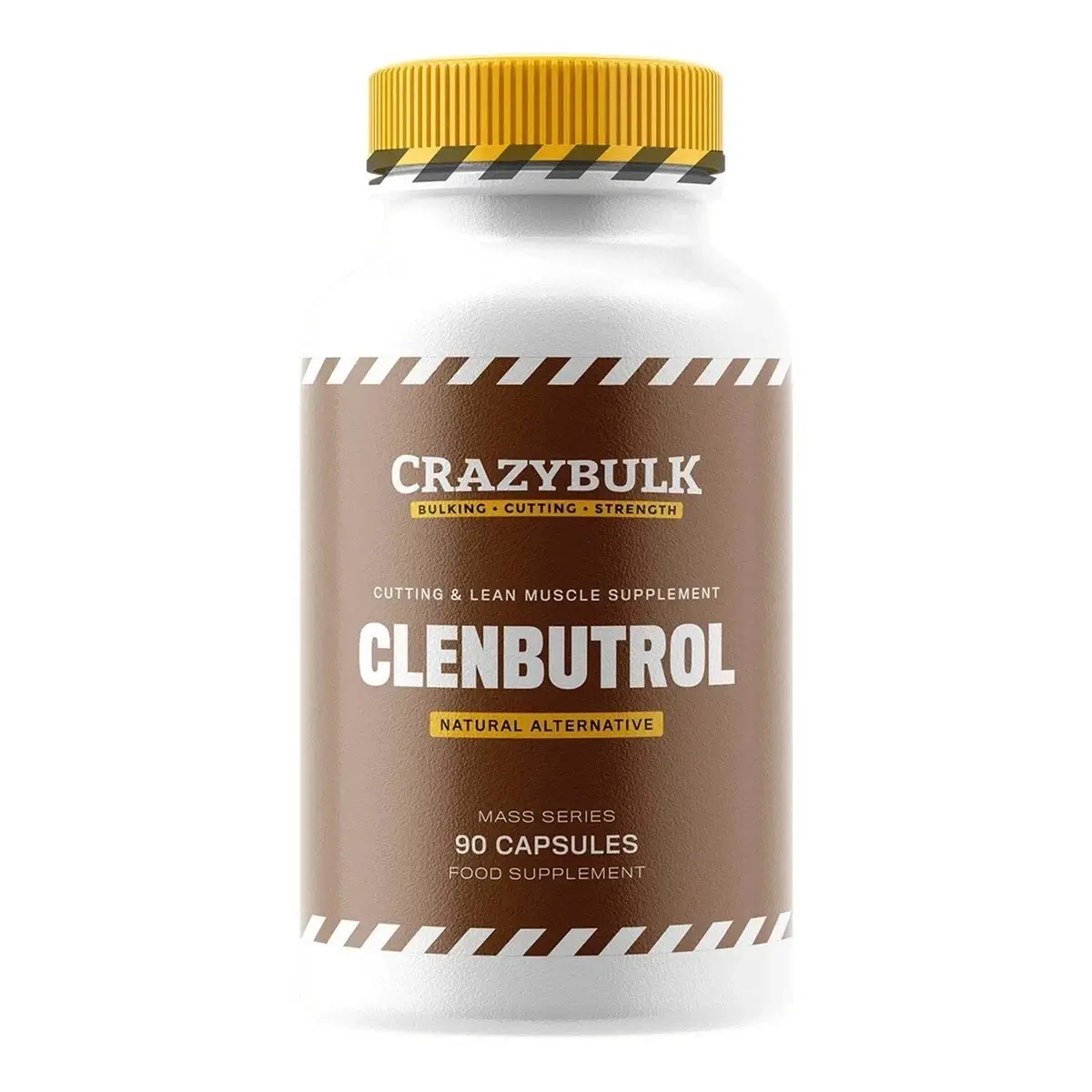
Clenbutrol — CrazyBulk
Thermogenic supplement · 4 capsules daily · £49.99 per month
- No beta-2 agonist — so none of the receptor-driven cardiac risk described above
- Legal to buy, possess and use in the UK
- Every dose disclosed on the label, from a traceable manufacturer
- 60-day money-back guarantee
- Contains 200 mg caffeine — a real stimulant dose with its own cautions
- Will not replicate clenbuterol, and works alongside a calorie deficit rather than instead of one
FAQ
Can clenbuterol cause permanent heart damage?
The published literature includes myocardial infarction, myocarditis and cardiomyopathy — conditions that can leave lasting damage to heart muscle. Rhythm disturbances often resolve with treatment; structural injury is the category that may not.
Why does clenbuterol cause cramps?
The most plausible explanation is hypokalaemia — beta-2 agonists shift potassium into cells, and low blood potassium is a well-established cause of cramping. The taurine explanation circulating in gym forums has considerably weaker support.
Does taurine stop clenbuterol cramps?
It’s widely recommended and thinly evidenced. If the underlying cause is low potassium, taurine addresses a symptom while leaving the electrolyte problem — and that same problem is what raises arrhythmia risk.
How long do clenbuterol side effects last?
Longer than most people expect, because of the long half-life — tremor, raised heart rate and insomnia commonly persist for days rather than hours after a dose.
Is clenbuterol dangerous at low doses?
The reported cases span a wide range of amounts, and because there’s no regulated UK supply you can’t verify what a given tablet actually contains. “Low dose” of an unverified product isn’t a meaningful safety category.
Will clenbuterol show up on a drug test?
Not on a standard hospital toxicology screen — in one published case the screen was negative and clenbuterol was identified only by later analysis. In tested sport it’s a different story: it’s prohibited at all times and detectable for a long window.
References
- Case report and review of clenbuterol cardiac toxicity. Journal of Cardiology Cases, 2013. https://www.sciencedirect.com/science/article/pii/S1878540913001011
- Clenbuterol toxicity: an emerging epidemic. A case report and review. PubMed. https://pubmed.ncbi.nlm.nih.gov/17393901/
- Acute clenbuterol overdose resulting in supraventricular tachycardia and atrial fibrillation. PubMed. https://pubmed.ncbi.nlm.nih.gov/18072161/
- Unsuspected clenbuterol toxicity in a patient using intramuscular testosterone. Clin Pract Cases Emerg Med. 2017. https://pubmed.ncbi.nlm.nih.gov/29849287/
- The Misuse of Drugs Act 1971 (Modification) Order 1996, SI 1996/1300 — legislation.gov.uk. https://www.legislation.gov.uk/uksi/1996/1300/made
- NHS — Anabolic steroid misuse. https://www.nhs.uk/conditions/anabolic-steroid-misuse/
- UK Anti-Doping — British triathlete receives three-year ban for possession and use of clenbuterol. https://www.ukad.org.uk/news/british-triathlete-louis-walker-receives-three-year-ban-for-possession-and-use-of-clenbuterol
- Medicines and Healthcare products Regulatory Agency (MHRA) — GOV.UK. https://www.gov.uk/government/organisations/medicines-and-healthcare-products-regulatory-agency
This article is for information and harm-awareness. It does not provide dosing information, does not identify sellers or sources, and is not medical advice — if you are experiencing symptoms after taking anything described here, seek medical attention. NHS services treat these issues without judgement, and possession for personal use is not a criminal offence in the UK.

Tanveer Quraishi, author of Steroids 101 has extensive experience in the field of bodybuilding and has been writing online on various muscle-building and other health topics for many years now. He is not just interested in bodybuilding but is a great football player too. When he is not writing for his site or training at the gym, he loves to spend his time with this wife and kids.