Clenbuterol vs Clenbutrol: Drug vs Supplement (UK Guide)
Is Clenbutrol the same as clenbuterol? No — and they aren’t in the same category of product. Clenbuterol is a beta-2 adrenergic agonist, a Class C controlled drug never licensed for human use in the UK. Clenbutrol is a food supplement built around 200 mg of caffeine, cayenne and green tea, legal to buy and sold openly. The names differ by one letter and the pharmacology differs completely: one acts on beta-2 receptors and carries documented cardiac risks, the other is a thermogenic stimulant with modest, well-characterised effects.
Somebody in a marketing meeting removed a single letter, and it has been doing the heavy lifting ever since. The near-identical name invites you to assume a near-identical effect with the legal problem stripped out.
That isn’t what’s on offer. Here’s what each one actually is — mechanism, legal status, real effects — and why the comparison people want to make can’t be made.
The Category Error This Comparison Rests On
Most articles score these two against each other like rival fat burners — effectiveness, speed, side effects, winner. That framing is wrong before the first row of the table.
Clenbuterol is a sympathomimetic drug. It binds beta-2 adrenergic receptors, which is why it works as a bronchodilator in veterinary medicine and why its effects reach the heart as well as the lungs [1].
Clenbutrol contains no beta-2 agonist and nothing that acts on those receptors. Its ingredient panel is caffeine, cayenne, green tea extract, L-tyrosine and a handful of vitamins and minerals.
So asking which is better is a bit like asking whether a prescription bronchodilator or a strong coffee is the better choice. They aren’t in the same category, and any page treating them as equivalent has misled you before you reach its recommendation.
What Each One Actually Is
Clenbuterol (the drug)
A long-acting beta-2 adrenergic agonist, licensed in the UK only for veterinary use — it’s the active ingredient in medicines for respiratory conditions in cattle and horses. It has never been licensed for human use here.
Its reputation in fitness comes from genuine effects: it increases metabolic rate and has been shown to have anabolic and lipolytic properties in animal studies. It also has a long elimination half-life, so effects and detectability persist well beyond the point most users expect.
Legally it’s a Class C controlled drug, added by the Misuse of Drugs Act 1971 (Modification) Order 1996 [2]. Possession for personal use isn’t an offence; supply and postal importation are.
Clenbutrol (the supplement)
A capsule-form thermogenic sold by CrazyBulk, taken four capsules a day, roughly half an hour before training. It’s a food supplement — legal to buy, sell and possess in the UK, with no prescription required and no controlled substance in it.
Credit where it’s due: every dose is printed on the label rather than hidden in a proprietary blend, which is rarer on the fat-burner shelf than it should be. The full breakdown is in our Clenbutrol review.
Its marketing claims to “replicate” or “mimic” clenbuterol. Read that precisely — mimicking an outcome is a different assertion from producing it by the same mechanism, and only the second would make a product a drug.
Side by Side
| Factor | Clenbuterol · the drug | Clenbutrol · the supplement |
|---|---|---|
| What it is | Beta-2 adrenergic agonist — a drug | Food supplement: caffeine, botanicals, vitamins |
| Mechanism | Binds beta-2 receptors in lung, muscle and cardiac tissue | Thermogenic and stimulant; no receptor-level action of that kind |
| UK legal status | Class C — supply and postal import are offences | Legal to buy, sell and possess |
| Available to buy? | No lawful route — veterinary licences only | Yes, from the official website |
| Cardiovascular effects | Tachycardia, palpitations, raised BP; cardiac events in overdose | Stimulant-related — caffeine at 200 mg raises heart rate modestly |
| Half-life | Long — effects and detectability persist for days | Caffeine’s, around 5 hours — but enough to disrupt sleep |
| Speed of effect | Noticeable quickly, with side effects arriving alongside | Training energy immediately; body composition over weeks |
| Product verification | Unverifiable — no regulated UK supply exists | Ingredient panel published; company traceable |
| Sport | Prohibited at all times (WADA); UKAD issues multi-year bans | No banned ingredients listed |
| Requires a calorie deficit? | Yes | Yes |
Read the last row before any of the others. Whatever else separates these two products, neither creates the calorie deficit that determines whether you lose fat — and that’s the variable doing most of the work in every result either one is credited with.
What Clenbuterol Does That Clenbutrol Can’t
It’s easy to say the two work differently. It’s more useful to be specific about what a beta-2 agonist actually does — because that’s simultaneously the list of things you’d be giving up and the list of risks you’d be avoiding.
Bronchodilation
Beta-2 receptors are concentrated in airway smooth muscle, and activating them relaxes it. That’s the effect clenbuterol was developed for, and the reason its UK licences are veterinary medicines for respiratory conditions in cattle and horses.
No thermogenic supplement does this, and none claims to. It’s the clearest single illustration that these two products aren’t operating in the same space.
A repartitioning effect documented in animal research
Clenbuterol’s bodybuilding reputation comes largely from animal studies showing increased lean mass alongside reduced fat — a “repartitioning” effect, which is why it was investigated as a livestock growth promoter in the first place.
Two honest caveats belong with that. The effect is far better documented in livestock than in humans, and the doses used in that research bear no relation to what a person could tolerate.
But the mechanism is real, and caffeine and cayenne don’t reproduce it. Whatever you make of the risk, the pharmacological difference here is genuine rather than rhetorical.
Cardiac effects — the part that isn’t optional
Beta-2 receptors also sit in cardiac tissue, which is why the same activation that opens airways raises heart rate and can produce palpitations, tremor and arrhythmias.
This is the structural point worth carrying away: the fat-loss effect and the cardiac effect come from the same receptor activity. You cannot select one without the other, which is precisely the position a stimulant-based supplement isn’t in.
What Clenbutrol does instead
Caffeine raises energy expenditure and improves training performance through adenosine antagonism — an entirely different pathway. Capsaicinoids and catechins add a modest thermogenic effect on top of it.
Those mechanisms are real and well studied. They are also, in effect size, a different order of magnitude — which is the honest one-line summary of this whole comparison.
The Half-Life Difference (and Why It Explains So Much)
One number accounts for a surprising amount of what people report about these two products, and it almost never appears in comparisons.
Half-life figures are typical ranges reported in the literature. Individual clearance varies considerably with genetics, liver function and other medications.
Why it matters more than it sounds
It explains the side effects people describe. Users report tremor, insomnia and a racing heart persisting for days rather than hours on clenbuterol. That isn’t unusual sensitivity — it’s the compound still being present. A stimulant with a five-hour half-life cannot do that.
It explains the mistake people make. With a long half-life, a dose taken while the previous one is still active stacks rather than replaces. That accumulation is the mechanism behind a meaningful share of the overdose cases in the clinical literature.
It explains the drug-testing problem. Detection windows extend well beyond the point at which any effect has worn off, which is why athletes test positive long after they believe a substance has cleared. Our UK legality guide covers the anti-doping side, including a British case that turned on exactly this.
And it explains why the supplement advice is so mundane. Caffeine’s shorter half-life is the reason the useful guidance for Clenbutrol is simply “take it early in the day” — a timing inconvenience rather than a pharmacological trap.
What’s Actually In Clenbutrol
The formula is worth seeing in full, because it settles the “is it the same thing” question faster than any amount of argument.
| Ingredient | Dose | Evidence |
|---|---|---|
| Caffeine anhydrous | 200 mg | Strong — the main active |
| Cayenne (capsicum) | 800 mg | Moderate |
| Green tea extract | 76 mg | Moderate |
| L-Tyrosine | 500 mg | Moderate |
| Vitamin C, B3, chromium, iodine | Various | Nutritional |
| InnoSlim, green coffee, black pepper | Small | Limited |
Nothing on that list acts on a beta-2 receptor. The formula is a caffeine-and-catechin thermogenic with cayenne — a well-established combination with genuine but modest research support.
The meta-analysis position is that catechin-caffeine mixtures raise 24-hour energy expenditure by roughly 4–5% [3]. On a 2,500-calorie maintenance that’s around 100–125 calories a day — real over months, invisible over a week.
Caffeine at 200 mg is also a legitimate ergogenic dose with strong evidence for training performance [4]. In a deficit, when sessions feel heavy, that’s arguably the most useful thing in the bottle.
Reading the Marketing Honestly
Three phrases recur across every page about this product, and each needs translating.
“Replicates the effects of clenbuterol.” A claim about resembling an outcome, not about mechanism. Nothing legal reproduces a beta-2 agonist’s activity, because a product that did would be regulated as a drug.
“Legal clen.” A contradiction. Clenbuterol is controlled; the products marketed this way are food supplements, which is exactly why they’re legal and exactly why they don’t perform like the drug.
“Powerful thermogenic.” This one is closest to true, with the caveat that “powerful” in supplement copy and “4–5% more daily energy expenditure” in a meta-analysis are describing the same thing at very different volumes.
Why a Supplement Can Legally Be Called Clenbutrol
The obvious question, once you’ve accepted the two products aren’t the same: how is a company allowed to sell something named one letter from a controlled drug?
The answer sits in how UK regulation actually works, and it’s more interesting than “loophole”.
The name itself isn’t the regulated thing
Trade mark law protects brand names, but “clenbuterol” is an International Nonproprietary Name — a generic scientific term for the molecule, not anyone’s brand. Nobody owns it, so nobody has standing to object to a similar-sounding trade mark on that basis alone.
What that means practically is that the naming is a marketing decision rather than a legal permission. It’s unchallenged, not approved.
What actually decides whether something is a medicine
Here’s the part that matters, and the part competing articles miss entirely. Under UK medicines regulation, whether a product counts as a medicinal product doesn’t turn on what’s in it.
It turns on two tests. Whether it is presented as having properties for treating or preventing disease, and whether it functions that way by exerting a pharmacological, immunological or metabolic action [10].
Either test alone is enough. A product can be classed as a medicine on its claims even where its ingredients are innocuous, and on its function even where it makes no claims at all.
Which is exactly why the “replicates clenbuterol” claim has a ceiling
Follow that logic through and the marketing constrains itself. If a supplement genuinely produced clenbuterol’s pharmacological action, it would fail the function test and be a medicine — unlicensed, and unlawful to sell as a food supplement.
And if it claimed too explicitly to treat or prevent anything, it would fail the presentation test and land in the same place regardless of what was in the capsule.
So the phrasing you see everywhere — “mimics the effects of”, “alternative to”, “legal alternative” — isn’t accidental vagueness. It’s the wording that keeps a product on the food-supplement side of a line the MHRA polices case by case.
And the advertising rules add a second constraint
Separately from medicines law, the ASA enforces the CAP Code on supplement advertising. Claims about weight loss, body composition and health need substantiation, and comparisons to prescription drugs attract particular scrutiny.
The practical takeaway for a reader: the more dramatic a supplement’s promise sounds, the more likely it is that the promise has been engineered to be technically defensible rather than literally true. “Mimics the effects of” is doing a great deal of quiet work in that sentence.
The Risk Comparison People Actually Need
Set aside effectiveness, since the answer there is obvious and unhelpful. The useful comparison is what each option costs you.
Cardiovascular. Clenbuterol’s documented effects include tachycardia, arrhythmias, palpitations and tremor, with overdose cases in the literature requiring hospital treatment for cardiac symptoms. Clenbutrol’s cardiovascular consideration is 200 mg of caffeine — meaningful if you’re sensitive or hypertensive, and in a different order of magnitude.
The cardiac side of that comparison is covered properly in our breakdown of what the drug does to the heart, and the practical detection question in how long it stays in your system.
Legal. Buying clenbuterol means someone commits a supply offence, and if it arrives by post, an importation offence. Buying Clenbutrol is a card transaction.
Certainty about the product. With no lawful UK supply, anything sold as clenbuterol is unverifiable for identity, dose and contamination. Clenbutrol’s panel is printed on the bottle.
Sport. Clenbuterol is prohibited at all times under the WADA list and UKAD has issued multi-year bans. Clenbutrol lists no banned ingredients — though anyone tested competitively should verify any supplement against a batch-testing scheme rather than a label claim.
Who Each One Is Actually For
Nobody, in the case of clenbuterol, on this site’s reading. Not primarily because of the law — possession isn’t an offence — but because the cardiac risk profile is real, the product is unverifiable, and the fat loss still requires the deficit you’d have to create anyway.
Clenbutrol suits a narrower reader than its marketing implies. Someone already in a deficit, training consistently, who wants a legal thermogenic with disclosed doses that also improves how sessions feel.
And it makes no sense for two groups. Anyone expecting drug-like results, who will be disappointed. And anyone whose diet isn’t yet in a deficit, for whom the £49.99 is better spent on food.
Where We Land on Clenbutrol
A food supplement, not a drug — with expectations set by this article rather than the marketing.
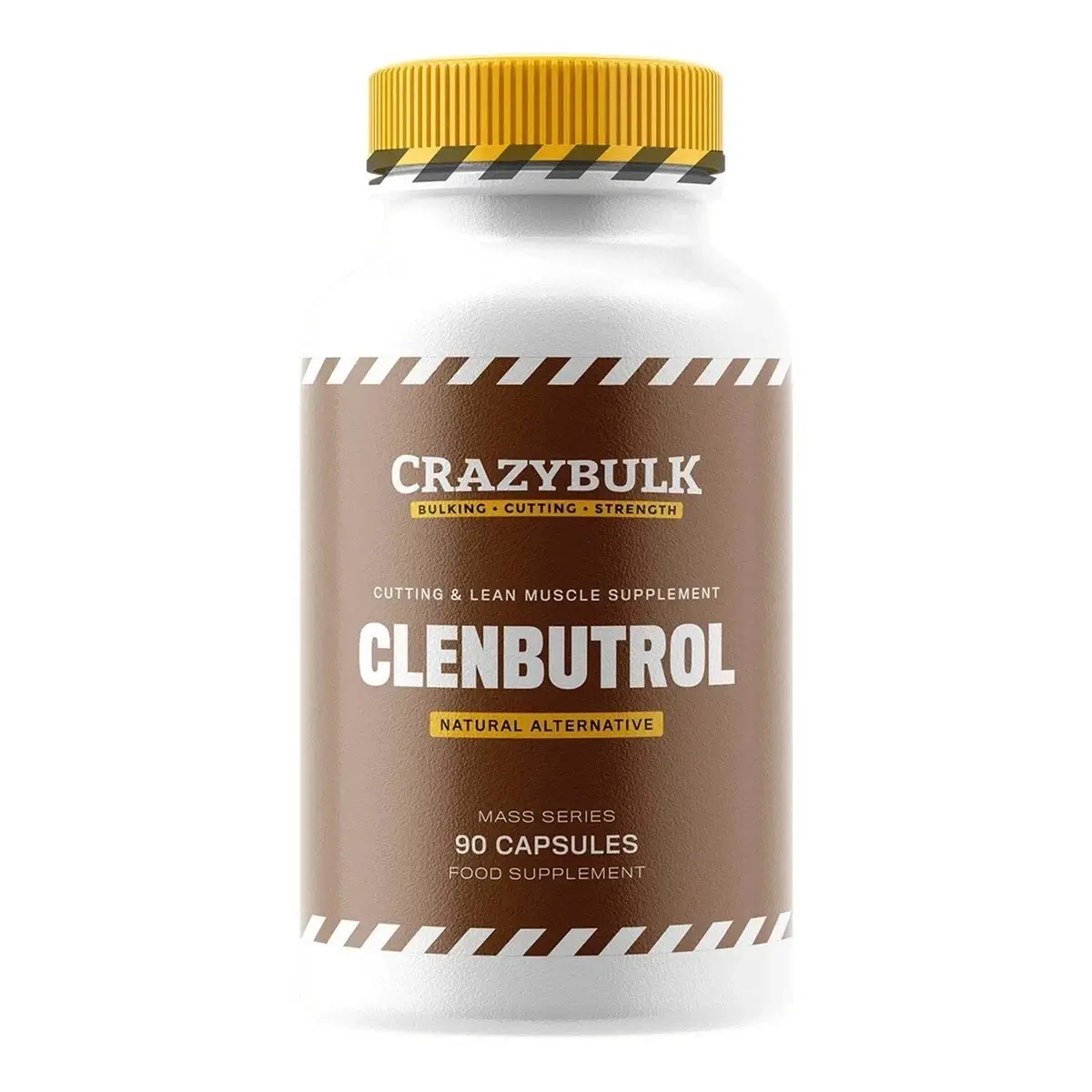
Clenbutrol — CrazyBulk
Thermogenic supplement · 4 capsules daily · £49.99 per month
- Legal to buy, possess and use in the UK — no supply or importation offence involved
- Every dose disclosed on the label, from a company with a published address
- 200 mg caffeine is a real ergogenic dose, and the cayenne is generous rather than token
- 60-day money-back guarantee
- Contains no beta-2 agonist and will not replicate clenbuterol
FAQ
Is Clenbutrol the same as clenbuterol?
No. Clenbuterol is a beta-2 adrenergic agonist and a Class C controlled drug; Clenbutrol is a caffeine-led food supplement containing no beta-2 agonist. The names are similar by design; the pharmacology isn’t.
Is Clenbutrol as effective as clenbuterol?
No, and it isn’t designed to be. Any page claiming equivalence is describing marketing rather than mechanism — a product that genuinely replicated a controlled drug’s effects would itself be regulated as one.
Does Clenbutrol actually work?
It works in the way a well-dosed thermogenic works: a modest increase in daily energy expenditure, plus a genuine improvement in training energy from the caffeine. It supports a calorie deficit rather than replacing one.
Is Clenbutrol legal in the UK?
Yes — it’s a food supplement, legal to buy, sell and possess. Clenbuterol’s position is more complicated and is covered in our UK legality guide.
Will Clenbutrol show up on a drug test?
It lists no banned substances, so it shouldn’t — but anyone competing under anti-doping rules should verify any supplement through a batch-testing scheme rather than relying on a label claim, since contamination risk is a supplement-industry issue rather than a product-specific one.
Can you take Clenbutrol and clenbuterol together?
There’s no sense in it. You’d be adding 200 mg of caffeine to a compound that already raises heart rate and blood pressure, which increases the cardiovascular load without adding anything meaningful.
References
- Clenbuterol toxicity: a NSW Poisons Information Centre experience / clinical reviews of beta-2 agonist toxicity. PubMed. https://pubmed.ncbi.nlm.nih.gov/30251330/
- The Misuse of Drugs Act 1971 (Modification) Order 1996, SI 1996/1300 — legislation.gov.uk. https://www.legislation.gov.uk/uksi/1996/1300/made
- Hursel R, Viechtbauer W, Dulloo AG, et al. The effects of catechin rich teas and caffeine on energy expenditure and fat oxidation: a meta-analysis. Obes Rev. 2011;12(7):e573–581. https://pubmed.ncbi.nlm.nih.gov/21366839/
- Guest NS, et al. International Society of Sports Nutrition position stand: caffeine and exercise performance. J Int Soc Sports Nutr. 2021;18:1. https://jissn.biomedcentral.com/articles/10.1186/s12970-020-00383-4
- Misuse of Drugs Regulations 2001, Schedule 4 — legislation.gov.uk. https://www.legislation.gov.uk/uksi/2001/3998/schedule/4
- Drugs penalties — GOV.UK. https://www.gov.uk/penalties-drug-possession-dealing
- UK Anti-Doping — British triathlete receives three-year ban for possession and use of clenbuterol. https://www.ukad.org.uk/news/british-triathlete-louis-walker-receives-three-year-ban-for-possession-and-use-of-clenbuterol
- Medicines and Healthcare products Regulatory Agency (MHRA) — GOV.UK. https://www.gov.uk/government/organisations/medicines-and-healthcare-products-regulatory-agency
- CrazyBulk UK — Clenbutrol supplement facts panel. https://crazybulk.co.uk/products/clenbutrol
This article is for information and harm-awareness. It does not identify sellers or sources, does not provide dosing information for controlled drugs, and is not legal or medical advice — if you’re worried about the health effects of anything you’ve taken, speak to your GP. NHS services treat these issues without judgement.

Tanveer Quraishi, author of Steroids 101 has extensive experience in the field of bodybuilding and has been writing online on various muscle-building and other health topics for many years now. He is not just interested in bodybuilding but is a great football player too. When he is not writing for his site or training at the gym, he loves to spend his time with this wife and kids.