Where to Buy Clenbuterol in the UK and Why Every Route Is a Problem
Where can you buy clenbuterol in the UK? Nowhere lawfully. It has never been licensed for human use here, so no pharmacy can dispense it and no retailer can legally sell it to you. Every route people actually use — an overseas website, a gym contact, a “UK-based” seller, social media, even a veterinary supply — involves someone committing a supply or importation offence, and none of them lets you verify what’s in the tablet. This article explains what’s wrong with each route rather than pointing you at any of them.
If you searched this hoping for a supplier, this page won’t provide one. But it’s worth understanding why the answer doesn’t exist rather than assuming we’re being cagey about it.
There is no lawful retail route to clenbuterol in this country — not one that’s hard to find, but none at all. What exists instead is a set of routes people use anyway, each with a distinct legal problem and a distinct practical one. Those are rarely the same problem, and that’s what this article is about.
Why There Is No Legal Route
Two separate bodies of law close the door, and it’s worth seeing them as distinct because they close it in different ways.
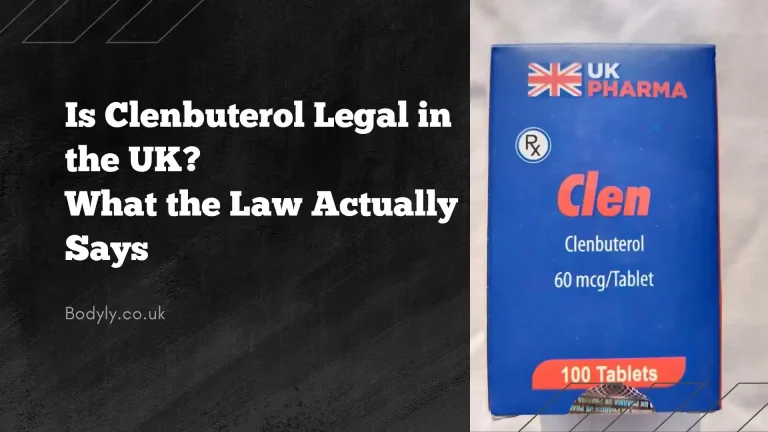
The first is drug control. Clenbuterol is a Class C controlled drug, added to the Misuse of Drugs Act 1971 by a 1996 Order that describes it as an adrenoceptor stimulant [1]. Supplying a Class C drug carries a maximum of 14 years’ imprisonment and an unlimited fine [2].
The second is medicines regulation. Clenbuterol is a prescription-only medicine with no UK human licence, so it isn’t authorised for sale here at all — which means a seller is breaching medicines law as well as the Misuse of Drugs Act.
Together those produce an odd situation. Possessing clenbuterol for personal use isn’t a criminal offence, but there’s no lawful way to acquire what you’re lawfully allowed to possess.
The Routes People Actually Use
Below is each route, what’s legally wrong with it, and what’s practically wrong with it.
1. An overseas website
By far the most common route, and the one with the clearest legal problem. Personal importation is lawful only in personal custody — carried by you, through customs — and a 2012 amendment specifically prohibited importation by post, courier or freight.
So a parcel arriving at your address is postal importation, which is an offence regardless of who it’s for. Border Force seizes these packages, and the site takes no responsibility when it happens.
The practical problem is separate and arguably worse: you’re buying a long-half-life cardiac stimulant from a manufacturer nobody has inspected, with no way to confirm the strength on the label.
2. A site advertising “UK next day delivery”
This phrasing appears constantly in this market, and it’s doing rhetorical work rather than legal work. Faster delivery from a domestic warehouse doesn’t change the offence — a UK seller supplying a Class C drug without a prescription is committing supply outright.
Being closer to you doesn’t reduce anyone’s exposure; if anything it concentrates it, since domestic stock implies domestic storage and distribution.
And plenty of sites using that phrasing ship from elsewhere anyway, which puts you back in postal importation territory without the courtesy of saying so.
3. Someone at the gym
The traditional route, and the one people assume carries less risk because it’s face to face. Legally it’s the opposite for the seller: handing over tablets is supply whether money changes hands or not.
Practically, a gym seller sits at the end of a chain they didn’t manufacture and can’t verify. They’re repeating what they were told, one link further from any laboratory than the person who told them.
4. Social media and messaging apps
Sellers here operate behind accounts that can vanish in seconds, which is the entire appeal from their side. No persistence, no accountability, and nothing to return to if the product turns out to be something else.
The transaction remains a supply offence, and the payment methods typically requested offer no recourse whatsoever.
5. Veterinary products
Clenbuterol does hold UK licences — veterinary ones, for respiratory conditions in cattle and horses, available on prescription from a vet [3]. That fact gets used to imply a lawful workaround. It isn’t one.
A veterinary prescription authorises use in an animal, not a person. Obtaining it by misrepresentation, or diverting it, is not a grey area.
And this route has a documented safety problem of its own. One published overdose case involved a tenfold dosing error with a veterinary syrup — products concentrated for animals weighing several hundred kilograms, measured in fractions of a millilitre [4].
6. Buying it abroad and carrying it back
The one route with a genuine legal wrinkle. UK law permits importing for personal use when you carry the product yourself, in person, through customs — that exception is real and widely misunderstood.
What it doesn’t do is make the purchase lawful under the other country’s law, and penalties elsewhere are often harsher than here. Nor does it tell you anything about what you bought.
7. A pharmacy, with a prescription
The only lawful supply route in principle, and closed in practice. A pharmacist can dispense a prescription-only medicine against a valid prescription — but no UK doctor can lawfully prescribe clenbuterol for humans, because it has no human marketing authorisation here.
In some other countries it’s prescribed as a bronchodilator for asthma. That has never been the case in the UK.
Every Route at a Glance
| Route | Legal status | The real problem |
|---|---|---|
| Overseas website | Postal import offence | Seizure risk, no recourse, unknown strength |
| “UK next day delivery” | Supply offence | Logistics claim mistaken for a legality claim |
| Gym contact | Supply offence | Unverifiable chain; awkward to question |
| Social media / messaging | Supply offence | Disposable accounts; fraud exposure |
| Veterinary products | Not authorised for humans | Formulated for large animals — overdose risk |
| Carried in personally | Permitted in UK | Foreign law applies; product still unverified |
| Pharmacy with prescription | Lawful | No human licence — effectively unavailable |
| Legal supplements | Lawful | Not a beta-2 agonist; far more modest effects |
The Problem That Survives Every Route
Legal exposure varies between the routes above. The verification problem doesn’t — it’s identical whichever one you pick, and with this compound it matters more than with most.
Because no regulated UK supply exists, everything in circulation comes from unlicensed manufacturing with no oversight. The MHRA’s position on unlicensed medicines is straightforward: no guarantee of quality or safety [5].
That leaves three unknowns you can’t resolve: whether the compound is what the label says, whether the strength is what the label says, and whether anything else came with it.
The tells people rely on don’t help either. Holograms, batch codes and verification portals are reproducible by whoever printed the box, and a verification page controlled by the seller verifies the seller’s own claim.
Nor does the product “working” confirm what it is. Tremor, a racing heart and sweating are consistent with a number of stimulants, several of them harsher than the one you think you bought.
What Happens if a Package Is Intercepted
Border Force does seize these parcels. What follows varies with circumstances, so anyone stating confidently what will happen in your case is guessing.
The usual first contact is a written seizure notice sent to the delivery address. That’s a notice, not a charge — and seizure and prosecution are separate decisions, with the Crown Prosecution Service applying an evidential test and a public interest test before any charge [6].
What changes the picture is quantity, repetition and anything suggesting supply rather than personal use. Which leads to the single most useful piece of practical advice on this page: don’t reorder. A second parcel to the same address turns an isolated event into a pattern, and a pattern is what a supply case is built from.
If you receive a seizure notice or are contacted by police, that’s a solicitor question rather than a forum question. Free initial advice is available, and if you’re interviewed under caution you’re entitled to free legal representation at the police station regardless of income.
The Question Underneath the Question
Most people searching for where to buy this aren’t drug enthusiasts. They want to lose fat faster, usually before a specific date, and this compound has a reputation for delivering that.
Worth weighing against that reputation: the published clinical literature on clenbuterol is a run of cardiac cases — atrial fibrillation, raised troponin, myocardial infarction in people with clean coronary arteries. Our side effects guide goes through them.
And the fat loss still requires the calorie deficit you’d have to create either way. Nothing about the compound removes that step; it operates at the margins of it.
If the appeal is a legal option with disclosed doses, that’s the section below. If the appeal was specifically the drug’s potency, the honest answer is that the potency and the cardiac risk are the same receptor activity — explained in our clenbuterol vs Clenbutrol comparison.
The Legal Alternative Route
Clenbutrol from CrazyBulk is the best-known legal option, and the honest framing matters more here than anywhere. It’s a food supplement, not a drug, and it contains no beta-2 agonist — so it won’t do what clenbuterol does.
What it offers is a genuinely different trade: legal to buy and possess, no supply or importation offence, no seizure risk, and a product whose ingredients are printed on the label and sold by a company with a published address.
Its formula is a thermogenic led by 200 mg of caffeine, with cayenne and green tea. That’s a real dose with its own stimulant cautions, and it works alongside a calorie deficit rather than instead of one.
The Legal Alternative: Clenbutrol
A food supplement, not a drug — with expectations set by this article rather than the marketing.
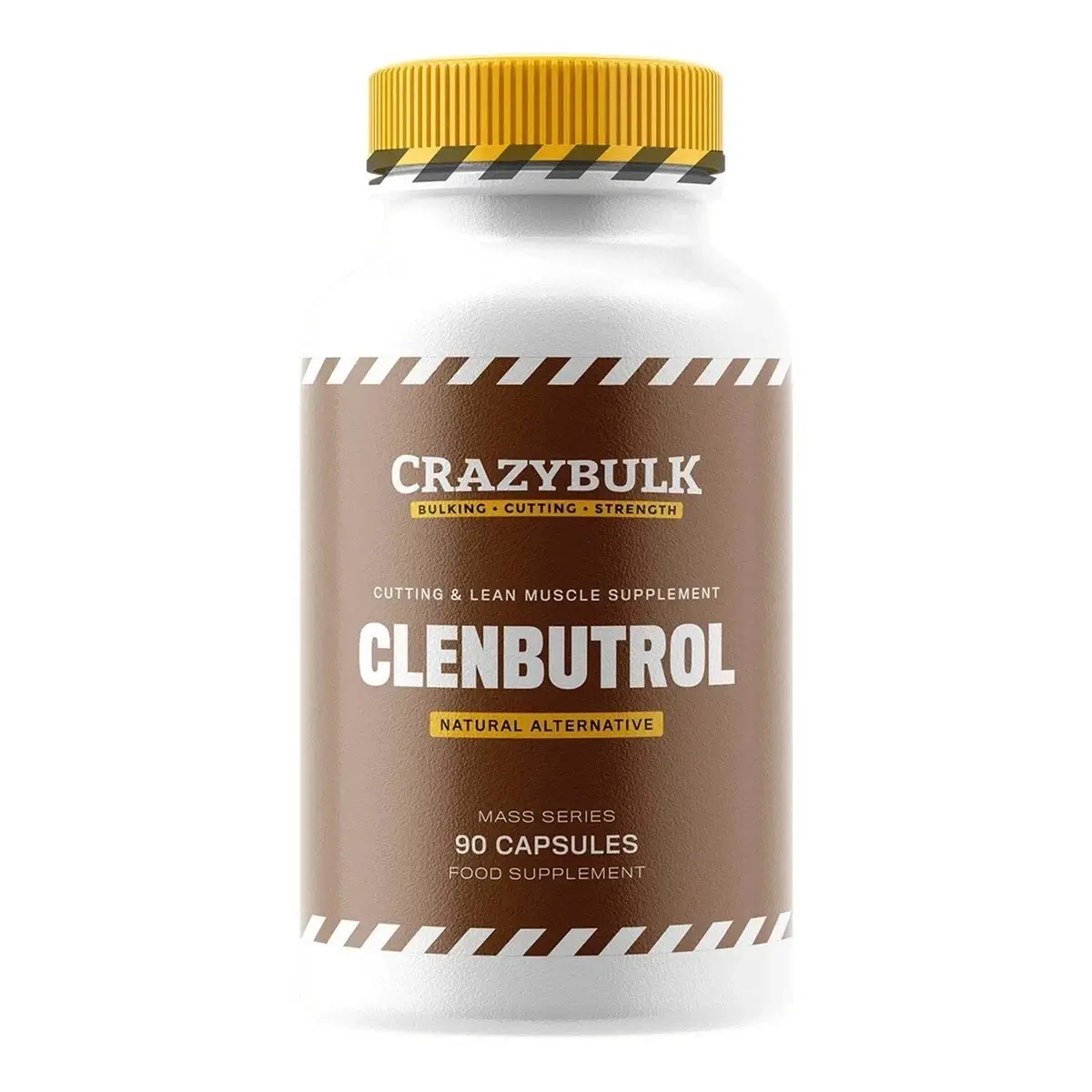
Clenbutrol — CrazyBulk
Thermogenic supplement · 4 capsules daily · £49.99 per month
- Bought openly and lawfully — no supply offence, no importation offence, no seizure risk
- Every dose printed on the label, from a company with a published address
- No beta-2 agonist, so none of the receptor-driven cardiac risk
- 60-day money-back guarantee
- Contains 200 mg caffeine — a real stimulant dose with its own cautions
- Will not replicate clenbuterol, and no supplement will
FAQ
Can you buy clenbuterol legally in the UK?
No. It has no human licence here, so no pharmacy can dispense it and no retailer can lawfully sell it — every seller is committing a supply offence even though you as the possessor are not.
Is it illegal to order clenbuterol online for personal use?
Yes. Importation by post, courier or freight is an offence even when it’s solely for you — the personal exemption applies only when you carry it yourself through customs.
What about sites offering UK next day delivery?
Faster shipping doesn’t change the legal position. A UK-based seller supplying a Class C drug without a prescription is committing supply, and many such sites ship from overseas anyway.
Can I get clenbuterol from a vet?
A vet can prescribe it for an animal, not for you. Obtaining it by misrepresentation is a separate problem, and veterinary formulations are concentrated for animals many times your body weight.
How can I tell if clenbuterol is fake?
Realistically you can’t, without laboratory testing. Holograms, batch codes and seller-run verification pages can all be produced by whoever made the packaging, and feeling stimulant effects doesn’t confirm which compound produced them.
Is possessing clenbuterol a crime in the UK?
No — possession for personal use is not an offence. The criminal exposure sits with supply and importation, which is why acquisition is the problem rather than possession.
References
- The Misuse of Drugs Act 1971 (Modification) Order 1996, SI 1996/1300 — legislation.gov.uk. https://www.legislation.gov.uk/uksi/1996/1300/made
- Drugs penalties — GOV.UK. https://www.gov.uk/penalties-drug-possession-dealing
- Clenbuterol — Hansard, House of Commons, 7 June 1993 (UK veterinary licensing). https://hansard.parliament.uk/Commons/1993-06-07/debates/fe96f92e-a208-4484-b81a-5da27c9170c3/Clenbuterol
- Acute clenbuterol overdose resulting in supraventricular tachycardia and atrial fibrillation. PubMed. https://pubmed.ncbi.nlm.nih.gov/18072161/
- Medicines and Healthcare products Regulatory Agency (MHRA) — GOV.UK. https://www.gov.uk/government/organisations/medicines-and-healthcare-products-regulatory-agency
- The Code for Crown Prosecutors — Crown Prosecution Service. https://www.cps.gov.uk/publication/code-crown-prosecutors
- Misuse of Drugs Regulations 2001, Schedule 4 — legislation.gov.uk. https://www.legislation.gov.uk/uksi/2001/3998/schedule/4
- NHS — Anabolic steroid misuse. https://www.nhs.uk/conditions/anabolic-steroid-misuse/
- Case report and review of clenbuterol cardiac toxicity. Journal of Cardiology Cases, 2013. https://www.sciencedirect.com/science/article/pii/S1878540913001011
This article is for information and harm-awareness. It does not identify sellers, sources or suppliers, and nothing here is legal or medical advice — if you’re facing a seizure notice or police contact, speak to a solicitor, and if you’re experiencing symptoms after taking anything described here, seek medical attention. NHS services treat these issues without judgement.

Tanveer Quraishi, author of Steroids 101 has extensive experience in the field of bodybuilding and has been writing online on various muscle-building and other health topics for many years now. He is not just interested in bodybuilding but is a great football player too. When he is not writing for his site or training at the gym, he loves to spend his time with this wife and kids.