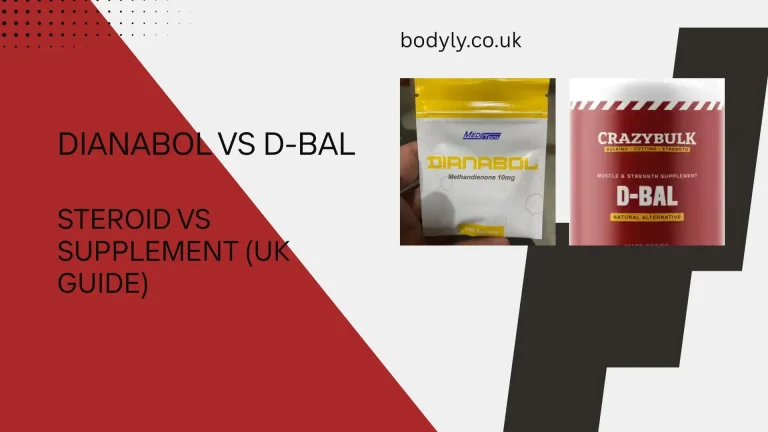
Dianabol Cycle for Beginners: What People Actually Do (and Why We Won’t Give You a Protocol)
✅ Medically reviewed by Dr. Joseph Nightingale, MBBS, MSc — Updated September 2026
What does a beginner Dianabol cycle involve? The conventional pattern is a short oral-only run of four to six weeks, followed by an attempt at post-cycle recovery. That convention exists because liver strain accumulates with duration — not because six weeks has been shown to be safe. Even a short cycle can raise liver enzymes, lower HDL cholesterol and suppress natural testosterone production, and much of the rapid weight gained is water that leaves when you stop. This page explains the practice and the reasoning behind it. It does not publish doses, and the section below explains why.
Search “Dianabol cycle for beginners” and you’ll get a dozen pages handing you milligram figures, week-by-week grids and stacking suggestions, usually written by someone with no medical training and a commission to earn.
This page takes a different approach, and it’s worth saying plainly up front: we’ll explain what a cycle is, why the conventions look the way they do, and what happens to your body regardless of the numbers — but we won’t publish a protocol.
Why We Won’t Publish Doses
This isn’t squeamishness, and it isn’t a legal dodge. There are four specific reasons, and each one would apply even if we wanted to help you cycle.
A protocol implies a safety profile that doesn’t exist. Publishing “X mg for Y weeks” communicates that some combination has been validated as acceptable. None has — there are no dose-ranging safety trials in healthy people using these compounds for physique purposes, because no ethics committee would approve one.
The tablet in your hand is unverifiable. Since no regulated UK supply exists, black-market products sold as Dianabol may be underdosed, overdosed, contaminated or a different compound entirely. A dose figure applied to an unknown substance is arithmetic pretending to be medicine.
Individual response varies enormously. Two people at identical exposure can differ substantially in liver enzyme response, blood pressure and hormonal recovery. Any published number is a population guess applied to an individual body, and you find out which end of the range you’re on afterwards.
And numbers displace the parts that matter. Readers who arrive for a protocol tend to leave with the protocol and skip everything about liver monitoring, blood pressure and recovery — the information that actually changes outcomes.
What this page does instead. It explains the reasoning behind the conventions you’ll encounter elsewhere, so you can evaluate what you’re reading. It sets out what happens physiologically regardless of the numbers. And it tells you what to monitor and when to seek help, which is the part no protocol page bothers with.
How to Read a Cycle Protocol You Find Elsewhere
You’re going to encounter protocols whether we publish one or not. So rather than leaving you to judge them unaided, here’s how to tell a page written to inform you from a page written to sell to you.
Run any cycle guide you find through these six questions. Most fail three or more.
1. Does it cite anything at all?
Look for links to primary sources — PubMed, LiverTox, NHS, a named journal. A page with no references is transmitting forum consensus, and forum consensus is what one anonymous person told another, repeated until it sounded settled.
2. Does it mention baseline blood work before anything else?
A page genuinely concerned with your outcome puts bloods before doses, because without a baseline no later result means anything. A page that leads with milligrams and mentions bloods in passing has told you which it cares about.
3. Does it sell what it recommends?
Check whether the “support supplements” it recommends link to a shop it profits from. That’s not automatically disqualifying — this site carries affiliate links and says so — but a protocol whose every step requires a purchase from the author deserves a harder read.
4. Does it distinguish what reverses from what doesn’t?
Pages that discuss side effects as a temporary inconvenience are omitting the part that matters most. Gynaecomastia, male-pattern hair loss and cardiac changes belong in a different category from bloating and acne, and a guide that flattens them is not being straight with you.
5. How much space does it give to coming off?
Count the words. If the weeks on get 800 and the weeks after get 80, the guide has spent its attention on the enjoyable half of the experience and skipped the difficult one.
6. Does it state PCT effectiveness as established fact?
Confident post-cycle protocols are common; the evidence underneath them is thin. A systematic review of anabolic steroid-induced hypogonadism set out to be a meta-analysis and found no studies of adequate quality to pool [2] — a page presenting PCT as a solved problem hasn’t read it.
The single fastest filter: a page that tells you what to take but not what to test is a page written for engagement, not for you.
One additional pattern worth recognising. Protocols written with unusual precision — exact milligrams, split doses, hour-by-hour timing — often signal confidence in an unregulated product whose actual contents nobody has verified. Precision applied to an unknown quantity is theatre, not rigour.
What a “Cycle” Actually Means
A cycle is simply a defined period of use followed by a defined period off. The concept exists because continuous use compounds the harms — not because the off-period undoes them.
For Dianabol specifically, cycles are short by convention. It’s an oral compound with a reported half-life of roughly four to six hours, so it’s typically taken daily across a run measured in weeks rather than months.
The “on” period is where the visible changes happen: water retention, strength climbing, the scale moving fast. Our timeline guide covers what users commonly report and what the trials actually measured.
The “off” period is where the difficulty is, and where most discussion isn’t. Suppressed natural testosterone doesn’t restart on the day you stop, and that gap is why the post-cycle conversation exists at all.
Where the “Four to Six Weeks” Convention Comes From
You’ll see this figure on every page about beginner cycles, usually stated as though it were a clinical guideline. Its actual origin is more mundane and more useful to understand.
Dianabol is 17-alpha alkylated — chemically modified so it survives first-pass metabolism in the liver. That modification is precisely what makes it hepatotoxic, and the two properties cannot be separated [1].
Liver strain from 17-alpha alkylated steroids accumulates with exposure, and prolonged use is associated with serious conditions including cholestatic injury, peliosis hepatis and liver tumours [1]. So the short-cycle convention is an attempt to stay on the shallow end of a dose-duration curve.
Here’s the part the protocol pages leave out. A convention designed to limit cumulative damage is not evidence that the limited amount is harmless — liver enzymes rise, HDL falls and testosterone suppresses from early in a run, not at some threshold week.
Six weeks isn’t a safe zone. It’s a shorter exposure to the same process, which is a meaningfully different claim.
What Happens During Any Cycle, at Any Dose
These aren’t risks that careful users can reliably avoid. They’re recognised effects of anabolic steroid use, and dose and duration affect their likelihood and severity.
| System | What happens | Can you feel it? |
|---|---|---|
| Liver | Enzyme elevation from 17-alpha alkylation; cholestatic injury risk with longer exposure | NoBlood tests only, until it’s advanced |
| Cholesterol | HDL suppressed, LDL raised; oral compounds do this more aggressively than injectables | NoEntirely silent |
| Blood pressure | Rises with sodium and water retention | RarelyNeeds a cuff to detect |
| Natural testosterone | Suppressed during use; recovery can take months after stopping | AfterwardsSharply — low mood, low libido, fatigue |
| Oestrogen | Aromatises to a potent methylated oestrogen; drives water retention and gynaecomastia risk | SometimesBloating, nipple tenderness |
| Heart structure | Left ventricular changes documented with anabolic steroid use | NoImaging only |
Notice the third column. Almost everything serious on this list is invisible without a blood test or a cuff, which is why “I feel fine” is the least informative sentence in this entire subject.
The full picture, including what reverses and what doesn’t, is in our side effects guide.
What People Actually Experience, Week by Week
The physiology above is what happens; this is what it feels like from the inside, which is a different question and the one most people are really asking.
What follows is drawn from commonly reported patterns rather than clinical measurement, and individual experience varies considerably with dose, duration, other substances used and individual response. It’s an illustrative account, not a timeline you can predict yourself against.
Days one to seven: the part everyone talks about
Users commonly report feeling different quickly — fuller muscles, better pumps, a general sense of being “on”. The scale usually starts moving within days.
What’s happening underneath is water and glycogen retention beginning, not meaningful new muscle tissue. Liver, lipid and hormonal changes may also be starting, and none of them announce themselves.
Weeks two to three: peak enthusiasm
Strength climbs noticeably and the mirror changes fast. This is when most first-time users decide it was the right call, and it’s when most before-and-after photos get taken.
It’s also peak water retention, which is why the visible change outpaces anything muscle tissue could plausibly accrue in that window — the arithmetic is in our before-and-after guide.
Weeks four to five: the reported downsides arrive
Bloating in the face and midsection is commonly reported, along with elevated blood pressure symptoms in some users, acne, and sleep disturbance. Mood changes get mentioned frequently and discussed rarely.
Some users report the puffiness starting to bother them more than the size pleases them by this point. Nothing detectable is happening to the liver or cholesterol as far as the user can tell — which is precisely the problem.
Stopping: the deflation nobody photographs
Water leaves within weeks, taking much of the visible result with it. Strength drops back toward baseline, and the mirror reverts faster than anyone expects.
This stage is where users most commonly report disappointment, because the comparison is no longer against the “before” photo but against the peak.
The weeks after: the hardest part
With natural testosterone suppressed and not yet restarted, users commonly report low mood, low libido, fatigue and reduced motivation to train. Recovery times vary widely. Testosterone often recovers within months, but some users take considerably longer, and recovery may remain incomplete.
The cruel timing is that this arrives at the same moment the visible result disappears. Our PCT guide covers what can and can’t be done about it.
Three months on: the honest accounting
What remains is the genuine tissue built during the run — retained only if training and eating continued — which is a fraction of the peak number on the scale.
And this is where the pattern that traps people begins. The gap between the peak and what’s left is what makes a second cycle feel necessary, which is the subject worth thinking about before the first one rather than after it.
Cycle pages typically pair a protocol with a shopping list of supporting compounds — liver supplements, oestrogen blockers, post-cycle drugs. Two honest observations about that whole category.
The first is that these are largely prescription medicines being used off-label without supervision, sourced from the same unregulated market as the steroid. Whatever their pharmacology, an unverified tablet taken to manage the effects of another unverified tablet compounds uncertainty rather than reducing it.
The second is that the evidence is thinner than the confidence around it. A systematic review of anabolic steroid-induced hypogonadism was intended as a meta-analysis but found no studies of sufficient quality to pool [2] — which is the actual evidence base underneath every confident PCT protocol you’ll read.
That’s why our PCT article is framed around what gym lore gets wrong. Post-cycle therapy is used in an attempt to shorten the recovery window; good clinical evidence remains limited.
What Beginners Consistently Get Wrong
Treating the scale as the scoreboard
Rapid weight gain feels like proof it’s working, and controlled trials attribute much of methandienone’s early weight gain to water retention [3]. A second trial found the composition of the gain inconsistent with normal muscle tissue [4].
The practical consequence arrives a fortnight after stopping, when the fluid leaves and takes much of the number with it. Our before-and-after guide covers what actually remains.
Running no bloods at all
Most first-time users never test anything, which means the effects that matter are invisible for the entire cycle. Baseline bloods before starting are the single most useful thing anyone in this position can do — without a baseline, a later result has nothing to compare against.
Assuming the first cycle is the easy one
Response to a first exposure is unpredictable, and there’s no prior data on how your own liver, lipids or hormonal axis behave. “Beginner” describes your experience level, not the compound’s behaviour.
Planning the cycle and not the aftermath
The weeks after stopping are when users report feeling worst — flat mood, low libido, strength dropping, and the visible deflation. It’s also the period people plan least, having spent their preparation on the part that feels good.
Buying on price
The cheapest source is the least accountable one. Since nothing about the contents can be verified, price is signalling supply-chain risk rather than value.
If You’ve Already Started
This is the section that can actually change something, so here it is properly rather than as a footnote.
The bloods checklist
Going in with a specific request produces a better appointment than going in with a vague worry. Tell your GP what you’ve taken, for how long, and roughly how much — then ask about these.
Liver function tests (LFTs). ALT, AST, ALP and bilirubin. Dianabol is 17-alpha alkylated, so elevation is common during use [1], and these typically normalise over weeks to months after stopping.
A full lipid profile. Total cholesterol, HDL, LDL and triglycerides. This is the effect you are least able to detect and most likely to underestimate, since suppressed HDL produces no symptoms whatsoever.
Full blood count. Androgens can raise haematocrit, thickening the blood. Simple to include, and worth knowing.
Reproductive hormone panel. Total testosterone, LH, FSH, oestradiol and prolactin — together these show how suppressed your axis is and whether it’s recovering.
Blood pressure, with a cuff. Not a blood test, but the same category of invisible. Home monitors cost roughly a month’s gym membership and give you something you can act on immediately.
When to test
Before starting is the single most valuable reading, and the one almost nobody takes. Without a baseline, a later result tells you where you are but not what changed.
During — roughly midway through a run — catches liver and blood pressure changes while there’s still a decision to make about continuing.
Four to six weeks after stopping shows whether liver enzymes and lipids are heading back toward baseline. Three months after is when the hormonal picture becomes informative, since suppression takes months to resolve.
Two practical notes. Ask for copies of the actual numbers rather than being told the results are “fine” — a value sitting at the edge of the reference range only becomes meaningful when you can track it across readings.
And if a result comes back abnormal, that’s information rather than a verdict. Most steroid-related blood changes improve after stopping; the ones that don’t are far better caught early than discovered late.
Check your blood pressure with an actual cuff, not by how you feel. Home monitors cost about the same as a month’s gym membership, and elevated pressure is one of the few effects you can respond to promptly.
Tell a GP what you’ve taken, for how long, and roughly how much. NHS services treat steroid-related health issues without judgement [5], and the consultation is confidential — the delay in seeking help usually comes from embarrassment rather than anything clinical.
Seek same-day medical advice for yellowing of the skin or eyes, dark urine, persistent right-upper-abdominal pain, or severe headaches. Call 999 for sudden or persistent chest pain, chest pain with breathlessness, or severe breathing difficulty.
The UK Legal Position
Possession and use for personal purposes are not criminal offences in the UK. Supplying Dianabol and importing it by post or courier are illegal, although individuals may personally carry steroids into the UK for their own use.
Penalties for supply reach 14 years’ imprisonment and an unlimited fine, and supply includes giving tablets to a training partner with no money involved. Full detail is in our Is Dianabol Legal in the UK? guide.
One practical consequence deserves emphasis on a page about beginner cycles: ordering from an overseas website is postal importation, which is the illegal part. That’s how nearly every UK first cycle is actually acquired.
The Legal Alternative Route
Two legal supplements reviewed on this site position themselves as Dianabol alternatives, and the honest framing matters more than the marketing. They are food supplements, not steroids, and they will not replicate steroid results.
What they offer is a different trade: legal to buy and possess, no criminal exposure, no post-cycle crash and no PCT question — in exchange for considerably more modest results on a slower timeline. One transparency note for both: their formulas include ashwagandha, which has been associated with rare cases of liver injury [6]. A different order of risk from an oral steroid’s built-in hepatotoxicity, but not zero.
Two Legal Alternatives Reviewed on This Site
Food supplements, not steroids — legal in the UK, with expectations set by this article rather than the ads.
Two Legal Alternatives Reviewed on This Site
Food supplements, not steroids — legal in the UK, with expectations set by this article rather than the ads.
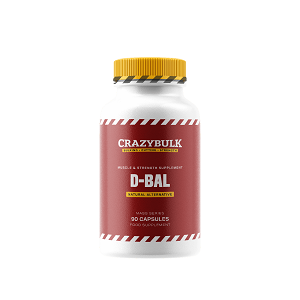
D-Bal — CrazyBulk
- Formulated to support muscle growth, protein synthesis, strength and recovery
- No oral-steroid liver toxicity and no hormonal suppression
- No banned ingredients listed; 60-day money-back guarantee
- No cycle length to plan and no PCT question — and no Dianabol-level results either
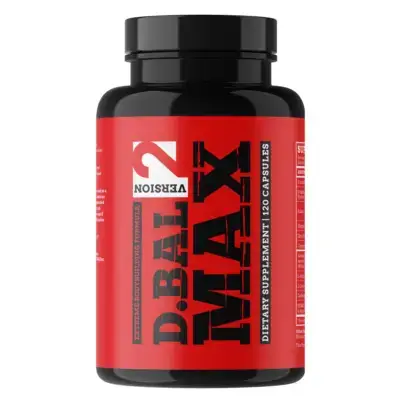
D-Bal Max — Wolfson Brands
- UK-made formula built around magnesium, ashwagandha, L-arginine and L-lysine
- Positioned for strength, performance and recovery support
- No oral-steroid liver toxicity; official-website-only sales with a money-back guarantee
- Same honest ceiling: a supplement, not a steroid substitute
FAQs
How long is a beginner Dianabol cycle?
The convention is four to six weeks, and that figure is a damage-limitation convention rather than a validated safety threshold — liver strain accumulates with duration, but the effects start early in any run. No cycle length has been established as safe.
Why won’t you give doses?
Because no dose has been validated as safe for physique use, the tablet you’d apply it to is unverifiable, individual response varies enormously, and readers who come for numbers tend to skip the monitoring information that actually affects outcomes.
Do I need PCT after a first Dianabol cycle?
Dianabol suppresses natural testosterone production, so recovery is a real issue regardless of experience level. Post-cycle therapy is used in an attempt to shorten that window, but good clinical evidence remains limited — our PCT guide covers what the research does and doesn’t support.
Is a Dianabol-only cycle safer than stacking?
Fewer compounds means fewer simultaneous mechanisms of harm, which is not the same as safe. An oral-only run still carries the full hepatotoxicity, lipid, blood-pressure and suppression profile described above.
What should I do before starting?
The most useful answer is to reconsider, and the second most useful is to get baseline bloods and a blood pressure reading first — without a baseline, later results have nothing to compare against.
References
- LiverTox: Clinical and Research Information on Drug-Induced Liver Injury — Anabolic Steroids. NIDDK / NCBI Bookshelf. https://www.ncbi.nlm.nih.gov/books/NBK548931/
- Rahnema CD, Lipshultz LI, Crosnoe LE, Kovac JR, Kim ED. Anabolic steroid–induced hypogonadism: diagnosis and treatment. Fertil Steril. 2014;101(5):1271–1279. https://pubmed.ncbi.nlm.nih.gov/24636400/
- Freed DLJ, Banks AJ, Longson D, Burley DM. Anabolic steroids in athletics: crossover double-blind trial on weightlifters. Br Med J. 1975;2(5969):471–473. https://pubmed.ncbi.nlm.nih.gov/125133/
- Hervey GR, Knibbs AV, Burkinshaw L, et al. Effects of methandienone on the performance and body composition of men undergoing athletic training. Clin Sci (Lond). 1981;60(4):457–461. https://pubmed.ncbi.nlm.nih.gov/7018798/
- NHS — Anabolic steroid misuse. https://www.nhs.uk/conditions/anabolic-steroid-misuse/
- Björnsson HK, et al. Ashwagandha-induced liver injury: A case series from Iceland and the US Drug-Induced Liver Injury Network. Liver Int. 2020;40(4):825–829. https://pubmed.ncbi.nlm.nih.gov/31991029/
- Kicman AT. Pharmacology of anabolic steroids. Br J Pharmacol. 2008;154(3):502–521. https://pubmed.ncbi.nlm.nih.gov/18500378/
- GOV.UK — Controlled drugs list (Misuse of Drugs legislation). https://www.gov.uk/government/publications/controlled-drugs-list–2
This article is for education and harm-awareness. It deliberately does not provide dosing instructions or protocols for anabolic steroid use, and nothing here is medical advice — if you’re experiencing effects from steroid use, speak to your GP; NHS services treat steroid-related health issues without judgement.

Tanveer Quraishi, author of Steroids 101 has extensive experience in the field of bodybuilding and has been writing online on various muscle-building and other health topics for many years now. He is not just interested in bodybuilding but is a great football player too. When he is not writing for his site or training at the gym, he loves to spend his time with this wife and kids.