The Best Exercises to Boost Testosterone in the UK — What the Research Shows
There’s a reason every men’s health article mentions exercise in the same breath as testosterone. The relationship is real, it’s well-documented, and — unlike a lot of natural testosterone advice — the research is genuinely robust. But the details matter enormously.
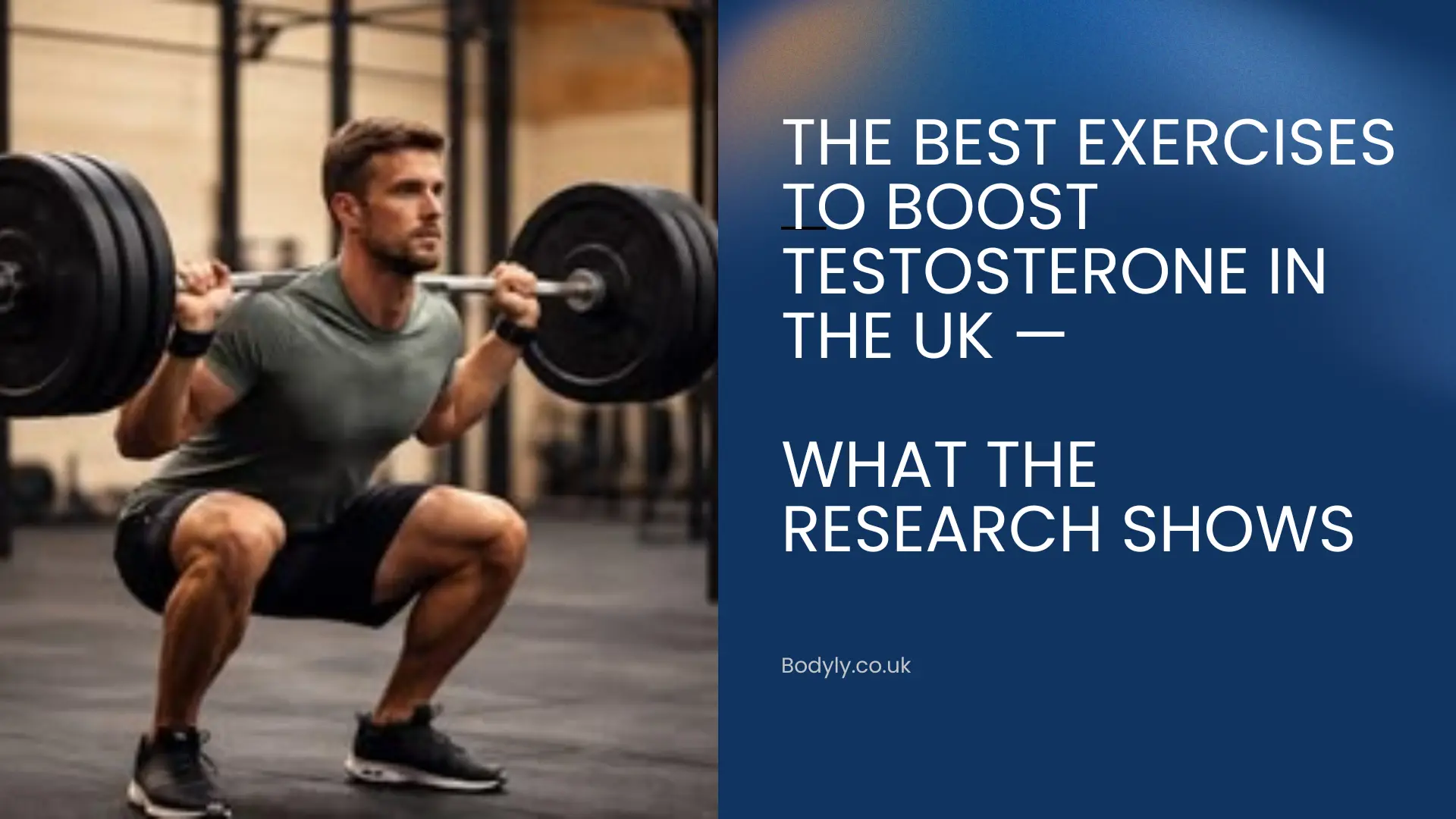
Not all exercise raises testosterone equally. Some types of training produce a significant hormonal response. Others produce almost none. And one particular training pattern — something millions of UK men fall into without realising — can actively suppress testosterone rather than raise it. Certain types of exercises, such as resistance training and high intensity interval training, can increase testosterone levels, but the type of workout you choose makes a difference.
This article cuts through the noise and tells you exactly what the research says — exercise by exercise, mechanism by mechanism, with practical recommendations you can apply this week.
How Exercise Affects Testosterone: The Basic Science
Before getting into specific exercises, it helps to understand the two ways exercise influences testosterone.
The first is acute response — the temporary spike in testosterone that occurs during and immediately after a session. Testosterone levels demonstrate a greater increase following resistance training, with a delayed return to baseline levels; in contrast, testosterone levels typically recover within one hour after aerobic exercise. This acute response matters because it drives the anabolic signalling that triggers muscle repair and growth.
The second is chronic adaptation — the longer-term shift in baseline testosterone that comes from months and years of consistent training. This is where the real hormonal benefit lives. Over months and years, consistent resistance training is associated with higher resting testosterone levels compared to sedentary individuals, particularly in men.
Both matter, but if you’re training specifically to support testosterone, the chronic adaptation is the goal. Acute spikes are a signal; baseline elevation is the outcome.
| Exercise type | T impact | Primary mechanism | Duration of effect | Recommendation |
|---|---|---|---|---|
| Resistance training (compound) | High | Recruits large muscle groups triggering HPG axis stimulation; reduces visceral fat and aromatase activity over time | Acute spike lasts up to 45 mins post-session; baseline elevation builds over months | Foundation of any testosterone-focused programme — 3–4x per week, compound movements, progressive overload |
| HIIT | Medium–High | Fast-twitch muscle fibre recruitment stimulates HPG axis; improves insulin sensitivity and fat oxidation | Acute response recovers faster than resistance training; cortisol suppression risk if sessions exceed 30 mins | 1–2 sessions per week alongside resistance training — keep sessions short (20–30 mins) and genuinely intense |
| Steady-state cardio | Low–Medium | Indirect benefit via visceral fat reduction and improved insulin sensitivity; direct hormonal signal is weak | T recovers to baseline within 1 hour post-session — no sustained acute effect | Keep in routine for cardiovascular health and body composition but don’t rely on it as a primary T tool |
| Overtraining (excessive volume) | Suppresses T | Chronic cortisol elevation from insufficient recovery suppresses the HPG axis — testosterone-to-cortisol ratio collapses | Extended suppression lasting up to 72 hrs per session; chronic if overtraining persists | Cap sessions at 75 mins; never train 6–7 days without adequate rest; watch for persistent fatigue and declining strength |
Based on published exercise endocrinology research including a 2026 systematic review of 15 RCTs. T impact ratings reflect both acute hormonal response and long-term baseline effects from consistent training. Individual results vary by age, training history, and recovery quality.
1. Resistance Training: The Gold Standard
If there’s one non-negotiable for testosterone, this is it. Resistance training and high intensity interval training can increase testosterone levels. But within resistance training, specifics matter a great deal.
Compound Movements Are King
Compound, multi-joint exercises involving large muscle groups — squats, deadlifts, bench press, rows — performed at moderate-to-high intensity with shorter rest periods produce the largest acute testosterone response. Isolation exercises like bicep curls or leg extensions simply don’t move the needle the same way. The hormonal response scales with the amount of muscle tissue recruited — which is why multi-joint movements that involve the legs, back, and core simultaneously produce the strongest effect.
Compound movements like squats, deadlifts, bench presses, and rows recruit large muscle groups and stimulate a hormonal response. The temporary rise in testosterone helps with muscle repair, fat metabolism, and overall performance.
The squat deserves particular mention. Research has shown a significant increase in testosterone concentration up to 45 minutes after completing barbell back squats — five sets of ten repetitions at 75% of one-rep maximum — as well as cortisol 15 and 45 minutes post-exercise. No other single exercise produces a more consistent and well-documented acute testosterone response. If you do nothing else in the gym, squat regularly and squat heavy.
The deadlift is equally powerful. A study comparing the acute endocrine responses to squat and deadlift exercises found that ten resistance-trained males completing eight sets of two repetitions at 95% of their one-rep maximum showed meaningful salivary testosterone responses at five and 30 minutes post-exercise for both movements.
Based on published exercise endocrinology research including a 2026 systematic review of 15 RCTs. Values represent upper-end acute percentage increases in serum testosterone above baseline measured immediately post-exercise. Overtraining value reflects suppression below baseline after extended high-volume sessions without adequate recovery.
Free weights beat machines. Free-weight exercises appear to trigger stronger hormonal responses to resistance training than machine-based exercises. The additional stabilisation demand of free weights recruits more total muscle — and that greater recruitment drives a stronger hormonal signal. This doesn't mean machines are useless, but if testosterone is a priority, barbells and dumbbells should be the foundation.
Optimal Training Parameters
The acute response is more pronounced with higher training volumes, compound movements involving large muscle groups, shorter rest intervals, and moderate-to-high intensity relative to one-repetition maximum.
In practical terms for a UK man building a testosterone-focused training programme:
| Variable | Optimal for testosterone | What to avoid | Why it matters |
|---|---|---|---|
| Exercise selection | Best Compound multi-joint movements — squats, deadlifts, bench press, rows, overhead press |
Avoid relying on Isolation exercises as primary movements — curls, leg extensions, cable flyes |
The more muscle mass recruited, the stronger the hormonal signal. Compound movements trigger the HPG axis; isolation exercises produce a negligible T response |
| Intensity (% of 1RM) | Best 70–85% of one-rep max — moderately heavy with good form throughout |
Avoid Below 60% 1RM for primary lifts; also avoid going to true failure on every set |
Research shows moderate-to-high intensity produces the strongest T response. Too light = insufficient stimulus. Too heavy every session = excessive cortisol and injury risk |
| Sets per exercise | Best 3–5 sets per compound exercise — volume is a key driver of the hormonal response |
Avoid 1–2 sets only (insufficient stimulus) or 8+ sets per exercise (excessive cortisol) |
It is volume rather than intensity alone that most enhances acute testosterone secretion. Accumulating enough total work per session is critical for the hormonal signal |
| Reps per set | Best 6–12 reps for hypertrophy; 3–6 reps for pure strength — both produce strong T responses |
Avoid 15–20+ rep sets as the primary training mode — too light to maximise T stimulus |
The 6–12 rep range balances mechanical tension and metabolic stress — both drivers of the hormonal response. Heavy 3–5 rep work also produces strong T, especially on big compound lifts |
| Rest between sets | Best 60–120 seconds for compound movements — shorter rest amplifies hormonal response |
Avoid 3–5 minute rest periods between every set — reduces the metabolic stress needed for T stimulus |
Shorter rest periods increase metabolic stress and growth hormone co-release alongside testosterone. However, some longer rest (2–3 min) is appropriate for very heavy compound sets to maintain performance |
| Session duration | Best 45–75 minutes — enough volume without excessive cortisol accumulation |
Avoid Sessions regularly exceeding 90 minutes — cortisol rises sharply and begins suppressing T |
Extended training causes testosterone suppression during recovery due to cortisol antagonism. Keeping sessions focused and under 75 minutes protects the T-to-cortisol ratio |
| Training frequency | Best 3–4 sessions per week with genuine rest days — UK data shows peak T at 6–10 hrs training per week |
Avoid 6–7 sessions per week without adequate rest — overtraining suppresses T for up to 72 hrs per session |
Rest days are not wasted days — they're when the hormonal adaptation actually happens. High-frequency training without recovery elevates cortisol chronically and collapses the T-to-cortisol ratio |
| Progressive overload | Best Add weight or reps each week — consistent progression is essential for ongoing T stimulus |
Avoid Repeating the same weights and reps indefinitely — adaptation stalls and hormonal stimulus diminishes |
The body adapts to training stimuli over time. Without progressive overload, the hormonal response diminishes as the body no longer perceives the training as a meaningful stress requiring adaptation |
Note: these recommendations reflect the training parameters most consistently associated with testosterone stimulation in published research. Individual responses vary by age, training history, and baseline hormone levels. Always prioritise recovery quality alongside training quality.
- Frequency: 3–4 sessions per week
- Load: 70–85% of your one-rep max (moderately heavy — you should be working hard but maintaining good form)
- Sets and reps: 3–5 sets of 6–12 reps per exercise
- Rest periods: 60–120 seconds between sets — shorter rest periods amplify the hormonal response
- Session duration: 45–75 minutes. Beyond this, cortisol starts to climb meaningfully
It is the volume rather than the intensity of resistance exercise that most enhances the acute secretion of testosterone — a useful insight that suggests accumulating enough total work per session matters more than simply going as heavy as possible.
2. HIIT: The Time-Efficient Testosterone Tool
For UK men who struggle to find time for full gym sessions, HIIT (High-Intensity Interval Training) offers a meaningful hormonal benefit in a shorter time window.
Six weeks of HIIT improved free testosterone levels and peak power output in master athletes. The mechanism is similar to resistance training — high-intensity effort recruits fast-twitch muscle fibres and stimulates the HPG axis, triggering a testosterone response.
HIIT works well when sessions are genuinely intense but short — typically 20–30 minutes of work. Sprint intervals, cycling intervals, rowing intervals, and circuit training with minimal rest all qualify. The key is that the effort during work periods must be close to maximum — moderate-pace "cardio" doesn't produce the same hormonal effect.
Moderate to high-intensity exercise stimulates the hypothalamic-pituitary-gonadal axis, leading to a transient rise in testosterone, but extended high-intensity exercise causes testosterone suppression during recovery due to cortisol antagonism for up to 72 hours. Keep HIIT sessions short and focused. One to two sessions per week alongside resistance training is the evidence-based sweet spot.
3. Aerobic Exercise: Useful but Limited
This is where many UK men are surprised by the research. Running, cycling, swimming, and other steady-state cardio are excellent for cardiovascular health — but their direct hormonal impact on testosterone is modest compared to resistance training and HIIT.
Testosterone levels typically recover within one hour after aerobic exercise — far faster than after resistance training, suggesting a smaller and less sustained hormonal signal.
That said, aerobic exercise is not without hormonal value. Aerobic exercise has been found superior to caloric restriction for improving testosterone concentrations in men who are overweight or obese. For heavier UK men, the fat loss driven by cardio has an indirect but significant testosterone benefit — by reducing visceral fat and aromatase activity, steady-state exercise supports the hormonal environment even without producing a strong direct testosterone signal.
The practical takeaway: keep cardio in your routine for cardiovascular health and body composition, but don't rely on it as your primary testosterone tool. That role belongs to the weights.
4. The Overtraining Trap: When Exercise Suppresses Testosterone
This is the section most exercise-and-testosterone articles skip. It's also one of the most practically important for UK men who train hard.
High-frequency training without adequate recovery can suppress rather than raise testosterone. Overtraining elevates cortisol and can reduce the testosterone-to-cortisol ratio to a range associated with impaired recovery and hormonal suppression.
The mechanism is straightforward: exercise is a physical stressor, and the body responds to stress by releasing cortisol. In moderate amounts, this is fine — the cortisol response is part of what drives adaptation. But when training volume exceeds the body's capacity to recover, cortisol stays elevated chronically, and testosterone is suppressed as a direct consequence. Cortisol and testosterone compete biologically — elevated cortisol tells the body to prioritise the stress response over anabolic and reproductive functions.
Extended high-intensity exercise causes testosterone suppression during recovery due to cortisol antagonism for up to 72 hours. That's three days of hormonal suppression from a single overly long or overly intense session.
Signs you may be overtraining include persistent fatigue that doesn't resolve with a rest day, declining strength despite consistent training, disrupted sleep, low mood and irritability, and a consistently flat feeling in the gym. These are also symptoms of low testosterone — which is not a coincidence.
Structured periodization with planned rest days supports the hormonal adaptations that benefit testosterone more effectively than maximum frequency training. For most UK men, four sessions per week with genuine rest days is optimal. Training six or seven days a week without adequate recovery is counterproductive for testosterone regardless of how hard you're working.
5. The Body Composition Benefit: Why Exercise Raises Testosterone Indirectly
Beyond the direct hormonal signalling of exercise, there's a powerful indirect mechanism that's often overlooked.
Resistance training reduces visceral fat, which in turn may raise free testosterone independent of any direct hormonal effect of the exercise itself. This means that the metabolic effects of lifting weights on body composition may contribute as much to long-term testosterone levels as the direct hormonal response to training.
Visceral fat — the deep abdominal fat that accumulates when men are sedentary and overfed — contains high levels of aromatase, the enzyme that converts testosterone to oestrogen. The more visceral fat you carry, the more testosterone gets converted. Exercise attacks this mechanism from both sides: it burns visceral fat directly, and it builds lean muscle that raises resting metabolism and makes future fat gain harder.
This is particularly relevant for UK men in sedentary office-based roles — which describes a significant proportion of the working male population. Even if your gym sessions are perfectly structured, sitting for eight to ten hours a day significantly undermines the hormonal benefits of training. Breaking up sitting time with regular movement — standing, walking, brief activity — reduces the metabolic suppression of prolonged sedentary behaviour.
Putting It Together: A UK-Practical Weekly Training Template
Here's a simple, evidence-based weekly structure designed specifically around testosterone optimisation for UK men who may be working full-time with limited gym time:
Mon
CompoundLower body
Highest T stimulusBarbell squats — 4 × 8
Romanian deadlifts — 3 × 10
Leg press — 3 × 12
Squats are the #1 testosterone exercise — never skip leg day
40–60
minutes
Tue
RestRecovery
Adaptation dayFull rest or light walking only
T adaptation happens overnight — prioritise 7–9 hrs sleep
—
Wed
CompoundUpper body
Strong T signalBench press — 4 × 8
Barbell rows — 4 × 8
Overhead press — 3 × 10
Pull-ups / lat pulldown — 3 × 10
Rows and press recruit large muscle groups for strong T response
40–60
minutes
Thu
RestRecovery
Cortisol clearanceFull rest or light mobility work
Cortisol must clear before Friday — avoid intense activity
—
Fri
HIITFull body
Acute T + fat burnDeadlifts — 4 × 5 (heavy)
Sprint / rowing intervals — 6–8 × 30 sec max / 90 sec rest
Deadlifts + HIIT = strongest combined acute T and fat-burning stimulus
30–45
minutes
Sat/Sun
ActiveActive recovery
Low cortisolLong walk, recreational sport, cycling, or mobility work
One full rest day minimum — nothing that spikes cortisol significantly
30–60
minutes
Monday — Lower body compound (40–60 mins) Squats (4 sets × 8 reps), Romanian deadlifts (3 sets × 10), leg press (3 sets × 12), calf raises. Focus on progressive overload — add weight or reps each week.
Wednesday — Upper body compound (40–60 mins) Bench press (4 sets × 8), barbell rows (4 sets × 8), overhead press (3 sets × 10), pull-ups or lat pulldown (3 sets × 10).
Friday — Full body or HIIT (30–45 mins) Deadlifts (4 sets × 5), followed by 15–20 minutes of sprint intervals or rowing intervals. Keep the HIIT portion genuinely intense — short bursts at maximum effort, not a moderate jog.
Saturday or Sunday — Optional lower intensity activity A long walk, recreational sport, or light mobility work. This supports recovery without suppressing testosterone through additional cortisol load.
Tuesday, Thursday, and one weekend day — Rest or active recovery Adequate rest is not optional — it's when the hormonal adaptation actually happens. Sleep, nutrition, and diet, and stress management on rest days are as important as the training itself.
When Exercise Alone Isn't Enough
Exercise is one of the most powerful natural tools for testosterone — but it has limits. If you've been training consistently for several months with a well-structured programme and you're still experiencing symptoms of low testosterone (persistent fatigue, low libido, low mood, poor body composition response to training), it's worth getting a blood test.
In the UK, you can request a testosterone blood test from your NHS GP. Morning appointments are essential — testosterone peaks between 8am and 11am, and the NHS requires two morning blood tests on separate occasions to confirm a result. If you're finding NHS access slow, private testing is available and typically provides a more comprehensive hormonal panel.
Training is a powerful signal. Medical assessment is the only way to know your actual levels.
A Note on Natural Support: Testosil
Sponsored/affiliate content — does not constitute medical advice.
For men who are training consistently and want nutritional support that specifically complements the exercise-testosterone connection, Testosil is worth a mention here — but for a specific reason.
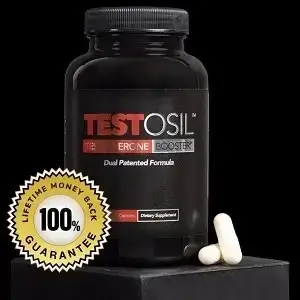
The biggest hormonal risk of hard training isn't under-training. It's the cortisol response to training stress without adequate recovery. Testosil's headline ingredient, KSM-66 ashwagandha, has been clinically studied as an adaptogen — helping regulate the stress response and reduce chronic cortisol elevation. For men training hard and managing the kind of work and life stress typical of the UK adult male, reducing chronic cortisol directly supports the testosterone-to-cortisol ratio that training is trying to optimise.
The formula also includes zinc and magnesium — two micronutrients frequently depleted in men who train regularly through sweat losses — alongside D-aspartic acid and fenugreek, which support the HPG axis stimulation that exercise is designed to trigger.
It's a formula that makes particular sense in the context of an active training programme, not as a substitute for one.
Check out my complete Testosil review by clicking here
Disclosure: This section may contain affiliate links. We may earn a small commission at no extra cost to you.
Final Thoughts
The research on exercise and testosterone is clearer than on almost any other natural testosterone intervention. Compound resistance training, done consistently and progressively, is the single most evidence-backed thing a UK man can do to support his testosterone levels naturally.
Train hard. Train smart. Don't overtrain. Get enough sleep to recover. And if the symptoms persist despite doing everything right, get tested — because exercise alone can't fix a clinical deficiency.
The gym is not a substitute for a blood test. But for most men, it's absolutely where to start.

Tanveer Quraishi, author of Steroids 101 has extensive experience in the field of bodybuilding and has been writing online on various muscle-building and other health topics for many years now. He is not just interested in bodybuilding but is a great football player too. When he is not writing for his site or training at the gym, he loves to spend his time with this wife and kids.