How to Get Shredded After 40: The Complete Guide for UK Men (2026)
Key Takeaways
- 1 Lift weights 3–4 times a week. Resistance training is your best defence against age-related muscle loss — build sessions around squats, deadlifts, presses and rows.
- 2 Use a moderate calorie deficit, not a crash diet. Around 500 calories a day off maintenance, with 1.6–2.2g of protein per kg of body weight, strips fat while protecting muscle.
- 3 Cardio supports the cut — it doesn’t drive it. Zone 2 sessions plus 8,000–10,000 daily steps widen your deficit without wrecking recovery or your knees.
- 4 Recovery is the over-40 secret weapon. Seven to nine hours of sleep and managed stress do more for fat loss and testosterone than any advanced training trick.
- 5 Start with your free NHS Health Check. If you’re 40–74 in England, get your blood pressure, cholesterol and baseline numbers checked before you push the engine hard.
- 6 Keep supplements simple. Creatine, protein and vitamin D (October–March) cover the essentials — a fat burner can support your deficit, but nothing replaces it.
Here’s something most blokes over 40 don’t realise: your body can still build muscle and strip fat well into your 50s and beyond. The research on older lifters is genuinely encouraging.
But I’ll level with you. Getting shredded after 40 is a different game to the one you played at 25. Recovery takes longer. Testosterone has probably dipped. And that Friday pint hits differently now!
The good news? With the right approach to training, nutrition and recovery, your 40s can deliver the leanest, strongest physique of your life. This guide covers exactly how — built for real life in the UK, not a Californian bodybuilder’s schedule. No bro-science. Just what works.
In short: to get shredded after 40, lift weights 3–4 times a week, eat in a moderate 500-calorie deficit with 1.6–2.2g of protein per kg of body weight, walk 8,000–10,000 steps daily, and protect 7–9 hours of sleep. Most men reach a visibly lean 12–15% body fat within 4–8 months.
Why Getting Shredded After 40 Is Different (And Why That’s OK)
What actually changes in your body
From your mid-30s onwards, testosterone tends to decline gradually — roughly 1% a year for many men. That affects muscle building, recovery, and whether testosterone helps you burn fat as efficiently as it used to.
Your metabolism doesn’t fall off a cliff, though, despite what the supplement adverts claim. Most of the “slowing metabolism” men blame is really lost muscle and more time sat at a desk.
There’s also a quieter hormonal shift most men have never heard of: belly fat actively converts your testosterone into oestrogen, which makes belly fat even harder to lose. One more reason to start now rather than at 50.
Sarcopenia: the reason lifting becomes non-negotiable
Sarcopenia is age-related muscle loss, and it quietly starts in your 30s. Left unchallenged, you can lose 3–8% of muscle mass per decade.
The fix is simple but not optional: resistance training. Lifting weights is the single most powerful lever you have against ageing — full stop.
The advantages you have over the 25-year-old you
Here’s what nobody tells you: older lifters often out-perform younger ones on the things that actually matter. Consistency, discipline, patience and showing up on the grim February mornings.
You’ve also likely got a stable routine, your own kitchen and a reason to train beyond vanity. Those are massive advantages.
Redefining “shredded” for your 40s
Forget stage-ready, veins-on-abs bodybuilder conditioning — that’s miserable to maintain and often unhealthy. Shredded in your 40s means visibly lean, strong and energetic, year-round.
For most men that’s somewhere around 12–15% body fat. Lean enough for abs on holiday, sustainable enough to still enjoy a Sunday roast.
Realistic targets and timelines
A sensible rate of fat loss is around 0.5% of body weight per week, sometimes a touch more early on. For a typical bloke carrying a couple of stone extra, a genuinely shredded look takes 4–8 months, not 6 weeks.
That sounds slow until you remember you’re 40-something, not 24. Slow is what sticks.
And if the gut is your main battleground, our complete guide on how to lose belly fat and boost testosterone digs into that specific fight in far more depth.
Before You Start: Health Checks Every UK Man Over 40 Should Book
The free NHS Health Check
If you’re aged 40 to 74 in England without a pre-existing condition, you’re entitled to a free NHS Health Check every five years. It covers blood pressure, cholesterol, BMI and your risk of heart disease, stroke and type 2 diabetes.
Think of it as your midlife MOT before you start pushing the engine harder. Contact your GP practice if you haven’t been invited — you don’t need to wait.
Get your bloods done
Beyond the basic check, it’s worth asking about testosterone, thyroid function and HbA1c if you have symptoms like persistent fatigue or stubborn weight gain. Low testosterone is more common than most men admit, and it changes the fat-loss picture considerably.
Private blood panels are also widely available across the UK if NHS testing isn’t offered. Knowing your numbers beats guessing.
When to speak to your GP first
If you’re on medication, have a heart condition, uncontrolled blood pressure, or dodgy joints from years of Sunday league, have a quick chat with your GP before starting. This isn’t box-ticking — it means you can train hard with confidence.
Ten minutes with a doctor now saves months of setbacks later. Simple as that.
Establish your baseline
You can’t manage what you don’t measure. Take front, side and back photos, waist measurement at the navel, and your morning weight averaged over a week.
If you want precision, DEXA scans are available in most UK cities for around £100–£160 and give you a proper body fat percentage. Smart scales are less accurate but fine for tracking trends.
Health first, abs second
The men who get shredded and stay shredded treat this as a health project with a visual payoff. Crash dieters get a photo, then rebound.
Build the engine properly and the physique follows. Every time.
Strength Training After 40: Build Muscle, Burn Fat
Why weights beat endless cardio
Muscle is metabolically expensive tissue — the more you carry, the more calories you burn doing absolutely nothing. Cardio burns calories during the session; muscle raises the bill 24/7.
More importantly, a calorie deficit without lifting strips muscle along with fat, leaving you “skinny fat”. Lifting tells your body to keep the muscle and burn the fat instead.
The best training split for over-40s
Three to four sessions a week is the sweet spot for most men over 40 — enough stimulus, enough recovery. Full-body three times a week or an upper/lower split four times a week both work brilliantly.
Each muscle group gets trained at least twice weekly, which the research consistently favours. Five or six-day bro splits? Leave those to the students.
🏋️ The Over-40 Shred Programme
Three full-body days, every muscle trained twice a week, joints respected throughout. Rest at least one day between sessions — e.g. Monday / Wednesday / Friday.
A Day A — Squat Focus ~45–55 min
| Exercise | Sets × Reps | Joint-friendly swap |
|---|---|---|
| Back squat | 3 × 6–8 | Goblet squat or leg press |
| Bench press | 3 × 6–8 | Dumbbell bench press |
| Seated cable row | 3 × 8–10 | Chest-supported row |
| Romanian deadlift | 3 × 8–10 | 45° back extension |
| Plank | 3 × 30–45 sec | Dead bug |
B Day B — Hinge Focus ~45–55 min
| Exercise | Sets × Reps | Joint-friendly swap |
|---|---|---|
| Trap bar deadlift | 3 × 5–6 | Rack pull or hip thrust |
| Overhead press | 3 × 6–8 | Seated dumbbell press |
| Pull-up or lat pulldown | 3 × 8–10 | Assisted pull-up machine |
| Split squat | 3 × 8–10 each leg | Step-up to bench |
| Farmer’s carry | 3 × 30–40 metres | Suitcase carry (one side) |
C Day C — Volume Focus ~45–55 min
| Exercise | Sets × Reps | Joint-friendly swap |
|---|---|---|
| Leg press | 3 × 8–10 | Hack squat or goblet squat |
| Incline dumbbell press | 3 × 8–10 | Machine chest press |
| One-arm dumbbell row | 3 × 10–12 | Machine row |
| Leg curl | 3 × 10–12 | Swiss ball leg curl |
| Face pull | 3 × 12–15 | Band pull-apart |
Progression rules (the bit that makes it work)
- Warm up every session: 5 minutes of easy cardio, then 1–2 lighter feeder sets of the first exercise. Non-negotiable at this age.
- Leave 1–2 reps in the tank on every set. Grinding failure reps is how over-40 tendons get injured.
- Add weight or a rep once you hit the top of a rep range on all sets — small jumps (1.25–2.5kg) beat big ones.
- Deload every 6–8 weeks: one week at roughly 60–70% of your usual weights. It’s a recharge, not a setback.
- Optional 4th day: if recovery is good after 4+ weeks, repeat Day A later in the week — don’t add a fourth day from week one.
Compound movements that deliver
Build every session around the big rocks: squats, deadlifts, presses, rows and pull-ups or pulldowns. These recruit the most muscle and drive the biggest hormonal and metabolic response.
Joints complaining? Swap barbell back squats for goblet squats or leg press, and conventional deadlifts for trap bar deadlifts. Same stimulus, far friendlier on a 45-year-old spine.
Progressive overload without wrecking yourself
Progressive overload just means doing slightly more over time — more weight, more reps, or better form. It’s the entire engine of muscle growth.
After 40, chase progress in smaller jumps and leave one or two reps in the tank on most sets. Grinding ugly one-rep maxes is how men your age end up seeing a physio instead of a barbell.
The unglamorous stuff that keeps you training
Ten minutes of warm-up — light cardio, dynamic stretches, a couple of lighter feeder sets — is non-negotiable now. Cold muscles and 40-something tendons are a bad combination.
Add some basic mobility work for hips, shoulders and ankles a few times a week. Boring? Yes. But the man who never gets injured beats the man who trains hard for six weeks then sits out three.
Home gym vs UK gym memberships
Budget gyms like PureGym and The Gym Group run from roughly £20–£30 a month with no contract, and most are open 24 hours — ideal around work and family. Local council leisure centres are often even cheaper and less intimidating.
Alternatively, a bench, a barbell and some plates in the garage removes every excuse, including British weather. Whichever kills your excuses fastest is the right answer.
Cardio That Works With You, Not Against You
The real role of cardio
Cardio isn’t the fat-loss engine — your calorie deficit is. Cardio’s job is to widen that deficit, keep your heart healthy and build the work capacity that lets you train harder.
Treat it as a supporting act, not the headliner. Men who try to out-run a bad diet always lose.
Zone 2 vs HIIT after 40
Zone 2 is easy, conversational-pace cardio — you should be able to chat, just about. Two to four sessions of 30–45 minutes weekly builds your aerobic base with almost zero recovery cost.
HIIT still has a place, but once or twice a week is plenty at this age. It’s effective but expensive, and it competes with your lifting recovery.
Low-impact options for ageing joints
Your knees have done 40-plus years of service — pick cardio that respects them. Cycling, swimming, rowing and incline treadmill walking all torch calories without the pounding of road running.
If you love running, keep it, but mix surfaces and don’t make it your only tool. Variety keeps you moving pain-free.
How much is actually enough?
The NHS recommends at least 150 minutes of moderate activity per week plus two strength sessions — that’s the health floor, not the shredded ceiling. For fat loss, most men do well with lifting three to four times weekly plus 2–4 cardio sessions and a daily step target.
Aim for 8,000–10,000 steps a day as your baseline. Steps are the quiet hero of every successful cut.
Making it work in Britain
You don’t need a spin studio — you need movement built into your week. Walk part of the commute, take the stairs, get out at lunch, do a weekend hike or coastal walk.
Five-a-side, padel or a Saturday morning parkrun add cardio you’ll actually enjoy. If it’s fun, it happens; if it’s a chore, it dies by November.
Nutrition for Fat Loss After 40: The UK Man’s Approach
Setting your calorie deficit
Fat loss requires eating fewer calories than you burn — everything else is detail. A moderate deficit of around 500 calories a day delivers roughly 1lb of fat loss per week without tanking your energy or your mood.
Aggressive crash deficits strip muscle, crush testosterone and end in a takeaway blowout. Moderate wins the year; aggressive wins a fortnight.
🔢 Your Shred Numbers Calculator
Your daily cutting calories and protein target — the two numbers this whole plan runs on
Protein: your highest-priority macro
Men over 40 need more protein than younger lifters because ageing muscle responds less efficiently to it. Aim for roughly 1.6–2.2g per kilogram of body weight daily — for a 90kg man, that’s 145–200g.
UK-friendly sources make this easy: chicken, eggs, lean beef mince, tinned tuna, Greek yoghurt, skyr, cottage cheese and a decent whey. Anchor every meal around a protein source and half the job is done.
Eating well from a British supermarket
You can get shredded entirely from Tesco, Aldi or Sainsbury’s — no speciality shops required. Base your trolley on lean meats, eggs, oats, rice, potatoes, frozen veg, fruit and dairy.
The meal deal can even survive the cut if you choose smartly: chicken salad or sushi, fruit, and a zero-sugar drink. It’s the crisps-and-Coke version that does the damage.
The alcohol question
Let’s be honest — this is Britain, and total abstinence advice gets ignored. But alcohol is calorie-dense, lowers inhibition around food, disrupts sleep and blunts recovery, so it genuinely slows your progress.
A workable rule: keep it to one or two occasions a week, set a drink limit before you go out, and favour spirits with diet mixers over pints. Drinkaware’s guidelines are a sensible anchor if you want structure.
Meal timing, fasting and the noise
Intermittent fasting works for some men — not because of magic, but because skipping breakfast makes the calorie deficit easier to hold. If it suits your appetite, use it; if it leaves you raiding the biscuit tin at 4pm, drop it.
Total daily calories and protein matter enormously; meal timing barely matters at all. Don’t let the noise distract you from the signal.
Surviving pub lunches and curry nights
A social life and a shredded physique aren’t enemies — you just need a plan. Eat lighter earlier in the day, order protein-forward at the pub (mixed grill over pie and chips), and at the curry house pick tandoori or tikka dishes over creamy kormas.
One meal never ruined a physique; a “sod it, the week’s ruined” spiral did. Enjoy the meal, then carry on as normal the next morning.
Sleep, Stress and Recovery: The Over-40 Secret Weapon
Where the over-40 game is won
Training provides the stimulus; recovery builds the result. In your 40s, recovery capacity is your limiting factor — which makes it your biggest opportunity.
The men who master sleep and stress consistently out-progress harder-training men who don’t. It really is that decisive.
Sleep and the fat-loss hormones
Poor sleep raises cortisol, suppresses testosterone and growth hormone, and cranks up hunger hormones the next day. Studies on dieters have shown short sleep shifts weight loss away from fat and towards muscle — the exact opposite of what you want.
Target seven to nine hours with a consistent bedtime. A dark, cool room and no phone doomscrolling in bed do more for your abs than any fat burner ever will.
Managing stress alongside work and family
Chronic work stress keeps cortisol elevated — and the real link between cortisol and belly fat is more interesting than the wellness trend suggests. You can’t eliminate stress at 45, but you can manage the dose.
Daily walks, ten minutes of breathing work, and treating training as your pressure valve all help. Also: tell your family what you’re doing so the household works with you, not against you.
Rest days, deloads and honest listening
Schedule at least two full rest days a week, and every six to eight weeks take a deload — a lighter week at around 60–70% of your usual effort. Your joints and nervous system will thank you.
There’s a difference between “I’m tired and need rest” and “I fancy the sofa”. After a few months of training you’ll know exactly which voice is talking.
Recovery tools: worth it or not?
Worth your money: a decent mattress, blackout blinds, magnesium if your diet’s short, and time outdoors. Cheap, boring, effective.
Mostly not worth it: ice baths, massage guns and compression boots as anything more than nice-to-haves. They’re the 2%, not the 80%.
Supplements for Men Over 40: What’s Worth It in the UK
The short list that’s actually backed by evidence
Creatine monohydrate is the most-studied supplement in existence — 3–5g daily supports strength, muscle retention and possibly cognition. Whey or another protein powder is simply convenient food that makes hitting your protein target easier.
Add omega-3 (fish oil) if you rarely eat oily fish. That’s genuinely most of the list.
Vitamin D: especially important in Britain
Between October and March, UK sunlight isn’t strong enough for your body to make vitamin D — which matters for bones, muscles and immune function. The NHS advises everyone to consider a daily 10 microgram supplement through autumn and winter.
For a lifter over 40, this is the cheapest meaningful supplement you’ll buy. A pack costs a few pounds at any supermarket or Boots.
Testosterone boosters: still a hard pass
Almost every over-the-counter “testosterone booster” is expensive marketing wrapped around herbs with weak evidence. If you genuinely suspect low testosterone, that’s a GP and blood test conversation — not an Instagram checkout.
Fat burners: a helpful nudge, not a magic pill
Let’s be straight about fat burners, because the marketing rarely is. No pill causes fat loss — only your calorie deficit does that — but the better products can make a cut easier through appetite control, a modest thermogenic bump and extra training energy.
If you go down this route, stick to transparent labels built on evidence-backed ingredients like caffeine and Capsimax, and match the product to your actual weak point. Capsiplex Burn suits men who want training energy on low calories, Phen24 targets the evening cravings that wreck most diets, and CalmLean is the sensible pick if stimulants don’t agree with you.
We’ve dose-checked and ranked all of them in our full guide to the best fat burners for men in the UK. Read that before spending a penny — and remember the pill supports the deficit, it never replaces it.
⚖️ Fat Burners for the Over-40 Cut
Matched to your actual weak point — because after 40, sleep and recovery decide whether the caffeine helps or hurts
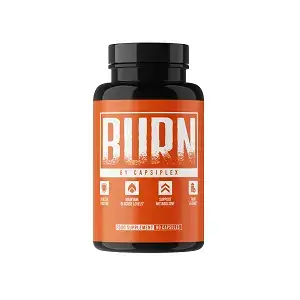
Capsiplex Burn
- Best pick if low-calorie training days flatten you — a genuine pre-workout-style lift
- Caffeine and Capsimax both clinically dosed, full formula published, 60-day guarantee
- Too much stimulant if your sleep is already shaky — a real consideration after 40

Phen24
- Built for the 9pm snacking that undoes most diets — the caffeine-free night capsule targets it directly
- Both formulas published openly, sleep-friendly by design, 60-day guarantee
- Pricier two-part system with a long exclusion list — check it before buying
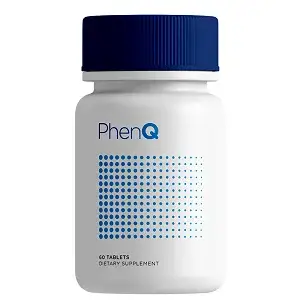
PhenQ
- The no-overthinking option — two capsules a day from an established UK maker
- Capsimax and caffeine core properly dosed, 60-day guarantee
- Several supporting actives sit below the doses in the studies cited

CalmLean
- The right tool if you train after work or stimulants wreck your sleep — protects the recovery that drives over-40 results
- Simple four-ingredient formula, 67-day guarantee
- ForsLean dose isn’t published, and forskolin evidence is mixed — gentler by design
Buying safely in the UK
Stick to established UK brands and look for Informed Sport certification, which means batch testing for banned and contaminated substances. Avoid mystery imports from marketplace sellers — the UK has seen plenty of spiked and mislabelled products.
If a supplement promises shredded abs in 30 days, it’s lying. The label just isn’t legally required to say so.
The hierarchy that keeps you honest
Supplements sit at the bottom of the pyramid — below calories, protein, training, sleep and steps. They polish a good plan; they cannot rescue a bad one.
Get the big five right for twelve weeks before you spend a penny on anything beyond creatine, protein and vitamin D. Most men have this pyramid upside down.
Your 12-Week Get Shredded Plan: Putting It All Together
Weeks 1–4: build the foundation
Start with three full-body sessions a week, focusing on learning or re-learning technique on the big compounds. Set your calories at a moderate 400–500 daily deficit and lock in your protein target.
Establish the boring habits now: step count, sleep time, food tracking. The first month is about building the machine, not redlining it.
Weeks 5–8: progressive intensity
Add a fourth training day if recovery allows, and push progressive overload on every main lift. If fat loss has stalled for two straight weeks, trim another 100–200 calories or add a cardio session — one lever at a time.
This is the block where the mirror starts talking back. Stay patient and keep the standards high.
Weeks 9–12: the final push
Refine rather than punish: tighten weekend eating, keep steps high, protect sleep fiercely. Resist the urge to slash calories or add daily HIIT — desperation moves cost muscle.
By now you’re likely down 8–12lbs of mostly fat with strength maintained or up. That’s the transformation everyone notices at the school gates.
Track what matters (the scales lie)
Weigh daily and judge only the weekly average — day-to-day swings are water, salt and last night’s curry. Add weekly waist measurements, fortnightly photos and your gym numbers.
If the waist is shrinking and lifts are holding, you’re winning regardless of what one Tuesday weigh-in says. Trust the trend, not the snapshot.
After week 12: keeping your results
The men who keep their results reverse diet — adding 100–150 calories back per week while monitoring the waistband. This rebuilds metabolism and energy without rebuilding the belly.
Then live at maintenance for a couple of months before cutting again if you want to go leaner. Shredded is a lifestyle rhythm, not a finish line.
The mistakes that catch men over 40
The classics: training like it’s 2005, dieting like it’s a punishment, skipping warm-ups, drinking away the weekend deficit, and quitting in week five because the scales stalled. Every one of them is avoidable.
Slow, boring consistency beats heroic intensity at this age. Write that on the fridge.
Conclusion
Getting shredded after 40 isn’t about training like a 25-year-old. It’s smarter than that.
It comes down to lifting three to four times a week, a moderate calorie deficit built on real British food, daily movement, and sleep you actually protect. Will it take patience? Absolutely — but the payoff is more energy, better health markers and a physique you’re proud of on the beach.
Start with your free NHS Health Check, pick the 12-week plan above, and give it twelve honest weeks. Your 40s could genuinely be the decade you get in the best shape of your life. Now get after it.
FAQs
Can I really build muscle and lose fat at the same time after 40?
Yes — especially if you’re new to lifting, returning after a long break, or carrying extra body fat. With a moderate deficit, high protein and progressive strength training, “body recomposition” is very achievable in your 40s.
How long does it take to get shredded after 40?
For most men carrying 1–2 stone of excess fat, expect four to eight months of consistent work to reach a visibly lean 12–15% body fat. The 12-week plan in this guide delivers a dramatic first phase; genuinely shredded usually takes a second cycle.
Do I need testosterone replacement therapy (TRT) to get lean after 40?
No — the vast majority of men get excellent results through training, nutrition and sleep alone. If you have genuine symptoms of low testosterone, speak to your GP and get tested rather than self-diagnosing; TRT is a medical decision, not a shortcut.
Can I still drink alcohol and get shredded?
You can, in moderation — plenty of men get lean while keeping one or two social drinking occasions a week. Alcohol slows progress through empty calories and disrupted sleep, so the leaner you want to get, the less room it leaves.
References
- NHS Health Check — NHS
- Physical activity guidelines for adults aged 19 to 64 — NHS
- Exercise — NHS Live Well
- Vitamin D — NHS
- Vitamin D: deficiency, supplements, sunlight and diet — British Heart Foundation
- Drinkaware — UK alcohol advice and guidelines

Tanveer Quraishi, author of Steroids 101 has extensive experience in the field of bodybuilding and has been writing online on various muscle-building and other health topics for many years now. He is not just interested in bodybuilding but is a great football player too. When he is not writing for his site or training at the gym, he loves to spend his time with this wife and kids.