D-Aspartic Acid and Testosterone: What UK Men Need to Know
D-aspartic acid is one of the most common ingredients in testosterone supplements. It’s also one of the most misunderstood.

Walk into the marketing copy of most testosterone boosters and you’ll see the same headline figure repeated: a 42% testosterone increase. That number is real. It’s also from one small study, in one very specific group of men, and it doesn’t tell the whole story.
This article breaks down what D-aspartic acid actually does, what the full evidence shows — including the studies that found no effect at all — and who’s actually likely to benefit from it.
What Is D-Aspartic Acid?
D-aspartic acid (DAA) is an amino acid found naturally in the brain, pituitary gland, and testes. It’s the mirror-image form of regular aspartic acid, which is used in protein synthesis — DAA instead plays a role in the body’s hormonal signalling system.
DAA is concentrated in the hypothalamus and pituitary gland, the two structures that sit at the top of the hormonal chain of command for testosterone production. It’s also found in high concentrations in the Leydig cells of the testes, where testosterone is actually made.
The proposed mechanism is straightforward on paper. DAA is thought to stimulate the release of gonadotropin-releasing hormone (GnRH) from the hypothalamus. GnRH then signals the pituitary gland to release luteinizing hormone (LH) — the hormone that tells the Leydig cells in the testes to produce testosterone. DAA may also act directly on the Leydig cells themselves, independent of the LH pathway.
In theory, that’s two separate mechanisms working together. In practice, the human evidence is far more mixed than the theory suggests.
Related Article:
- Ashwagandha and Testosterone in the UK: Does It Actually Work?
- DIM Supplement for Men in the UK: Estrogen Balance and Testosterone Support
The Famous Study — And Why It’s Misleading on Its Own
The DAA story starts with a 2009 study by Topo and colleagues, published in Reproductive Biology and Endocrinology. 23 healthy but sedentary men took 3.12g of DAA daily for 12 days. By the end, 20 of the 23 men showed higher testosterone, with an average increase of 42%, alongside a 33% increase in LH.
This is the study behind almost every “42% testosterone boost” claim you’ll see on a supplement label. It’s a real finding from a real, published study. The problem is what happened next.
What Happened When Researchers Tested Trained Men
Subsequent research specifically in resistance-trained men told a very different story.
A 2013 study by Willoughby and Leutholtz gave resistance-trained men DAA for two weeks at 3g daily, then increased to 6g daily. The result: no significant testosterone increase at 3g, and a measurable decrease in testosterone at the higher 6g dose.
A 2015 study published in the Journal of the International Society of Sports Nutrition tested 3g and 6g doses specifically in resistance-trained men and found no significant effect on total testosterone, estradiol, SHBG, or albumin at either dose — directly contradicting the original Topo findings in the same population.
A 2017 randomised controlled trial published in PLOS ONE followed resistance-trained men over a full three-month training period taking 6g of DAA daily. The conclusion was unambiguous: DAA supplementation is ineffective at changing testosterone levels or positively affecting training outcomes.
A 2022 systematic review pulling together the available randomised trials on trained males concluded that DAA is, at best, a low-level booster of testosterone with no significant effect on testosterone levels in professional male athletes, and no effect on body composition.
So Why the Difference? The Baseline Testosterone Factor
The pattern that emerges across this research is consistent: DAA appears to help men with below-average testosterone, and does little or nothing for men whose levels are already in the normal-to-high range.
The original Topo study used sedentary men with comparatively low baseline testosterone. The studies that found no effect — or a negative effect — were conducted in resistance-trained men, who typically have higher baseline testosterone than sedentary populations to begin with.
One of the clearest statements of this comes directly from the research literature: DAA supplementation is currently recommended as a viable product to significantly raise testosterone, however research in humans only supports this recommendation in untrained men with below-average testosterone levels.
There’s also supporting evidence from a different population entirely. A study in overweight and obese men combining DAA with sodium nitrate and vitamin D3 over 28 days found a 10–15% increase in total and free testosterone, with the men who started with the lowest testosterone seeing the largest improvements — again pointing to baseline level as the deciding factor.
A more recent 2025 study looked at DAA in a clinical context — men with idiopathic infertility — combining it with zinc and coenzyme Q10, finding measurable effects on semen parameters and testosterone in that specific medically-relevant population.
What This Means in Practice for UK Men
If you’re already training hard, eating well, and your testosterone is in a healthy range, DAA on its own is unlikely to move the needle. The strongest research in resistance-trained men consistently shows no benefit, and in some cases, a slight reduction in testosterone at higher doses.
| Your profile | Likely effect | Why | Recommendation |
|---|---|---|---|
| Sedentary, below-average baseline testosterone | Likely benefit | Closest match to the Topo (2009) study population — untrained men with lower starting testosterone showed the clearest response | DAA-containing formula reasonable to try; combine with lifestyle changes for best results |
| Men over 45 with declining testosterone | Likely benefit | Age-related decline typically means below-average baseline — the demographic where DAA research shows genuine, repeatable effect | Consider an increased-dose formula such as TestoPrime Gold, which targets this group specifically |
| Overweight or obese men with mild fatigue | Possible benefit | Supporting evidence shows 10–15% testosterone increase in this group, with strongest response in men who started lowest | Worth trying as part of a multi-ingredient formula alongside weight management efforts |
| Men with fertility concerns / subfertility | Possible benefit | 2025 clinical study combining DAA with zinc and CoQ10 showed measurable effects on semen parameters in this specific population | Discuss with your GP or fertility specialist before self-supplementing in this context |
| Resistance-trained men with normal-to-high testosterone | Unlikely to benefit | Multiple RCTs in this exact population found no significant testosterone increase — and higher doses (6g) showed a measurable decrease | DAA alone won’t move the needle; focus on training, sleep, and other evidence-based ingredients instead |
| Competitive or elite athletes | Unlikely to benefit | 2022 systematic review concluded DAA has no significant effect on testosterone or body composition in professional male athletes | Not worth prioritising as a standalone ingredient for this group |
Based on published clinical research referenced throughout this article, including Topo et al. (2009), Willoughby & Leutholtz (2013), Melville et al. (2015, 2017), and the 2022 systematic review. Individual results vary. This table is for informational purposes only and does not constitute medical advice.
If your testosterone is genuinely below average — whether due to age, lifestyle factors, or being relatively untrained — DAA may provide a meaningful short-term lift, particularly in the first few weeks of use. The effect appears strongest in the first one to two weeks and tends to diminish with continued use, which is consistent with the body’s tendency to regulate hormone levels back toward its own set point over time.
This is also why DAA rarely appears as a standalone product worth recommending. The evidence supports it as one component of a multi-ingredient formula targeting several mechanisms simultaneously — rather than a single ingredient capable of reliably raising testosterone on its own.
Dosage and Safety
Across the research, doses have ranged from 2g to 6g daily, with most positive studies using 3g daily for 2 to 4 weeks. Higher doses (6g) have not shown additional benefit and in some studies were associated with worse outcomes than lower doses.
DAA is generally considered safe at studied doses for short-term use. Long-term safety data beyond 90 days is limited, and the apparent diminishing returns with continued use suggest cycling — rather than continuous long-term use — may be the more sensible approach if using DAA specifically.
There are no major safety red flags in the human literature, though as with any supplement affecting hormone levels, men with existing hormonal conditions should check with their GP before starting.
The Best UK Options That Use D-Aspartic Acid Correctly
Given the nuanced evidence, the ingredient is best used as part of a broader formula rather than relied upon alone. Two products stand out for UK men specifically.
TestoPrime
TestoPrime includes D-aspartic acid at 2,000mg alongside a comprehensive formula covering the other major evidence-based mechanisms for testosterone support — KSM-66 ashwagandha for cortisol reduction, fenugreek for aromatase inhibition, Panax ginseng, pomegranate extract, zinc, and vitamin D.
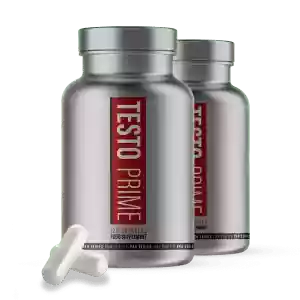
This multi-mechanism approach is exactly what the DAA research suggests is sensible. Rather than relying on DAA alone to do the heavy lifting, TestoPrime pairs it with ingredients targeting cortisol, SHBG, and oestrogen conversion — covering the bases that DAA by itself cannot. It’s manufactured in GMP-certified facilities in both the US and UK, entirely plant-based, and backed by a lifetime money-back guarantee. Check out my honest Testo Prime review by clicking here.
TestoPrime Gold
For men over 45 — the demographic where baseline testosterone has typically declined enough that DAA’s evidence base is most directly relevant — TestoPrime Gold takes this further with an increased D-aspartic acid dose specifically formulated for this age group.
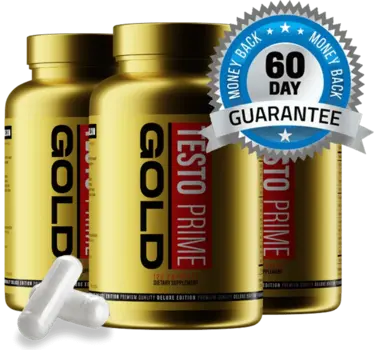
This is a meaningful distinction given everything covered in this article. Men over 45 are considerably more likely to fall into the “below-average baseline testosterone” category where DAA has shown genuine, repeatable benefit in the research, rather than the “already-optimal, resistance-trained” category where the evidence consistently shows no effect.
Gold pairs the increased DAA dose with boron (for SHBG reduction), zinc with green tea extract (for aromatase inhibition), red ginseng, and vitamin B6 — addressing the broader hormonal picture rather than DAA in isolation.
Both products take the right approach: using DAA as one well-dosed component within a formula built around multiple complementary mechanisms, rather than marketing DAA alone as a guaranteed testosterone solution — which the evidence simply doesn’t support. Click here to read my detailed TestoPrime Gold review.
Final Thoughts
D-aspartic acid is a textbook case of why ingredient-level marketing claims need context. The 42% figure is real — but it applies to sedentary men with low baseline testosterone over a 12-day window, not to the general population, and certainly not to men who are already training and eating well.
For UK men with confirmed or suspected lower testosterone — particularly those over 45 — DAA included as part of a well-rounded formula like TestoPrime or TestoPrime Gold makes sense as part of a broader strategy. For younger, already-active men with healthy testosterone, the honest evidence suggests DAA alone won’t do much, and the other ingredients in a comprehensive formula matter more.
If you’re experiencing persistent symptoms of low testosterone, a GP appointment and blood test should always come first. Supplements support natural production — they don’t replace proper diagnosis where it’s needed.
References
- Topo, E., Soricelli, A., D’Aniello, A., Ronsini, S., & D’Aniello, G. (2009). The role and molecular mechanism of D-aspartic acid in the release and synthesis of LH and testosterone in humans and rats. Reproductive Biology and Endocrinology, 7, 120. https://doi.org/10.1186/1477-7827-7-120
- Willoughby, D. S., & Leutholtz, B. (2013). D-aspartic acid supplementation combined with 28 days of heavy resistance training has no effect on body composition, muscle strength, and serum hormones associated with the hypothalamo-pituitary-gonadal axis in resistance-trained men. Nutrition Research, 33(10), 803–810. https://doi.org/10.1016/j.nutres.2013.07.010
- Melville, G. W., Siegler, J. C., & Marshall, P. W. M. (2015). Three and six grams supplementation of d-aspartic acid in resistance trained men. Journal of the International Society of Sports Nutrition, 12, 15. https://doi.org/10.1186/s12970-015-0078-7
- Melville, G. W., Siegler, J. C., & Marshall, P. W. M. (2017). The effects of d-aspartic acid supplementation in resistance-trained men over a three month training period: A randomised controlled trial. PLOS ONE, 12(8), e0182630. https://doi.org/10.1371/journal.pone.0182630
- Shahrbaf, M. A., et al. (2022). D-aspartic Acid Supplementation Effects on Body Composition: A Systematic Review of Randomized Clinical Trials on Trained Males. Asian Journal of Sports Medicine, In Press, e120161. https://doi.org/10.5812/asjsm.120161
- Bloomer, R. J., Gunnels, T. A., & Schriefer, J. M. (2015). Clinical evaluation of a novel testosterone-boosting dietary supplement in overweight/obese men. Journal of Functional Morphology and Kinesiology. (DAA combined with sodium nitrate and vitamin D3 in overweight/obese men).
- GamalEl Din, S. F., Elnashar, A. M., Elkhiat, Y., Hussein, T., AbdElSalam, M. A., et al. (2025). Evaluation of in vivo supplementation of 2660mg D-aspartic acid and 200mg ubiquinol and 10mg zinc on different semen parameters in idiopathic male infertility: A randomized double blind placebo controlled study. Archivio Italiano di Urologia e Andrologia, 97(2), 13554. https://doi.org/10.4081/aiua.2025.13554
- Examine.com. (2025). Research Breakdown on D-Aspartic Acid. Retrieved from https://examine.com/supplements/d-aspartic-acid/research/
- D’Aniello, G., Ronsini, S., Notari, T., Grieco, N., Infante, V., D’Angelo, N., et al. (2012). D-Aspartate, a key element for the improvement of sperm quality. Advances in Sexual Medicine, 2(4), 45–53. https://doi.org/10.4236/asm.2012.24008

Tanveer Quraishi, author of Steroids 101 has extensive experience in the field of bodybuilding and has been writing online on various muscle-building and other health topics for many years now. He is not just interested in bodybuilding but is a great football player too. When he is not writing for his site or training at the gym, he loves to spend his time with this wife and kids.