Ashwagandha and Testosterone in the UK: Does It Actually Work?
Ashwagandha is everywhere right now. It’s in sports supplements, wellness shots, and an ever-growing number of testosterone boosters — and it’s being credited with everything from reduced anxiety to significant hormonal improvements.
But does it actually work for testosterone? And if so, who does it work for, at what dose, and in what form?
This article cuts through the noise and gives you the honest, evidence-based answer.
What Is Ashwagandha?
Ashwagandha — botanically known as Withania somnifera — is a medicinal herb with a 3,000-year history in Ayurvedic medicine, India’s traditional system of health.
It’s classified as an adaptogen — a herb that helps the body adapt to stress by regulating the physiological stress response. The primary bioactive compounds are withanolides, a group of steroidal lactones found mainly in the root. These withanolides are chemically similar in structure to human sex hormones, though they don’t act as hormones directly.
In recent decades, ashwagandha has moved from Ayurvedic tradition into mainstream sports science, backed by a growing body of clinical evidence. It’s now one of the most-studied herbal supplements in the world — with well over 24 double-blind, randomised, placebo-controlled trials completed on KSM-66, the most studied form.
How Does Ashwagandha Affect Testosterone?
The relationship between ashwagandha and testosterone operates through several distinct mechanisms — which is important to understand, because it’s not a direct testosterone precursor like D-aspartic acid.
Mechanism 1: Cortisol reduction
This is the primary pathway. Research suggests that ashwagandha extracts may lower stress, anxiety, and cortisol levels — and this is where the testosterone connection lives.
Cortisol and testosterone operate in direct opposition through the hypothalamic-pituitary-gonadal (HPG) axis. When cortisol is chronically elevated — as it is for a significant proportion of UK men navigating work pressure, financial stress, and sleep deprivation — it actively suppresses testosterone production. Chronic stress damages the key proteins needed to make testosterone, and high cortisol levels stop the testicular Leydig cells from working properly. These cells make most of the testosterone in men.
By reducing chronic cortisol, ashwagandha removes one of the most consistent hormonal suppressors of testosterone — allowing the body’s natural production to rebound.
Mechanism 2: HPG axis stimulation
Some studies have observed rises in luteinizing hormone (LH) alongside higher testosterone levels in men taking ashwagandha. This suggests the herb may gently stimulate the brain-gonad axis directly — not just through cortisol reduction alone.
Mechanism 3: Antioxidant protection of testicular tissue
Ashwagandha’s antioxidant and anti-inflammatory properties may protect testicular Leydig cells from oxidative damage. Lower oxidative stress in testicular tissue means healthier hormone production. This is particularly relevant for men under chronic stress or with high inflammatory markers.
Mechanism 4: DHEA-S elevation
Several studies have found increases in DHEA-S (dehydroepiandrosterone sulfate) — a testosterone precursor — alongside testosterone increases. One study found an 18% greater increase in DHEA-S compared to placebo. This suggests ashwagandha may support the upstream hormonal supply chain, not just the direct production pathway.
What Does the Research Actually Show?
A comprehensive 2025 review concluded that ashwagandha supplementation can increase testosterone levels in adults with no chronic disorders. This is meaningful — it suggests that even men in the normal testosterone range may see further improvements, not just those with confirmed deficiency.
| Study | Participants | Dose | Duration | Testosterone outcome |
|---|---|---|---|---|
| Wankhede et al., 2015 | Healthy, resistance-trained young men | 600mg KSM-66/day | 8 weeks | Statistically significant testosterone increase vs placebo, alongside improved muscle strength and recovery |
| Lopresti et al., 2019 | Overweight men, aged 40–70, mild fatigue | Extract with 21mg withanolide glycosides/day | 8 weeks | ~15% testosterone increase and 18% greater DHEA-S increase vs placebo |
| 2022 RCT — low sexual desire | Adult males with low sexual desire | 300mg twice daily (600mg total) | 8 weeks | Significant increase in serum testosterone and sexual wellbeing scores |
| Salve et al., 2025 (long-term safety) | 191 healthy adults, aged 18–65 | KSM-66 (dose per standard protocol) | 12 months | Testosterone significantly increased; cortisol modestly declined; no adverse liver, kidney or thyroid effects; 68.7% showed clinical improvement, strongest in 50+ |
| 2013 fertility study | 46 healthy male participants | KSM-66 (standard protocol) | 12 weeks | Testosterone +17%; sperm concentration +167%; semen volume +53%; sperm motility +57% |
| 2025 systematic review (cortisol) | 873 patients across 15 RCTs | 125–600mg/day (range across studies) | 4–12 weeks | Significant cortisol reduction across all included studies — the primary mechanism behind testosterone benefits |
Source: published peer-reviewed RCTs and systematic reviews referenced throughout this article. Outcomes reflect group averages from controlled trials — individual results vary. This table is for informational purposes only and does not constitute medical advice.
Here’s what specific studies have found:
The landmark RCT — resistance-trained men (Wankhede et al., 2015): Published in the Journal of the International Society of Sports Nutrition, this 8-week, randomised, double-blind, placebo-controlled trial enrolled 57 young men aged 18–50 with little resistance training experience — 29 in the ashwagandha group, 28 on placebo. Subjects took 300mg of KSM-66 twice daily (600mg total) alongside a structured resistance training programme.
The ashwagandha group showed a statistically significant increase in testosterone compared to placebo, alongside significantly greater gains in muscle strength, muscle size, and a reduction in exercise-induced muscle damage (measured via serum creatine kinase).
Overweight men aged 40–70 (Lopresti et al., 2019): Published in the American Journal of Men’s Health, this 16-week randomised, double-blind, placebo-controlled crossover trial enrolled 57 overweight men aged 40–70 with mild-to-moderate fatigue (50 completed the first 8-week phase). Participants received either placebo or an ashwagandha extract delivering 21mg of withanolide glycosides daily.
The ashwagandha group showed an 18% greater increase in DHEA-S (p=.005) and a 14.7% greater increase in testosterone (p=.010) compared to placebo — though no significant between-group differences were found in cortisol or estradiol. This is particularly relevant for UK men in the demographic most commonly experiencing hormonal decline.
Men with low sexual desire (2022 RCT): Adult males with low sexual desire were given 300mg of ashwagandha root extract twice daily over 8 weeks. Results showed a significant increase in serum testosterone levels and sexual wellbeing.
12-month long-term safety study (Salve et al., 2025): Published in Phytotherapy Research, this prospective observational study followed 191 healthy adults aged 18–65 taking standardised KSM-66 root extract for 12 months, with clinical assessments monthly and laboratory tests at baseline, 6 months, and 12 months.
Serum cortisol levels modestly declined, testosterone significantly increased, and quality of life scores (measured via SF-12) improved significantly. Critically, there were no significant adverse effects on liver, kidney, or thyroid function over the full 12 months. 68.7% of participants showed overall clinical improvement — especially those aged 50 and above.
2013 fertility study: Published in Evidence-Based Complementary and Alternative Medicine, this double-blind, placebo-controlled pilot study followed 46 men with oligospermia (low sperm count) taking KSM-66 over a 90-day period, showing increases in sperm concentration (+167%), semen volume (+53%), sperm motility (+57%), and serum testosterone (+17%). For younger UK men concerned about fertility alongside hormonal health, these findings are particularly relevant.
The honest summary: testosterone increases in the range of 10–20% are consistently seen across well-designed studies using standardised extracts at appropriate doses. These are meaningful improvements — staying within the normal physiological range — not pharmacological spikes.
Why This Matters Specifically for UK Men
The cortisol-testosterone connection makes ashwagandha particularly relevant for the UK context.
UK men face a unique combination of high occupational stress, poor sleep culture, limited daylight in winter, and high alcohol consumption — all of which elevate chronic cortisol and suppress testosterone. A 2025 systematic review of 15 studies confirmed that ashwagandha supplementation significantly reduces cortisol in stressed adults across doses of 125–600mg per day over 4–12 weeks.
For men whose testosterone issues stem primarily from chronic stress and elevated cortisol — rather than a clinical deficiency or nutritional gap — ashwagandha addresses the root cause more directly than many other natural interventions.
It’s also important to note that according to the 2026 WADA List of Prohibited Substances, ashwagandha is not prohibited. UK men who compete in sport can use it without concern about doping violations.
KSM-66 vs Generic Ashwagandha: Why the Form Matters Enormously
Not all ashwagandha is the same. This is one of the most important practical points in this article, and it’s consistently glossed over in mainstream supplement coverage.
KSM-66 is a full-spectrum, root-only extract of ashwagandha, standardised to a minimum of 5% withanolides using a water-based extraction process. It is the most extensively studied form of ashwagandha in the world — with over 24 double-blind, placebo-controlled human clinical trials behind it. The studies cited throughout this article predominantly used KSM-66 specifically.
| Criteria | KSM-66 | Generic Ashwagandha |
|---|---|---|
| Extract source | Root-only Full-spectrum, root-only extract — the part of the plant used in almost all clinical trials |
Often leaf or mixed Frequently uses leaf extract or root/leaf blends, which have a different and less-studied compound profile |
| Withanolide content | Standardised ≥5% Guaranteed minimum withanolide concentration on every batch — what you see on the label is what’s in the capsule |
Often unstated Many products don’t disclose withanolide percentage at all, making potency impossible to verify |
| Extraction method | Water-based Gentle water-based extraction process preserves the natural compound ratios found in the whole root |
Varies, often solvent-based Some generic extracts use harsher solvent extraction, which can alter the natural compound profile |
| Clinical trial backing | 24+ RCTs Over 24 double-blind, randomised, placebo-controlled human trials — the most studied ashwagandha form in the world |
Little to none The vast majority of generic ashwagandha products have zero trials conducted on that specific formulation |
| Batch-to-batch consistency | High Patented, standardised manufacturing process ensures consistent potency across every batch produced |
Variable Potency can vary significantly batch to batch with no standardisation requirement in place |
| Contamination testing | Tested and verified Subject to heavy metal and contaminant testing as part of the patented production process |
Inconsistent Some studies have found cadmium and lead levels exceeding allowed limits in untested generic products |
Note: when evaluating any ashwagandha supplement, look for “KSM-66” specifically named on the label — not just “ashwagandha extract.” The clinical research discussed in this article applies specifically to this standardised form and cannot be reliably extrapolated to generic alternatives.
Generic ashwagandha supplements — the kind you’ll find in budget products and supermarket own-label lines — typically use leaf extracts or unstandardised root powder with no guaranteed withanolide content. The potency can vary enormously batch to batch, and the research on KSM-66 cannot simply be applied to generic forms.
When evaluating any ashwagandha supplement, look for KSM-66 specifically on the label. If it just says “ashwagandha extract” without naming the form, the clinical research does not reliably apply to that product.
What’s the Right Dose?
Clinical trials have used daily dosages ranging from 10mg to 12,000mg, but the most studied and consistently effective range is 300–600mg daily of a standardised extract.
For testosterone support specifically, 600mg per day is the dose used in the most relevant RCTs — including the Wankhede resistance training study and the 12-month safety trial. This is why products that include ashwagandha at 300mg or less are operating below the dose used in the most compelling research.
The dose should be taken daily — not cyclically — as the effects build over time. Most studies run for 8–12 weeks, and meaningful testosterone and cortisol improvements emerge across that timeframe. Results won’t be immediate.
In terms of timing, taking ashwagandha with a meal reduces the risk of gastrointestinal discomfort. Morning or evening is a matter of personal preference — the research doesn’t show a meaningful difference in outcomes based on timing.
Related Articles:
- DIM Supplement for Men in the UK: Estrogen Balance and Testosterone Support
- D-Aspartic Acid and Testosterone: What UK Men Need to Know
Are There Any Side Effects?
Ashwagandha is generally considered safe and well-tolerated at standard doses. Side effects are uncommon. At doses exceeding 1,250mg daily, some studies have noted direct irritation to the intestinal mucosa, potentially causing nausea, vomiting, or gastrointestinal upset.
The 2025 long-term safety study over 12 months in 191 adults found no significant adverse effects on liver, kidney, or thyroid function. This is meaningful reassurance for men considering extended use.
There are a few contraindications worth knowing. Ashwagandha may interact with thyroid medications — given that it can modestly influence thyroid hormone levels. Men on thyroid medication should check with their GP before supplementing. It may also have mild interactions with sedatives and immunosuppressants.
Pregnant women should avoid ashwagandha. For the vast majority of healthy adult men, it is a well-tolerated supplement with an increasingly robust long-term safety profile.
Who Will Benefit Most From Ashwagandha?
Based on the research, the men most likely to see meaningful testosterone improvements from ashwagandha are:
Men under chronic stress — the cortisol-testosterone mechanism works most powerfully here. If your testosterone issues correlate with high-stress periods, ashwagandha is highly relevant.
Men who train with resistance exercise — the combination of KSM-66 and resistance training consistently produces stronger hormonal outcomes than either intervention alone.
Men aged 40–70 with mild fatigue and borderline levels — the Lopresti study was specifically conducted in this demographic and showed the most clinically meaningful improvements.
Men with fertility concerns — the sperm quality data (motility, count, volume) is among the most consistent in the ashwagandha literature.
Who is less likely to benefit? Men with very low testosterone due to a primary hormonal disorder (hypogonadism, pituitary dysfunction, Klinefelter syndrome) are unlikely to see sufficient improvement from ashwagandha alone. These men need medical assessment and potentially TRT — not a supplement.
A Note on Natural Support: TestoPrime
Sponsored/affiliate content — does not constitute medical advice.
For UK men looking to use ashwagandha as part of a comprehensive testosterone support approach, the form, dose, and manufacturing standards behind the supplement all matter — as this article has made clear.
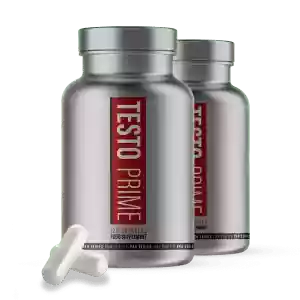
TestoPrime is manufactured in GMP-certified facilities in both the US and the UK, which is a genuine point of difference for British buyers who prefer to know their supplement has UK manufacturing oversight rather than being produced and shipped from overseas alone. The formula includes KSM-66 ashwagandha alongside D-aspartic acid, fenugreek extract, Panax ginseng, pomegranate extract, zinc, and vitamin D — all ingredients with credible research behind the mechanisms discussed in this article.
The product is also entirely plant-based and vegan-friendly, which broadens who it suits compared with many competitor formulas. Alongside the cortisol-reducing properties of its ashwagandha content, TestoPrime’s inclusion of Panax ginseng adds a further layer of stress and fatigue support — relevant given how central chronic cortisol elevation is to the testosterone-suppression picture in UK men. Check out my complete Testo Prime review by clicking here.
For men in their 40s and beyond specifically, TestoPrime Gold is worth particular attention. This variant is formulated with the additional hormonal and recovery needs of older men in mind, building on the core TestoPrime formula with adjustments aimed at the more pronounced age-related decline in testosterone and slower recovery profile typically seen from the mid-40s onwards.
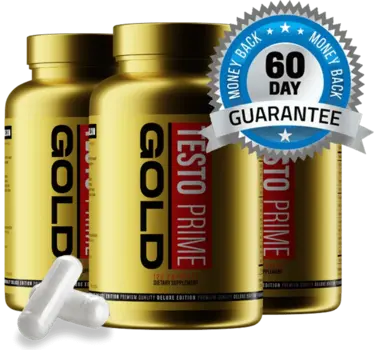
Given that several of the strongest ashwagandha studies cited in this article — including the Lopresti research on men aged 40–70 — showed the most clinically meaningful improvements in exactly this age group, TestoPrime Gold’s positioning is well aligned with where the evidence is strongest.
As with any supplement, it works best as a complement to the lifestyle fundamentals — resistance training, good sleep, and stress management — rather than a replacement for them. Check out my honest Testo Prime Gold review by clicking here.
Disclosure: This section may contain affiliate links. We may earn a small commission at no extra cost to you.
Final Thoughts
Does ashwagandha actually work for testosterone? Yes — with important caveats.
The evidence is consistent, increasingly robust, and now supported by a 12-month long-term safety study. For men dealing with chronic stress, elevated cortisol, and the associated hormonal suppression — particularly common in UK men — ashwagandha addresses the underlying mechanism more directly than most other natural interventions.
The key conditions are: use KSM-66 specifically, at 600mg daily, for at least 8–12 weeks, alongside resistance training. Do all of that, and the evidence gives you genuine reason for confidence.
If symptoms persist despite lifestyle optimisation and supplementation, always see your GP and get a blood test. Natural interventions have limits, and knowing where those limits are is as important as knowing what works.
References
- Wankhede, S., Langade, D., Joshi, K., Sinha, S. R., & Bhattacharyya, S. (2015). Examining the effect of Withania somnifera supplementation on muscle strength and recovery: A randomized controlled trial. Journal of the International Society of Sports Nutrition, 12(43). https://doi.org/10.1186/s12970-015-0104-9
- Lopresti, A. L., Drummond, P. D., & Smith, S. J. (2019). A Randomized, Double-Blind, Placebo-Controlled, Crossover Study Examining the Hormonal and Vitality Effects of Ashwagandha (Withania somnifera) in Aging, Overweight Males. American Journal of Men’s Health, 13(2). https://doi.org/10.1177/1557988319835985
- Salve, J., Kale, S., Prajapati, B. L., Sparavigna, A., Savant, M., Ademola, J., & Langade, D. (2025). Safety of 12-Months Administration of Ashwagandha (Withania somnifera) Standardized Root Extract in Healthy Adults: A Prospective, Observational Study. Phytotherapy Research. https://doi.org/10.1002/ptr.70096
- Ambiye, V. R., Langade, D., Dongre, S., Aptikar, P., Kulkarni, M., & Dongre, A. (2013). Clinical evaluation of the spermatogenic activity of the root extract of Ashwagandha (Withania somnifera) in oligospermic males: A pilot study. Evidence-Based Complementary and Alternative Medicine, 2013, 571420. https://doi.org/10.1155/2013/571420
- Bachour, G., Samir, A., Haddad, S., Houssaini, M. A., & El Radad, M. (2025). Effects of Ashwagandha Supplements on Cortisol, Stress, and Anxiety Levels in Adults: A Systematic Review and Meta-Analysis. BJPsych Open. https://doi.org/10.1192/bjo.2025.10136
- Examine.com. (2026). Ashwagandha: Benefits, dosage, and side effects. Retrieved from https://examine.com/supplements/ashwagandha/
- National Institutes of Health, Office of Dietary Supplements. Ashwagandha: Is it helpful for stress, anxiety, or sleep? — Health Professional Fact Sheet. Retrieved from https://ods.od.nih.gov/factsheets/Ashwagandha-HealthProfessional/
- World Anti-Doping Agency (WADA). (2026). The 2026 Prohibited List. Retrieved from https://www.wada-ama.org

Tanveer Quraishi, author of Steroids 101 has extensive experience in the field of bodybuilding and has been writing online on various muscle-building and other health topics for many years now. He is not just interested in bodybuilding but is a great football player too. When he is not writing for his site or training at the gym, he loves to spend his time with this wife and kids.