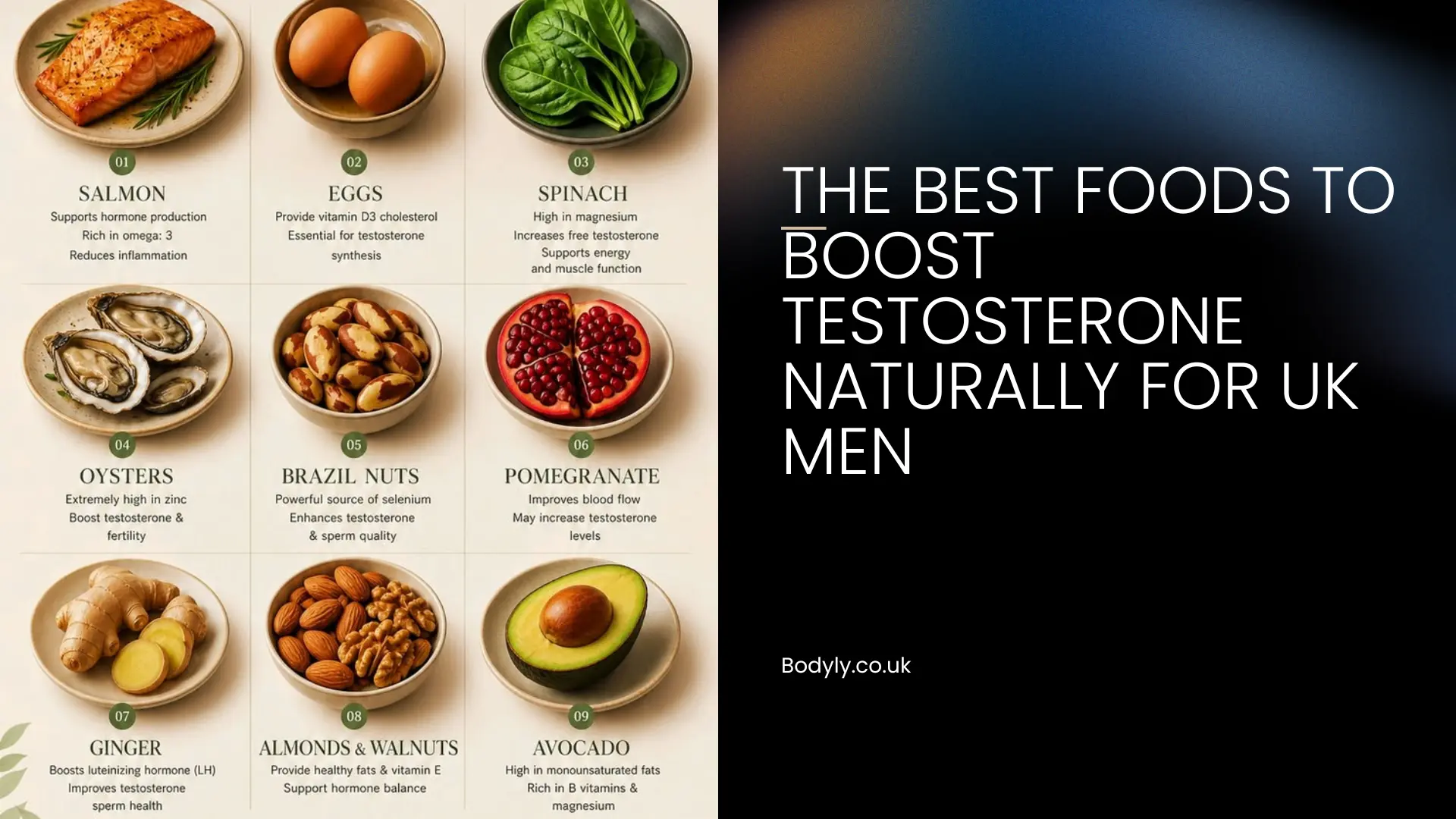
The Best Foods to Boost Testosterone Naturally for UK Men
You don’t need a prescription to start supporting your testosterone levels. What’s already on your plate — or what’s conspicuously missing from it — could be making a significant difference to your hormonal health right now.
“Testosterone production relies heavily on micronutrient status, especially vitamin D, zinc, and magnesium,” says Kevin Greene, R.D.N., and managing director of Almased UK. “Including foods rich in these nutrients within a healthy diet can make a meaningful difference for men when testosterone levels start to slide.”
And here’s the thing — most UK men aren’t getting nearly enough of these key nutrients. The average British diet is heavy on ultra-processed foods and light on the zinc-rich shellfish, magnesium-packed leafy greens, and vitamin D-rich fatty fish that testosterone production actually depends on.
This guide covers the best foods to boost testosterone naturally, why each one works, how to actually incorporate them into a UK diet, and — equally important — which foods are quietly working against your hormonal health.
UK Nutrient Deficiency Rates
Before we get into the best foods for testosterone, it’s worth understanding the scale of the problem. The chart above shows the percentage of UK men who are deficient in each of the key nutrients testosterone production depends on — and the numbers are sobering.
More than half of UK men are vitamin D deficient during the winter months. That’s not a niche health issue — that’s the majority, and it runs from October through to April every single year. The reason is straightforward: the UK’s latitude means sunlight is simply too weak for skin synthesis for most of the year. If you’re not actively supplementing or eating oily fish regularly, there’s a strong chance your vitamin D levels are insufficient right now.
Magnesium tells a similar story. Close to half of UK men fall below the recommended intake — largely because the foods richest in magnesium (dark leafy greens, whole grains, nuts, and seeds) are significantly underrepresented in the average British diet, which skews heavily toward ultra-processed convenience foods that contain virtually none of it.
Zinc and selenium follow the same pattern — both depleted by diets low in shellfish, red meat, and quality whole foods. Selenium in particular is worth highlighting for a UK-specific reason: British agricultural soils are naturally low in selenium compared to North American equivalents, meaning even men eating reasonable diets may be getting less than they think.
The point isn’t to overwhelm you. It’s to make clear that for most UK men, improving testosterone through diet isn’t about adding exotic superfoods — it’s about closing nutritional gaps that are already there. The foods in this article do exactly that.
Based on published UK population nutritional surveys including NDNS (National Diet and Nutrition Survey) data. Vitamin D figure reflects winter months (Oct–Apr) when sunlight synthesis is insufficient. Deficiency defined as below recommended reference nutrient intake (RNI) for UK adults.
Why Food Matters for Testosterone
Before diving into the specifics, it’s worth understanding the basics. Testosterone is a steroid hormone, and like all steroid hormones, it’s synthesised from cholesterol. That means your body needs dietary fat — specifically, the right kinds — to even begin the production process.
Beyond fat, testosterone synthesis depends on a handful of micronutrients acting as essential cofactors. Without adequate zinc, magnesium, and vitamin D, your body simply cannot produce testosterone efficiently — regardless of how well you’re training or sleeping.
A testosterone-boosting diet should be full of lean protein, healthy fats, and foods high in antioxidants, like berries and leafy greens, as well as foods rich in zinc, magnesium, and vitamin D.
No single food is going to transform your testosterone levels overnight. But a consistent dietary pattern that supplies the right building blocks, reduces inflammation, and avoids the hormonal disruptors that suppress production — that absolutely moves the needle over weeks and months.
The Best Foods to Boost Testosterone Naturally
Here’s the list of foods that can help boost testosterone levels in men naturally and safely:
| Food | Key nutrient(s) | Testosterone benefit | UK availability | How to eat it |
|---|---|---|---|---|
| Oysters Highest T impact | Zinc (32mg per 6 oysters) | Provides more zinc per serving than any other food — essential cofactor for Leydig cell testosterone synthesis | Most supermarkets, fishmongers, coastal markets | Fresh with lemon, smoked from jars, or cooked in pasta dishes |
| Eggs (whole) Highest T impact | Cholesterol, Vitamin D, healthy fats | Provides cholesterol — the direct precursor to all steroid hormones including testosterone | Every UK supermarket — one of the most affordable options | 2–3 whole eggs daily — poached, scrambled, or boiled. Never ditch the yolk |
| Salmon / mackerel / sardines Highest T impact | Vitamin D, omega-3, zinc | Critical for UK men — primary food source of vitamin D during the Oct–April deficiency window | All supermarkets fresh and tinned — tinned sardines/mackerel are the best-value option | 2–3 portions per week; tinned sardines on toast is a quick, affordable option |
| Spinach / kale / Swiss chard Highest T impact | Magnesium | Magnesium competes with SHBG, freeing bound testosterone and increasing the biologically active free T | All supermarkets — spinach is cheapest, widely available year-round | Wilt into curries, scrambled eggs, pasta; add raw to smoothies |
| Grass-fed beef / lamb Highest T impact | Zinc, saturated fat, protein | Provides zinc and healthy fats essential for hormone synthesis; adequate saturated fat linked to higher T | All supermarkets; grass-fed widely available in UK butchers and M&S | 2–3 portions per week — steak, mince, or slow-cooked lamb |
| Pumpkin seeds Good T impact | Zinc, magnesium, healthy fats | Ticks two key micronutrient boxes in one affordable snack; easy daily habit to build | All supermarkets, Holland & Barrett, Amazon | 30g daily as a snack or sprinkled on porridge, yoghurt, or salads |
| Broccoli / Brussels sprouts / cauliflower Good T impact | Indole-3-carbinol, DIM | Supports oestrogen clearance through the liver — improves the testosterone-to-oestrogen ratio | All supermarkets — among the most affordable UK vegetables | Steam or stir-fry 3–4x per week; avoid boiling which degrades active compounds |
| Extra virgin olive oil Good T impact | Monounsaturated fats, Vitamin E, polyphenols | Linked to higher T in studies; polyphenols protect testicular tissue from oxidative damage | All supermarkets — Lidl and Aldi offer excellent quality at low cost | Replace vegetable/sunflower oil with EVOO for everyday cooking and dressings |
| Pomegranate Emerging evidence | Antioxidants, punicalagins | One study showed 24% T increase; antioxidants protect testicular tissue from oxidative stress | Most supermarkets fresh Oct–Jan; juice available year-round | Seeds on porridge or yoghurt; 100% pomegranate juice (no added sugar) as occasional supplement |
| Avocado Good T impact | Boron, monounsaturated fats, Vitamin K | Boron reduces SHBG levels, freeing more testosterone for the body to use; supports Vitamin D metabolism | All supermarkets year-round | Half an avocado daily — on toast, in salads, or as a side |
| Dark chocolate (70%+) Emerging evidence | Magnesium, flavonoids | Provides magnesium and antioxidant compounds that support testicular cell health | All supermarkets — Green & Black’s 70%+ widely available | 1–2 squares daily; must be 70%+ cocoa — milk chocolate has negligible benefit |
| Brazil nuts Good T impact | Selenium, healthy fats | Selenium supports testosterone synthesis and sperm quality; 2–3 nuts provides optimal daily selenium | All supermarkets — sold loose or in mixed nut bags | 2–3 Brazil nuts daily — don’t exceed this as excess selenium is toxic |
Note: no single food will dramatically alter testosterone levels in isolation. The overall dietary pattern matters most. These foods work best as part of a consistently testosterone-friendly diet rather than as individual additions to an otherwise poor diet.
1. Oysters — The Single Most Powerful Testosterone Food
If you could eat just one food for testosterone, this would be it. Oysters contain more zinc per serving than any other food on earth — and zinc is arguably the most critical micronutrient for testosterone production.
Zinc acts as an essential cofactor in the enzymatic reactions that produce testosterone in the Leydig cells of the testicles. Zinc deficiency is strongly and consistently linked to low testosterone, and correcting a deficiency through diet or supplementation has been shown in multiple studies to meaningfully raise levels.
A standard serving of six oysters provides around 32mg of zinc — more than twice the UK recommended daily intake for adult men of 9.5mg. You don’t need to eat them daily, but incorporating oysters a few times a month alongside other zinc-rich foods makes a genuine difference.
Can’t stomach oysters? Shellfish like prawns and mussels are good sources of zinc too, and they’re considerably more accessible in UK supermarkets and fishmongers.
2. Eggs — Nature’s Testosterone Multivitamin
Eggs are one of the most complete testosterone-supporting foods available. A single whole egg provides cholesterol (the direct precursor to testosterone), vitamin D, vitamin B12, healthy fats, and high-quality protein — essentially a miniature hormonal toolkit in one package.
The key word there is whole. Egg whites contain protein but none of the hormonal building blocks. Fatty fish such as salmon and sardines are high in nutrients important for hormonal health, such as vitamin D, zinc, and omega-3 fatty acids. Eggs offer much of the same nutrient profile in a more affordable, everyday format.
For decades, eggs were demonised for their cholesterol content. Modern nutritional science has comprehensively overturned that position — dietary cholesterol from whole foods doesn’t raise cardiovascular risk for most people, and it does provide the raw material for steroid hormone production.
Aim for two to three whole eggs per day as part of a balanced diet. Poached, scrambled, boiled — the cooking method matters less than including the yolk.
3. Fatty Fish — Essential for UK Men Specifically
Salmon, mackerel, sardines, and trout are the most powerful testosterone-supporting fish available — and for UK men, they carry a particular importance that goes beyond general hormonal health.
Fatty fish are high in nutrients important for hormonal health, such as vitamin D, zinc, and omega-3 fatty acids. In the UK, we can only synthesise vitamin D from sunlight between late May and early August. For the other seven or eight months of the year, dietary sources become critical — and fatty fish are the richest natural food source available.
The omega-3 fatty acids in these fish serve a different but equally important function. They reduce systemic inflammation, and chronic inflammation is one of the key mechanisms by which diet suppresses testosterone. When inflammatory markers are elevated, the body prioritises the inflammatory response over reproductive and anabolic functions — including testosterone production.
Practical UK recommendations: mackerel is the most affordable option and widely available fresh or tinned. Tinned sardines are a genuinely excellent budget option — just as nutritionally valuable as fresh. Aim for two to three portions of oily fish per week, which also aligns with NHS dietary recommendations for heart health.
4. Leafy Green Vegetables — The Magnesium Powerhouses
Spinach, kale, Swiss chard, and rocket are among the richest dietary sources of magnesium — and magnesium plays a direct and underappreciated role in testosterone availability.
The mechanism is specific: magnesium competes with sex hormone-binding globulin (SHBG) for binding sites. SHBG binds to testosterone in the bloodstream and makes it unavailable for the body to use — only free testosterone (the unbound portion) is biologically active. Higher dietary magnesium means more testosterone remains free and functional.
Magnesium deficiency is common in UK men, partly because the foods richest in it — dark leafy greens, whole grains, nuts, and seeds — are significantly underrepresented in the average British diet. Correcting this deficiency through diet and supplementation has been shown to meaningfully increase free testosterone levels.
Practically speaking: a large handful of spinach wilts down to almost nothing when cooked, making it easy to incorporate into curries, pasta, omelettes, and stir-fries without significantly changing the character of a dish. It’s one of the lowest-effort, highest-impact dietary additions a UK man can make.
5. Beef (Particularly Grass-Fed) — Zinc, Protein and Healthy Fats
Red meat has had an unfair press in recent years. When consumed in moderate amounts as part of a varied diet, quality beef provides three things testosterone production depends on: zinc, protein, and saturated fat.
Saturated fat has also been the subject of significant nutritional revision in recent years. Both a low-fat diet and a diet high in foods that promote inflammation can lower testosterone levels, so a testosterone-boosting diet should include healthy fats. Research suggests that diets with adequate saturated fat are associated with higher testosterone compared to very low-fat diets — because, again, cholesterol (derived partly from saturated fat) is the precursor to testosterone.
Grass-fed beef carries a better nutritional profile than conventionally raised alternatives — higher in omega-3s, conjugated linoleic acid (CLA), and micronutrients. It’s more expensive, but even conventional lean beef is a solid testosterone-supporting food.
Two to three portions of quality red meat per week is a reasonable target. Lamb — a traditional UK staple — offers a similar nutritional profile and is worth including alongside beef.
6. Pumpkin Seeds — The Everyday Testosterone Snack
If you’re looking for a practical, affordable, genuinely testosterone-friendly snack to replace crisps and processed alternatives, pumpkin seeds are arguably the best option available.
A 30g serving of pumpkin seeds provides around 2.2mg of zinc, 80mg of magnesium, and a solid hit of healthy unsaturated fats and plant protein. That means a small daily portion ticks two of the three key micronutrient boxes for testosterone in one go.
They’re widely available in UK supermarkets, keep well in a jar, and work as a topping for porridge, yoghurt, salads, or simply eaten as a snack. Brazil nuts offer a similar dual-micronutrient benefit with the addition of selenium — two to three Brazil nuts per day provides the optimal selenium dose for hormone health and sperm quality.
7. Broccoli, Cauliflower and Brussels Sprouts — Managing Oestrogen
Cruciferous vegetables like Brussels sprouts, broccoli, and cauliflower are rich in indole-3-carbinol, a compound that helps the body process and eliminate excess oestrogens.
This is a different mechanism to the micronutrient-based support of other foods on this list. Rather than directly fuelling testosterone production, cruciferous vegetables help maintain the testosterone-to-oestrogen ratio by supporting oestrogen clearance through the liver.
When oestrogen levels in men are elevated — which can happen due to excess body fat, alcohol, or environmental exposure — it suppresses testosterone production through hormonal feedback. Helping the body clear excess oestrogen more efficiently protects the hormonal balance.
DIM (diindolylmethane), a compound produced when indole-3-carbinol is digested, is the primary active agent here. It’s also available as a standalone supplement, but getting it from whole food sources provides additional fibre, antioxidants, and micronutrients that supplements don’t replicate.
A straightforward way to hit this: include at least one portion of cruciferous veg in your evening meal three to four times per week. Steaming or stir-frying preserves more of the active compounds than boiling.
8. Extra Virgin Olive Oil — The Testosterone-Friendly Cooking Fat
Foods that have been linked to increased testosterone include extra virgin olive oil, which provides monounsaturated fats linked to higher testosterone levels, and contains vitamin E and antioxidants that protect hormone-producing cells from oxidative damage.
Replacing processed oils and trans fats with olive oil not only improves cardiovascular health but also creates an environment where testosterone can thrive.
This is particularly relevant in a UK dietary context, where vegetable oil and sunflower oil are the default cooking fats in most households. These seed oils are high in omega-6 polyunsaturated fats, which in excess promote the kind of systemic inflammation that suppresses testosterone.
Making the switch to extra virgin olive oil as your primary cooking fat is one of the simplest, most impactful dietary changes you can make for hormonal health.
Use it for roasting vegetables, dressing salads, and low-to-medium heat cooking. For higher-heat cooking, organic butter or coconut oil are better choices than refined seed oils.
9. Pomegranate — The Antioxidant Testosterone Booster
Some limited evidence suggests that pomegranate juice may help increase levels of testosterone in athletes. However, more research is necessary to better understand how pomegranates or their juice can affect testosterone.
One study showed daily pomegranate juice increased salivary testosterone by up to 24% in participants. While more research is needed to confirm this fully, the mechanism is credible — pomegranates are exceptionally rich in antioxidants (specifically punicalagins and anthocyanins) that protect testicular tissue from oxidative stress.
Oxidative damage to the Leydig cells of the testicles directly reduces their capacity to produce testosterone.
Fresh pomegranate seeds make an excellent addition to yoghurt, porridge, or salads. Pomegranate juice is widely available in UK supermarkets — look for 100% pomegranate with no added sugar, and treat it as a dietary supplement rather than a regular drink given its natural sugar content.
10. Dark Chocolate (70%+) — Magnesium and Flavonoids
This is one of the more enjoyable entries on any testosterone food list. Dark chocolate with 70% or higher cocoa content is a meaningful source of magnesium, and its flavonoid content provides antioxidant protection similar in mechanism to pomegranate.
The key caveat is the cocoa percentage. Milk chocolate is largely sugar and dairy — it offers virtually none of the hormonal benefits and actively works against testosterone through its sugar content. Dark chocolate at 70% and above has a very different nutritional profile: typically 50–60mg of magnesium per 30g serving alongside a range of beneficial plant compounds.
A square or two of high-quality dark chocolate per day is a legitimate dietary addition for testosterone health. Not a licence for excess — but a genuinely evidence-adjacent daily habit worth building in.
11. Avocado — Healthy Fats and Boron
Avocados have become a staple of UK diets over the past decade, and from a hormonal health perspective, that’s no bad thing. They’re rich in monounsaturated fats (similar to olive oil), vitamin K, folate, and — importantly — boron.
Boron is a trace mineral that has been shown in research to reduce SHBG levels, meaning more testosterone remains free and biologically active in the bloodstream. It also supports vitamin D metabolism, adding an indirect hormonal benefit. The typical UK diet provides very little boron, making avocados and other dietary sources (nuts, raisins, dried fruit) worth including regularly.
12. Onions — The Overlooked Testosterone Food
Onions are rich in antioxidants and flavonoids that protect cells and support blood circulation. While more human research is needed, the evidence so far suggests that these humble kitchen ingredients are more than just flavour enhancers — they are subtle supporters of male vitality.
One animal study showed significant testosterone increases following onion juice consumption, and while human trials are more limited, the antioxidant and anti-inflammatory properties of onions provide a plausible mechanism. More importantly, onions are already a standard component of UK cooking — including them liberally in meals is a zero-effort addition to a testosterone-supporting diet.
Foods That Are Actively Hurting Your Testosterone
Knowing what to eat is only half the picture. These are the foods most consistently linked to testosterone suppression — and several are firmly embedded in UK food culture.
| Food / drink | How it suppresses testosterone | By how much | Better swap |
|---|---|---|---|
| Ultra-processed foods & trans fats Critical | Drives insulin resistance, visceral fat, and inflammation — all suppress testosterone; trans fats directly damage testicular function | Up to 15% lower T levels; 37% lower sperm count in high trans fat consumers | Home-cooked whole food meals; use olive oil instead of vegetable oil; swap ready meals for batch-cooked alternatives |
| Refined sugar & sugary drinks Critical | Insulin spikes from high sugar directly lower testosterone; promotes visceral fat accumulation which converts T to oestrogen via aromatase | 25% testosterone drop lasting up to 2 hours after consuming 75g of sugar | Water, sparkling water, black coffee; whole fruit instead of juice; oats or eggs instead of sugary cereal |
| Alcohol (regular / heavy) Critical | Directly inhibits Leydig cell function; activates aromatase in the liver (converting T to oestrogen); raises cortisol; disrupts sleep and overnight T production | Heavy drinkers (8+ drinks/week) have 4.37x higher risk of testosterone deficiency | Stay within NHS 14 units/week guideline; alcohol-free beer for social occasions; sparkling water with lime as a pub alternative |
| Vegetable & seed oils High impact | High omega-6 content promotes systemic inflammation which suppresses the HPG axis — the hormonal pathway controlling testosterone production | High omega-6 intake consistently associated with lower T in observational studies | Extra virgin olive oil for everyday cooking; organic butter or coconut oil for high-heat cooking |
| Takeaways & pub food High impact | Combines trans fats, refined carbs, excess salt, and often alcohol — a quadruple hormonal suppression in a single meal | UK men consuming high amounts of processed pub foods show 15% lower testosterone | Cook similar dishes at home with whole ingredients; if eating out, choose grilled over fried, and skip the chips |
| Sugary breakfast cereals High impact | High glycaemic index spikes insulin first thing in the morning — suppressing testosterone at the time it should be peaking naturally | Morning insulin spikes blunt the natural 8am testosterone peak | Whole eggs, smoked mackerel, or plain oats with pumpkin seeds and berries |
| Excessive soy products Moderate (at high intake) | Phytoestrogens (isoflavones) in soy may interfere with testosterone-oestrogen balance at very high intake levels | Risk mainly at very high daily intake — moderate consumption in a varied diet is unlikely to be a significant issue | Vary protein sources — eggs, fish, meat, legumes rather than relying heavily on soy-based products |
| Flaxseed (excessive) Moderate | Contains lignans which have oestrogenic activity; at high daily intake may shift the testosterone-oestrogen balance | Relevant mainly at very high intake (tablespoons daily); occasional use unlikely to cause problems | Use chia seeds as an alternative for omega-3s; pumpkin seeds as a better testosterone-supporting seed option |
Note: the impact of individual foods varies by overall diet quality, body composition, and individual metabolism. The biggest hormonal gains come from addressing the “critical” category foods first — these have the strongest and most consistent evidence behind them.
Ultra-Processed Foods and Trans Fats
A study of 209 men found that those who consumed the highest amounts of trans fats had 15% lower testosterone levels than those with the lowest consumption. In addition, they also had 37% lower sperm counts and reduced testicular volume.
Men consuming high amounts of processed pub foods and regular alcohol show 15% lower testosterone levels and reduced sperm counts. This is a specifically UK-relevant finding given the prevalence of convenience meals, takeaways, and pub food in the British diet.
Ready meals, frozen foods, and pre-packaged snacks are the primary sources of trans fats in the UK diet — replacing these with whole food alternatives is one of the highest-impact changes available.
Refined Sugar and High-Glycaemic Carbohydrates
High-sugar foods cause a 25% testosterone drop lasting two hours. That’s a significant, measurable, acute suppression from a single high-sugar consumption event. Over the course of a day involving multiple sugary foods and drinks — as is common in the UK diet — the cumulative hormonal impact is meaningful.
Suppression durations based on published research. Acute = single-consumption effect. Short-term = repeated intake over days. Long-term = cumulative sustained dietary pattern. Individual variation applies.
The mechanism runs through insulin: sugar spikes insulin, and elevated insulin directly suppresses testosterone production. It also drives fat storage and insulin resistance over time, both of which further suppress hormonal health through the aromatase pathway.
White bread, breakfast cereals, biscuits, crisps, fizzy drinks, and most commercial sauces and condiments all contribute to this glycaemic burden. Replacing refined carbohydrates with whole food alternatives — oats, sweet potatoes, whole grain bread, brown rice — removes this suppressive effect without eliminating carbohydrates from your diet.
Alcohol
Excessive alcohol consumption can lower testosterone levels, impair sexual function, and reduce sperm count due to hormone disruption.
Alcohol acts on multiple pathways simultaneously: it directly inhibits Leydig cell function in the testicles, activates aromatase in the liver (converting testosterone to oestrogen), raises cortisol, and significantly disrupts the sleep architecture required for overnight testosterone synthesis. Heavy drinkers — defined as those consuming 8 or more drinks weekly — showed a 4.37 times higher risk of testosterone deficiency.
This is uncomfortable territory for UK food culture, where alcohol is deeply socially embedded. The evidence doesn't require total abstinence, but it does require honesty about cumulative intake. Staying within the NHS guidelines of 14 units per week is the floor — the less, the better for hormonal health.
Vegetable and Seed Oils
Sunflower oil, vegetable oil, rapeseed oil, and other refined seed oils are high in omega-6 polyunsaturated fats. In the quantities consumed by most UK men — used for cooking, present in almost every processed food — they create a pro-inflammatory environment that suppresses testosterone production over time.
The solution isn't to eliminate all cooking fat — it's to replace refined seed oils with extra virgin olive oil for everyday cooking and organic butter or coconut oil for higher-heat cooking.
Excessive Soy
Foods high in phytoestrogens — like soy and flaxseed — can negatively impact testosterone levels and should be limited.
To be clear: moderate soy consumption in a varied diet is unlikely to cause problems for most men. The concern arises with very high intake — men drinking multiple soy protein shakes daily or consuming large amounts of soy-based meat substitutes alongside other soy products. If your diet is otherwise varied, soy in moderation is not a priority concern.
How to Build a Testosterone-Friendly UK Diet
Rather than overhauling your entire diet overnight, think about these practical changes that fit within the reality of UK food culture:
Breakfast: Swap sugary cereal for whole eggs (two to three) with smoked salmon or mackerel on whole grain toast. Add a handful of spinach cooked in olive oil. This single meal swap delivers zinc, vitamin D, omega-3s, magnesium, and healthy fats — the core testosterone nutrient stack.
Lunch: A salad or grain bowl with tinned sardines or mackerel, avocado, pumpkin seeds, and dark leafy greens dressed with extra virgin olive oil and lemon. Affordable, quick, and nutritionally excellent.
Dinner: Grass-fed beef or lamb two to three times per week with a large portion of cruciferous vegetables (broccoli, Brussels sprouts, or cauliflower). Roast everything in olive oil rather than vegetable oil.
Snacks: Pumpkin seeds, Brazil nuts, and two squares of dark chocolate (70%+) replace crisps and biscuits as default snacks.
Drinks: Reduce alcohol to within NHS guidelines. Replace fizzy drinks with water, sparkling water, or black coffee. Consider pomegranate juice as an occasional dietary supplement rather than a daily drink.
A Note on Natural Support: Testosil
Sponsored/affiliate content — does not constitute medical advice.
The dietary pattern described in this article takes time to implement consistently — and many UK men have significant nutritional gaps to close before food alone is meeting their hormonal needs. For some, particularly those with diets that have historically been low in zinc, magnesium, and vitamin D, a well-formulated supplement can help bridge the gap while dietary habits catch up.
Testosil is built specifically around the micronutrients that this article identifies as most critical for testosterone production. Zinc and magnesium — the two minerals most commonly deficient in UK men's diets — are both present in clinically relevant doses. Vitamin D addresses the UK-specific sunlight deficiency problem directly.
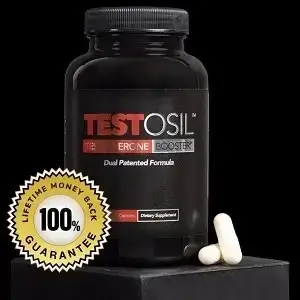
What distinguishes Testosil from most other products in this space is the inclusion of KSM-66 ashwagandha, which works through a different mechanism entirely — reducing cortisol, the stress hormone that actively competes with testosterone. For men whose diet has improved but whose stress levels remain chronically elevated, this cortisol-lowering mechanism is directly relevant.
It's worth being clear: Testosil works best as a complement to the dietary changes in this article, not a substitute for them. Get the food right first. Use supplementation to fill the gaps. That's the approach that makes the most practical sense.
Disclosure: This section may contain affiliate links. We may earn a small commission at no extra cost to you.
Final Thoughts
Food won't fix clinically diagnosed testosterone deficiency on its own — if you're experiencing persistent symptoms, a GP appointment and a blood test is always the right starting point. But for the vast majority of UK men operating below their hormonal potential due to poor dietary habits, the foods in this guide provide a genuinely evidence-backed foundation for improvement.
The core message is simple: eat more of the foods that supply zinc, magnesium, vitamin D, and healthy fats. Eat less of the foods that promote inflammation, spike insulin, and suppress hormonal function. Do this consistently over weeks and months, and your body has the building blocks it needs to support healthy testosterone production.
Start with one change at a time. Swap the cooking oil. Add eggs to breakfast. Include oily fish twice a week. Build from there. The cumulative effect of consistent, evidence-based dietary habits is more powerful than most men realise.

Tanveer Quraishi, author of Steroids 101 has extensive experience in the field of bodybuilding and has been writing online on various muscle-building and other health topics for many years now. He is not just interested in bodybuilding but is a great football player too. When he is not writing for his site or training at the gym, he loves to spend his time with this wife and kids.