Dad Bod to Defined: The Long-Game UK Transformation Plan (2026)
Written by Tanveer Quraishi · Fact-checked against NHS and NICE guidance · Last verified: August 2026
How do you go from a dad bod to defined?
Work in phases over 6–18 months: build habits first (walking, protein, two weekly strength sessions), then cut at 0.5–1% of body weight per week with diet breaks, then build muscle for 3–6 months, then run a final definition cut. No supplements are required — a calorie deficit, 1.6–2.2 g/kg of protein from food, and progressive training do the entire job.
Key Takeaways
Five phases, 6–18 months, zero supplements — the plan built for the weight you’ve carried for years, not the weight you gained last month.
If you’ve carried the weight for years, the 12-week shred was never designed for you. Around 80% of dieters regain what they lose because they run a sprint plan on a marathon problem. The realistic dad-bod-to-defined timeline is 6–18 months, in phases — and it works precisely because it’s slow.
You don’t start with a diet — you start with a fortnight of taking stock. Waist measurement, photos, a baseline week of honest food logging, and (if you’re 40–74 in England) a free NHS Health Check. You can’t navigate without knowing the start point.
Habits before deficits. Two months of walking, protein at every meal, two strength sessions a week and an alcohol audit will drop weight before you count a single calorie — and builds the machine the later phases run on.
The main cut runs at 0.5–1% of body weight a week, with deliberate diet breaks. A week at maintenance every 8–12 weeks isn’t cheating; it’s what keeps your metabolism, your training and your marriage intact over a long transformation.
“Defined” requires muscle, not just less fat. After the main cut comes a building phase most guides skip — which is why most guides produce “smaller,” not “defined.”
You do not need a single supplement. Every gram of protein, every workout fuel and every “fat-burning” mechanism in this plan comes from the supermarket. Supplements are an optional convenience at the very end of the priority list — not a requirement, whatever the industry implies.
The short version: take stock, build the habits, cut slowly with breaks, build the muscle, cut once more — then never “finish.” The 80% who regain are the ones who finished.
Let’s start with two numbers that explain why this article exists.
Around two-thirds of UK men are overweight or obese. And of the people who successfully lose weight, roughly 80% regain it. Put those together and you get the loop most British dads know intimately: January plan, spring progress, summer slide, Christmas reset. Repeat for a decade, and the belief quietly forms that your body just is this now.
It isn’t. But here’s the part the fitness industry won’t say, because it doesn’t sell 8-week programmes: if you’ve been overweight for years, the plan that finally works looks nothing like a shred. It’s longer, slower, more forgiving and more boring — and that’s exactly why it succeeds where the sprints failed. A body that’s carried extra weight for five, ten, fifteen years has adaptations, habits and a lifestyle wrapped around it. Unwinding that takes seasons, not weeks.
This is the long-game plan: dad bod to genuinely defined over 6–18 months, in five phases, built for UK life — the job, the kids, the pub, the supermarket. It covers how to get lean after years of being overweight, and how to get shredded naturally — including exactly which supplements can sharpen your results and which jobs food already covers. What you need most is a sequence. Here it is.
Why Sprints Fail Long-Term Weight — and the Long Game Doesn’t
Before the plan, understand the two forces that killed your previous attempts. Neither was weakness.
Force one: metabolic adaptation. When you cut calories hard, your body responds like the survival machine it is — resting metabolism drops, everyday movement quietly reduces, hunger hormones rise. The more aggressive the diet, the stronger the pushback.
This is why the crash diet that lost you a stone in six weeks ended in a plateau, a blowout, and regain. The fix isn’t more willpower; it’s a smaller deficit, run longer, with planned breaks — which is precisely how this plan is built.
Force two: nothing else changed. A 12-week plan treats fat loss as an event. But years of being overweight aren’t an event — they’re an ecosystem: the default big portions, the nightly units, the dead evenings, the “big lad” identity at the pub.
Any plan that doesn’t rebuild the ecosystem returns you to it the day the plan ends. The long game rebuilds it phase by phase, which is why phase one contains no calorie counting at all.
One more reframe before we start. “Dad bod to defined” is not really a weight goal — it’s a composition goal. Defined means less fat and more muscle.
That second half is why this plan contains a building phase, and it’s the single biggest thing separating it from every “how to get lean” listicle currently ranking: losing weight alone makes you a smaller version of the same shape. Muscle is what changes the shape.
Phase 0 — Take Stock (Weeks 0–2)
Don’t change anything yet. Seriously. Two weeks of reconnaissance first, because after years of avoidance, most men genuinely don’t know their own numbers — and the numbers are your map.
Get the free check if you qualify. If you’re 40–74 and living in England, you’re entitled to an NHS Health Check every five years — blood pressure, cholesterol, diabetes risk, the lot.
After years of carrying extra weight, this matters beyond vanity: it’s your health baseline, and improvements in these numbers will arrive months before the mirror catches up. Book it. If you’re under 40, a home blood pressure reading from a pharmacy machine is a fine start.
Measure the thing that matters. Forget BMI arguments. The measurement with the strongest link to the visceral fat that makes a dad bod risky is brutally simple: your waist should be less than half your height — that’s NICE’s own guidance. Measure at the belly button, honestly, breathing out normally. Write it down. This number will fall for a year.
Take the photos you don’t want to take. Front, side, back, phone propped on a shelf, same spot every month from now on. In eight months these photos will be the most motivating thing you own. Today they’re just data.
Log one normal week of eating — changing nothing. Use any free app, log everything including the beers and the kids’ leftovers you hoover up, and be honest, because you’re the only reader. Most men discover two or three “invisible” daily habits worth 500+ calories they’d never have guessed. You now know exactly where your later deficit will come from — no guessing, no generic meal plan.
Phase 1 — The Habit Foundation (Months 1–2)
Still no calorie counting. This phase installs the four habits that the entire transformation will run on, one at a time, until they’re boring. Weight will start dropping anyway — as a side effect.
Habit 1: Walk like it’s your job. If you’re coming from years of sedentary life, walking is the single best starting exercise there is: zero cost, zero injury risk, zero gym intimidation, meaningful calorie burn. Build to 8,000–10,000 steps a day — the school run on foot, the lunchtime loop, the evening walk that doubles as headspace. This alone is a few hundred calories a day.
Habit 2: Protein at every meal. Not weighed, not counted — just present. Eggs at breakfast, chicken or tuna at lunch, meat or fish at dinner, Greek yoghurt if you snack. Protein is the most filling thing you can eat, and this one habit passively shrinks the rest of your intake before any deficit exists.
Habit 3: Two strength sessions a week. Just two, full-body, 40 minutes — gym or a pair of adjustable dumbbells in the garage. Squat pattern, press, row, carry. The point in this phase isn’t transformation; it’s making “I train” a fact about you before the harder phases lean on it. If the logistics of fitting sessions around work and kids are your sticking point, we’ve built an entire system for exactly that in our guide to getting shredded around a full-time job.
Habit 4: The alcohol audit. Not prohibition — arithmetic. Count your real weekly units and calories from drink (a pint is 180–230 kcal; the UK guideline is no more than 14 units a week). Most dad bods are 20–40% beer. Pick your drinking occasions deliberately — say, one night — rather than defaulting to nightly cans. For many men this habit alone starts the waistband loosening within a month.
By the end of month two you’ll likely be 2–4 kg down without having “dieted” at all — and, more importantly, you’ll be a man who walks, trains and eats protein, about to start a cut with the machine already running.
Phase 2 — The Main Cut (Months 3–8, Roughly)
Now the deficit — the phase everyone tries to start on day one, which is exactly why it usually fails. You’re starting it with habits installed and momentum banked.
The numbers: eat roughly 500 calories under maintenance, aiming to lose 0.5–1% of your body weight per week — the evidence-based rate for keeping muscle while fat comes off. At 105 kg, that’s 0.5–1 kg a week. Protein goes from “present” to counted: 1.6–2.2 g per kg of body weight daily. Training goes to three full-body sessions a week, adding a little weight or a rep or two each time. Steps stay at 8,000+.
The part that makes this a long-game plan: scheduled diet breaks. Every 8–12 weeks, deliberately eat at maintenance — not a blowout, just not-a-deficit — for one to two weeks. This isn’t weakness. Over a cut this long, breaks ease the metabolic pushback, restore training energy, give hunger hormones a breather, and — the underrated part — let you practise maintaining, which is the skill that decides whether any of this lasts. Time them intelligently: the family holiday, Christmas fortnight, your birthday week. The diet bends around your life instead of shattering against it.
Expect the middle to be boring and occasionally demoralising. Somewhere around month four or five the scale will stall for two or three weeks while your body recomposes and water shifts mask fat loss. This is where every previous attempt died.
The answers are procedural, not emotional: judge by the weekly average, the monthly photo and the tape measure; if all three flatline for three straight weeks, drop calories by 100–200 or add 1,000 steps, and carry on. A stall is a data point, not a verdict.
If you’re the far side of 40, everything here still applies, with a few adjustments around recovery, joints and hormones that we’ve covered properly in our complete guide to getting shredded after 40.
And if your partner’s decided to make it a joint project — which, in our experience, roughly doubles the odds of both of you finishing — there’s a version of this journey written specifically for women in our guide to toning up and getting lean after 40.
This phase ends not at “shredded” but at roughly the top of the healthy waist range — waist under half your height, most of the belly gone, chin back. For a man starting well into the overweight range that typically takes four to six months of Phase 2. Then, counterintuitively, you stop cutting.
Phase 3 — The Building Bridge (Months 8–12+)
Here’s the phase that separates “defined” from merely “deflated,” and it’s the one every quick-fix plan omits.
After months of dieting, many men arrive at a lighter body and a flat surprise: soft arms, no chest, a smaller belly but no shape.
That’s not failure — it’s simply what fat loss without enough muscle looks like. (If this describes you even at a normal weight, you’re in classic territory we’ve mapped in the skinny-fat fix — and if you were never the big lad at all but a naturally slim hardgainer worried a cut will erase what little you’ve built, the playbook changes again in our cutting guide for ectomorphs.)
Definition is muscle showing through low-ish body fat. You’ve handled the fat; now you build the muscle.
For three to six months, eat at maintenance or a couple of hundred calories above, keep protein high, and make the gym the priority: three to four sessions, progressive overload as the non-negotiable, sleep guarded like an appointment.
Two things will happen that feel wrong and are right: the scale will creep up slightly (muscle and glycogen — hold your nerve), and your body will change shape faster than at any point in the cut. Shoulders appear. The chest returns. Trousers fit differently in a good way.
Novice and returning lifters — which after years away is you — build muscle fastest of anyone. This phase is where the transformation photos are actually made.
Phase 4 — The Definition Cut and the New Normal
The final phase is a short, sharp-ish cut of 8–12 weeks from a much better starting point: you’re now a man who trains, walks, eats protein by default and has done a full cut before.
Same rules as Phase 2 — 500-calorie deficit, 0.5–1% a week, protein high — run until you’re visibly lean: for most men, 12–15% body fat, flat stomach, definition in decent light.
Going leaner than that is possible but costs disproportionate misery; “defined and living normally” beats “shredded and miserable” over any timescale that includes a family.
Then the phase nobody plans for: maintenance as an identity. Reverse calories up slowly (100–150 per week) until the weekly average holds steady.
Keep the three sessions, the steps, the protein and the alcohol budget — they’re not diet rules anymore; they’re just what you do. The 80% who regain are almost all people who “finished.” You don’t finish. You just stop cutting.
How to Get Shredded Naturally: Food Does the Work — the Right Supplements Sharpen the Results
Worth its own section, because “do I need supplements?” is half of why men delay starting. The honest answer has two halves.
First: no, you don’t need any — you can run this entire plan without supplements, and every job the industry sells you is covered by a UK supermarket.
Second: once the plan is genuinely running, adding the right supplements can get you better results — easier protein targets, stronger training sessions, steadier appetite through the hardest weeks — and over a 6–18 month transformation, those margins compound. Here’s both halves, job by job:
Protein: an 85 kg man in Phase 2 needs ~140–185 g a day. Entirely doable from food: 3 eggs (~19 g), a 250 g tub of cottage cheese (~28 g), a chicken breast (~35 g), a tin of tuna (~25 g), 500 g Skyr or Greek yoghurt (~50 g), a pint of milk (~19 g). That’s 175 g before dinner’s mince or fish, for a few pounds a day at Aldi or Lidl prices.
Where a supplement helps: a protein shake is the cheapest, fastest way to rescue the target on the days work and kids flatten your meal plan — and hitting protein every day rather than most days is one of the quiet differences between decent results and great ones.
Energy for training: a black coffee 30–45 minutes before your session — caffeine is the single best-evidenced performance and fat-oxidation aid in existence.
Where a supplement helps: creatine monohydrate (3–5 g daily, pennies a day) is the most-studied supplement in sport, and during a long cut it genuinely helps you hold onto strength and muscle — which is precisely what Phase 3 is trying to build and Phase 4 is trying to protect.
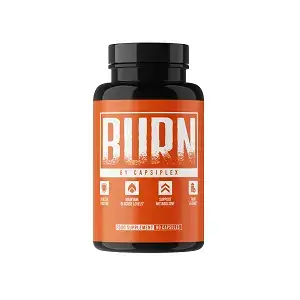
Fat burning: the deficit does the actual burning — no pill overrides that, and we’ll never tell you otherwise. But a well-formulated fat burner can make the deficit easier to hold: steadier energy for training on low calories, capsaicinoids adding a modest thermogenic nudge, and appetite support through the evening window where most diets quietly fail.
Easier adherence for months on end is better results — that’s the honest mechanism. The weeks you’ll feel it most are deep in Phase 2 and the final definition cut, and if you want that edge, these are the only four on the UK market that cleared our bar on honest dosing and transparent labels, each matched to a different weak point:



Recovery: sleep, food, and losing the visceral fat — no product replaces these three, which brings us to the next section.
If you take one thing from this section: the transformation is assembled from a supermarket trolley, a pair of trainers and three hours a week — that’s the engine. The right supplements are the tune-up: never the reason it works, but a genuine help in making it work better. Get the engine running first; add the tune-up when you want the extra few per cent.
The Honest Chapter: Loose Skin, the Last Few Kilos, and Being “the Big Lad”
Three realities of transforming after years of being overweight that ranking articles avoid because they’re awkward. You deserve them straight.
Loose skin. After significant, long-held weight, some looseness — usually lower belly — is possible, and how much is largely genetics, age, degree and duration of the overweight years.
What genuinely helps: losing at the slow rate this plan already uses, building muscle underneath (Phase 3 earns its keep again), and time — skin keeps adapting for one to two years. What doesn’t help: creams and “skin-tightening” supplements, whatever the ads say.
And perspective helps most: some loose skin on a lean, strong body is a trophy, and it’s invisible in a T-shirt. Severe cases can be discussed with a GP, but for most men losing at a sensible rate, it’s far less dramatic than feared.
Stretch marks fade from red-purple to faint silver but don’t vanish. They’re the growth rings of the years you’re closing out. Every transformed dad has them.
The identity tax. Nobody warns you about this: somewhere around month five, the resistance stops being hunger and starts being social. You’re “the big lad,” the one who gets the round in, the reliable takeaway partner — and your changing habits quietly renegotiate all of it.
The banter (“one pint won’t kill you”) is real and relentless for about two months, then evaporates once the new you is just who you are. Expect it, budget your one drinking occasion so you’re still present, and remember your kids are watching the whole thing — which, for most dads, is the actual reason this time is different.
When the Dad Bod Is Also a Health Flag
One section with the vanity switched off. The belly-first fat pattern of the classic dad bod is visceral fat — the metabolically active kind wrapped around organs, and the reason waist-to-height predicts health risk so well.
It’s linked to type 2 diabetes, cardiovascular disease and — the part relevant to how you feel — suppressed testosterone, which loops back into low energy, low drive and easier fat gain. It’s a two-way street we’ve unpacked fully in our guide to losing belly fat and boosting testosterone: the fat lowers the hormone, the low hormone protects the fat, and fat loss is the intervention that breaks the loop in both directions.
The practical takeaway: if your waist is over half your height, this plan isn’t cosmetic — it’s preventative medicine you administer yourself. And if you’re carrying symptoms alongside it (constant fatigue, low mood, zero libido), that’s a GP conversation worth having in Phase 0, not something to out-train.
FAQ
How long does it take to go from dad bod to defined? For a man starting genuinely overweight after years: typically 9–18 months through the full arc — two months of habits, four to six months of main cut with breaks, three to six months of building, and a final 8–12 week definition cut. Visible change arrives by month three; “mates start commenting” is usually months four to six.
Can you get lean after years of being overweight? Yes — age and history slow nothing meaningfully; they just punish crash approaches harder. The adjustments that matter: a moderate deficit rather than an aggressive one, scheduled diet breaks, strength training from day one to protect muscle, and a plan measured in months. The 80% regain statistic belongs to sprint dieters, not long-game ones.
Can you really get shredded without supplements? Completely — a calorie deficit, 1.6–2.2 g/kg of protein from food, progressive strength training, daily steps and sleep are the entire mechanism, and this plan runs fully on supermarket food.
That said, once those fundamentals are in place, adding the right supplements can improve your results at the margins: protein powder makes daily targets easier to hit, creatine helps preserve strength and muscle through a long cut, and an honestly-dosed fat burner supports energy and appetite in the toughest weeks. Helpful additions — never requirements.
Will I have loose skin after losing my dad bod? Possibly some, depending on genetics, age and how long and how much weight was carried — usually around the lower belly. Slow loss, building muscle and one to two years of skin adaptation minimise it, and for most men losing at 0.5–1% a week it’s far milder than feared. No cream or supplement tightens skin, whatever the marketing claims.
Is a dad bod actually unhealthy? The belly-centred pattern is the concern: it reflects visceral fat, which is linked to diabetes, heart disease and lower testosterone. The simple screen is waist-to-height — if your waist is more than half your height, NICE guidance treats that as elevated risk, and losing it is a health intervention, not vanity.
Do I need a gym to do this? No. Phases 0–1 need trainers and a pavement. From Phase 2 onward you need progressive resistance — a gym is convenient, but a pair of adjustable dumbbells and a bench at home covers the entire plan.
This article is for general information and isn’t medical advice. If you’ve been overweight for years, have existing health conditions, or take regular medication, speak to your GP before starting — ideally as part of your Phase 0 baseline.
References
UK prevalence and health context
- NHS England Digital — Health Survey for England 2024: Adults’ Overweight and Obesity. — the latest official prevalence data behind the “around two-thirds of UK men” figure; obesity prevalence reached roughly 30% of adults in 2024, the highest on record.
- NHS England Digital — Health Survey for England 2022: Adult Overweight and Obesity. — the trend picture: 64% of adults overweight or living with obesity, with prevalence highest in the 55–74 age groups.
The waist measurement and Phase 0 checks
- NICE Guideline NG246 — Identifying and Assessing Overweight, Obesity and Central Adiposity. — the official recommendation this article’s waist rule comes from: keep your waist to less than half your height (a waist-to-height ratio under 0.5).
- NICE — “Keep the size of your waist to less than half of your height.” — NICE’s plain-English explanation of why waist-to-height predicts type 2 diabetes, hypertension and cardiovascular risk.
- Ashwell M, Gibson S. A proposal for a primary screening tool: “Keep your waist circumference to less than half your height.” BMC Med. 2014. — the research underpinning the 0.5 boundary, including why BMI alone misclassifies a quarter of “normal weight” adults.
- NHS — NHS Health Check. — eligibility (40–74 in England, every five years) and what the free check covers; the Phase 0 baseline this article recommends.
The plan’s numbers
- NHS Better Health — Calories and Weight Loss. — the NHS’s calorie-deficit guidance underpinning Phase 2’s moderate-deficit approach.
- Morton RW, et al. Protein supplementation and resistance training-induced gains in muscle mass and strength: systematic review and meta-analysis. Br J Sports Med. 2018;52(6):376–384. — the source of the 1.6–2.2 g/kg/day protein range used throughout the plan.
- Helms ER, Aragon AA, Fitschen PJ. Evidence-based recommendations for natural bodybuilding contest preparation: nutrition and supplementation. J Int Soc Sports Nutr. 2014;11:20. — the source of the 0.5–1% of body weight per week rate for maximising muscle retention, and of creatine and caffeine as the supplements with genuine evidence.
Weight regain and the case for the long game
- Dietary Intake after Weight Loss and the Risk of Weight Regain. Nutrients. 2017. — an example of the regain literature: participants regained roughly half their lost weight within nine months of a diet ending, illustrating why this plan treats maintenance as a phase rather than an afterthought.
Alcohol
NHS Better Health — Lose Weight. — the NHS hub covering calories in alcoholic drinks and the 14-units-a-week guidance behind Phase 1’s alcohol audit.

Tanveer Quraishi, author of Steroids 101 has extensive experience in the field of bodybuilding and has been writing online on various muscle-building and other health topics for many years now. He is not just interested in bodybuilding but is a great football player too. When he is not writing for his site or training at the gym, he loves to spend his time with this wife and kids.