
TRT Side Effects in the UK: What Men Need to Know Before Starting
TRT can be genuinely life-changing for men with confirmed testosterone deficiency. Better energy, improved mood, stronger libido, sharper thinking — the benefits are real and well-documented.

But so are the side effects. And most men don’t hear about those until after they’ve started.
This guide covers every significant TRT side effect honestly — what it is, how common it is, and what you can do about it. If you’re considering TRT in the UK in 2026, this is the reading you need to do first.
Why Understanding TRT Side Effects Matters
TRT is not a short-term course of medication. For most men, it’s a lifelong commitment.
Once you start supplementing with exogenous testosterone, your body’s natural production slows down — sometimes stops entirely. That’s not a reason to avoid it if you genuinely need it, but it’s a reason to go in with both eyes open.
A cross-sectional survey of TRT users in the UK found that the most common side effects were acne (24%), testicular shrinkage (24%), and nipple itchiness or gynecomastia (19%). Those numbers don’t come from the brochure — they come from real men already on treatment.
Side effects with TRT are manageable in most cases. But they’re real, they’re specific, and every man starting TRT should understand them before signing up.
The Most Common TRT Side Effects
Acne and Oily Skin
Acne is the most frequently reported side effect of TRT — particularly in the early weeks of treatment as testosterone levels rise and sebaceous glands respond to the hormonal shift.
It tends to be most pronounced on the back, shoulders, and chest. For most men it’s mild and resolves as hormone levels stabilise. If it persists, a prescriber can adjust the dose or formulation — gel users sometimes switch to injections to smooth out the peaks that trigger breakouts.
Testicular Atrophy
This one surprises men who haven’t done their research. When you introduce external testosterone, your body’s feedback loop — the hypothalamic-pituitary-gonadal (HPG) axis — registers that testosterone levels are sufficient and signals the testes to slow or stop natural production.
The result is a reduction in testicular size. It’s not dangerous, but it is noticeable and can be permanent if TRT is maintained long-term without HCG support.
HCG (human chorionic gonadotropin) is often prescribed alongside TRT at private clinics specifically to maintain testicular function and prevent atrophy. This is rarely offered on the NHS — another meaningful difference between the two routes.
Gynecomastia and Nipple Sensitivity
Testosterone converts to oestrogen via the aromatase enzyme. On TRT, particularly at higher doses, oestradiol levels can rise — and excess oestradiol in men can stimulate breast tissue growth, causing tenderness, itchiness, or visible puffiness around the nipples.
This is manageable. Regular oestradiol monitoring and, where necessary, aromatase inhibitors can bring levels back into range. The key is catching it early through consistent blood testing — which is why monitoring matters so much on TRT.
Water Retention and Bloating
Elevated oestrogen from TRT also causes the kidneys to retain sodium, which pulls water into the tissues. Men often describe this as feeling “puffy” — particularly around the face, ankles, and midsection.
It tends to be more pronounced in the early stages and often settles once hormone levels stabilise. Reducing sodium intake, staying well-hydrated, and keeping oestradiol in check through monitoring typically resolves it.
Mood Changes and Irritability
TRT often improves mood significantly — that’s one of the primary reasons men seek it. But getting the dose wrong in either direction can cause problems.
Too much testosterone relative to oestrogen can cause irritability, aggression, and emotional volatility. Too little — or crashing between doses — produces fatigue, low mood, and anxiety. Finding the right dose and dosing frequency is essential, and it takes time.
Men on injections can experience hormonal peaks shortly after administration and troughs before the next dose. Shorter-acting, more frequent injections typically produce steadier levels and a more consistent mood.
Sleep Disturbances
Some men experience difficulty sleeping when first starting TRT, often due to changes in energy levels or oestrogen fluctuations.
High oestradiol in particular disrupts sleep quality. For men with pre-existing obstructive sleep apnoea (OSA), TRT can initially worsen symptoms — though research suggests this effect may not be permanent. Men with known OSA should disclose this before starting TRT and be monitored closely in the early weeks.
Serious Side Effects That Require Monitoring
Erythrocytosis (High Red Blood Cell Count)
This is the most clinically significant side effect of TRT and the one that requires the most vigilance. Testosterone stimulates the production of red blood cells. Too many red blood cells thicken the blood, increasing the risk of clots, stroke, and deep vein thrombosis (DVT).
Men on TRT should be monitored for side effects such as polycythemia, peripheral oedema, cardiac and hepatic dysfunction.
TRT side effects at a glance
Frequency, severity, manageability and management options for every key side effect
| Side effect | How common | Severity | Manageable? | What to do about it |
|---|---|---|---|---|
| Common side effects | ||||
| Acne and oily skin | 24% of users | Mild | Yes | Usually resolves as levels stabilise. Switch from gel to injections to reduce peaks that trigger breakouts. Adjust dose if persistent. |
| Testicular atrophy | 24% of users | Moderate | Yes | Add HCG alongside TRT to maintain testicular function. Rarely offered on NHS — discuss with a private prescriber before starting. |
| Gynaecomastia / nipple sensitivity | 19% of users | Moderate | Yes | Monitor oestradiol regularly. Aromatase inhibitors can reduce conversion of testosterone to oestrogen. Catch it early through consistent blood tests. |
| Water retention and bloating | Common | Mild | Yes | Reduce sodium intake, stay hydrated, keep oestradiol in range. Usually resolves once hormone levels stabilise in the first few weeks. |
| Mood changes / irritability | Common | Mild–moderate | Yes | Usually caused by wrong dose or formulation. More frequent, shorter-acting injections produce steadier levels. Dose adjustment typically resolves. |
| Sleep disturbances | Common early on | Mild | Yes | Often caused by oestrogen fluctuation in early weeks. Monitor oestradiol. Men with sleep apnoea should disclose before starting TRT. |
| Serious side effects requiring monitoring | ||||
| Erythrocytosis (high red blood cell count) | Less common | Serious | Yes — with monitoring | Monitor haematocrit at every blood test. Pause TRT if haematocrit exceeds 50%, reintroduce at lower dose. Regular blood tests are non-negotiable. |
| Cardiovascular risk | Context-dependent | Serious | Yes — with monitoring | Monitor lipid panel regularly. Men with pre-existing heart conditions need specialist evaluation before starting. Poorly controlled heart failure is a contraindication. |
| PSA / prostate changes | Less common | Moderate | Yes — with monitoring | Monitor PSA at every blood test. Men with elevated PSA or family history of prostate cancer require specialist risk assessment before starting TRT. |
| Fertility suppression | Very common | Serious | Partially | Discuss sperm banking and fertility preservation before starting. Add HCG to maintain some natural testicular function. Recovery not guaranteed after stopping TRT. |
| Suppression of natural testosterone production | Universal | Moderate | Partially | Permanent in some cases. HCG can partially maintain natural production. Consider whether lifelong commitment to TRT is right before starting. |
Frequency data sourced from El-Osta et al. cross-sectional survey of UK TRT users (Translational Andrology and Urology, 2025). This table is for informational purposes only and does not constitute medical advice.
Haematocrit — the percentage of red blood cells in the blood — should be checked at every monitoring appointment. Current guidelines recommend pausing TRT temporarily if haematocrit exceeds 50%, then reintroducing at a lower dose. This is non-negotiable safety monitoring.
Cardiovascular Considerations
The relationship between TRT and cardiovascular health is more nuanced than early headlines suggested. Several observational studies and meta-analyses have suggested that TRT may have cardioprotective effects, such as improving endothelial function, reducing inflammation, and favourably modulating lipid profiles.
However, men with pre-existing heart conditions or significant cardiovascular risk factors need careful evaluation before starting. Poorly controlled heart failure is a contraindication to TRT. Regular lipid panel monitoring is standard practice on any responsible TRT protocol.
Prostate Health
While TRT may increase serum prostate-specific antigen (PSA) levels in some men, it often remains within clinically acceptable ranges, and has not been shown to increase the risk of prostate cancer.
That said, PSA monitoring is essential — and men with a strong family history of prostate cancer, an existing elevated PSA, or a palpable prostate nodule require individualised risk assessment before starting TRT.
Patients with a high risk of prostate cancer — those with a PSA measurement above the reference range for their age group, a prostate nodule, or strong family history of prostate cancer — require individualised risk assessment and urological review.
TRT is contraindicated in men with active prostate cancer or breast cancer. Those who have been successfully treated for prostate cancer may be candidates for TRT under close specialist supervision.
Fertility Suppression
This is the side effect that catches many younger men off guard. TRT suppresses the HPG axis — the hormonal pathway that drives sperm production. Most men on TRT experience a dramatic reduction in sperm count, and some become temporarily infertile.
This is reversible in many cases when TRT is stopped, but recovery can take months and is not guaranteed. Men who want biological children in the future must discuss fertility preservation and sperm banking before starting TRT — and consider HCG alongside treatment to maintain some degree of natural testicular function.
This conversation happens routinely at private TRT clinics. It rarely happens on the NHS.
Who Should Not Start TRT
TRT is contraindicated in the following situations and should not be started without specialist review:
- Active prostate cancer or male breast cancer
- Men actively seeking fertility without HCG support
- Poorly controlled heart failure
- Untreated severe obstructive sleep apnoea
- Haematocrit above 54%
- Nephrotic syndrome or hypercalcaemia
Men with borderline situations — elevated PSA, a history of successfully treated prostate cancer, or cardiovascular risk factors — require case-by-case assessment with a specialist rather than blanket exclusion.
The Importance of Monitoring on TRT
TRT without monitoring is not TRT — it’s a gamble. Every reputable prescriber in the UK, NHS or private, should be running blood tests at regular intervals throughout your treatment.
Patients on testosterone replacement require regular blood test monitoring. Once levels are optimised, the frequency of monitoring reduces. In addition, your doctor will monitor your blood count and possibly PSA. It is very important to have these taken at the times advised.
The standard monitoring schedule includes tests at 6–12 weeks after starting, then every 3–6 months once stable. Key markers include total and free testosterone, haematocrit, PSA, oestradiol, liver function, lipid panel, and a full blood count.
If your prescriber isn’t running these tests, change your prescriber.
TRT monitoring schedule — what gets tested and when
Every blood marker you should expect your prescriber to check throughout your treatment
| Blood marker | Test frequency | Why it matters on TRT | Warning signs to watch for |
|---|---|---|---|
| Core hormone panel | |||
| Total testosterone | 6–12 wks, then 3–6 monthly | Confirms your levels have reached the optimal therapeutic range (typically 15–30 nmol/L). The primary measure of whether treatment is working. | Levels too high or too low — both indicate dose adjustment is needed. |
| Free testosterone | Baseline and 6 months | Measures the active, unbound testosterone your body can actually use. More accurate picture than total testosterone alone. | Low free T despite adequate total T suggests high SHBG — needs further investigation. |
| Oestradiol (E2) | 6–12 wks, then 3–6 monthly | Testosterone converts to oestradiol via aromatase. Excess oestradiol causes gynaecomastia, water retention, mood changes, and fat gain. | Raised E2 — consider aromatase inhibitor or dose reduction. Low E2 also problematic for bone and cardiovascular health. |
| SHBG | Baseline, then annually | Protein that binds testosterone making it unavailable for use. High SHBG reduces TRT effectiveness even when total testosterone looks adequate. | High SHBG may require dose or formulation adjustment to improve free testosterone availability. |
| LH and FSH | Baseline only | Confirms whether low testosterone is primary (testicular failure) or secondary (pituitary issue) — critical for correct diagnosis before starting. | High LH/FSH = primary hypogonadism. Low/normal with low T = secondary — different treatment implications. |
| Safety markers | |||
| Haematocrit (HCT) | Every 3 months — critical | Measures red blood cell percentage in blood. TRT stimulates red blood cell production — too many thickens blood, raising clot, stroke, and DVT risk. | Above 50% — pause TRT and consult prescriber immediately. Above 54% is an absolute contraindication to continuing. |
| PSA (prostate specific antigen) | 6–12 wks, then annually | Screens for prostate changes during TRT. A PSA rise over 1ng/ml above baseline or velocity greater than 0.35 ng/ml per year requires urological evaluation. | Rapid or sustained PSA rise — refer to urology. TRT is contraindicated in active prostate cancer. |
| Full blood count (FBC) | Every 6 months | Includes haemoglobin, white cell and platelet counts alongside haematocrit. Complete picture of how TRT is affecting blood composition. | Polycythaemia (raised haemoglobin and haematocrit) — requires dose adjustment or temporary cessation. |
| Liver function tests (LFTs) | Baseline, then 6 monthly | Injectable and oral testosterone are processed by the liver. Monitoring ensures TRT isn’t placing excess strain on liver enzymes, particularly ALT and AST. | Raised liver enzymes — review formulation, particularly oral testosterone which carries higher liver stress than injections. |
| Lipid panel (cholesterol) | Baseline, then annually | TRT can affect HDL and LDL cholesterol. Monitoring ensures cardiovascular risk is not elevated during treatment, particularly in older men. | Significant changes in HDL/LDL ratio — may require lifestyle intervention or dose adjustment. |
| Metabolic and general health | |||
| HbA1c (blood glucose) | Baseline, then annually | TRT has been shown to improve glycaemic control in men with type 2 diabetes. Monitoring ensures treatment is benefitting metabolic health. | Worsening glucose control is uncommon but should be reviewed alongside diet and other medications. |
| Blood pressure | Every appointment | TRT and fluid retention can raise blood pressure in some men. Regular checks ensure cardiovascular safety throughout treatment. | Sustained elevation above 140/90 mmHg — lifestyle review and possible dose adjustment needed. |
| Prolactin | Baseline only (usually) | Elevated prolactin can cause secondary hypogonadism. Measuring at baseline rules out a pituitary adenoma as the underlying cause of low testosterone. | Significantly raised prolactin at baseline — investigate pituitary gland before starting TRT. |
Monitoring intervals are based on UK clinical guidelines including BSSM guidance and NNUH Joint Trust Guideline for Adult Testosterone Replacement. Individual prescribers may vary frequency based on clinical presentation. If your prescriber is not running these tests, seek a second opinion.
Is TRT Right for You — Or Is There a Better Starting Point?
TRT is the right answer for men with clinically confirmed hypogonadism — where testosterone is genuinely deficient and symptoms are significantly affecting quality of life.
But for men in the borderline zone — whose levels are low-normal, who are experiencing early symptoms, or who simply want to optimise their hormonal health without committing to a lifelong medical protocol — there’s a more sensible first step.
Natural testosterone support supplements, when properly formulated, can meaningfully improve testosterone levels, energy, libido, and body composition in men who don’t yet require prescription TRT.
They work with your body’s own endocrine system rather than replacing it — which means no suppression of natural production, no fertility concerns, and none of the side effects covered in this article.
For men in this category, two products stand out in 2026.
Our Natural Alternatives: TestoPrime and TestoPrime Gold
For men who aren’t ready for prescription TRT — or who want to exhaust natural options first — two products stand out in 2026.
Both avoid every side effect covered in this article. No suppression of natural production, no fertility concerns, no blood monitoring required.
TestoPrime — Best for Men With Early or Borderline Symptoms
TestoPrime is a 12-ingredient natural testosterone support formula made by UK-based Wolfson Brands. It’s manufactured in FDA-approved, GMP-certified facilities, third-party tested, fully vegan, and contains no proprietary blends — every ingredient and dose is disclosed upfront.
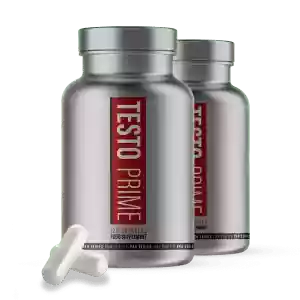
The formula targets testosterone production through multiple pathways — D-Aspartic Acid stimulates LH production to drive natural testosterone synthesis, KSM-66® Ashwagandha (668mg) reduces cortisol by up to 27.9%, Fenugreek (800mg) supports free testosterone, and Zinc (40mg) slows the conversion of testosterone to oestrogen.
Most men notice improvements in energy and mood within 2–4 weeks. Fuller benefits — libido, body composition, mental clarity — develop over 8–12 weeks of consistent daily use.
It comes with a lifetime money-back guarantee. No prescription needed. No side effects at standard doses.
👉 Read Our Full TestoPrime Review
TestoPrime Gold — Best for Men Over 45 or Those Who Want Maximum Support
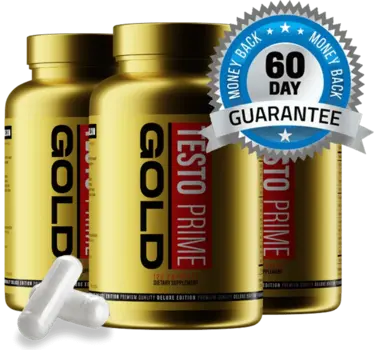
TestoPrime Gold is the premium tier of the TestoPrime range — a more advanced formulation built for men with more significant hormonal decline, or those who want the strongest natural testosterone support available without a prescription.
It carries the same quality standards, manufacturing credentials, and lifetime guarantee as the standard formula — but goes further for men who need it most.
👉 Read Our Full TestoPrime Gold Review
Which One Is Right for You?
| Feature | TestoPrime | TestoPrime Gold |
|---|---|---|
| Best for | Men 30–50 with early symptoms | Men 45+ or those wanting maximum support |
| Prescription needed | No | No |
| Side effects | None at standard doses | None at standard doses |
| Guarantee | Lifetime money-back | Lifetime money-back |
Final Thoughts: Know What You’re Starting Before You Start
TRT works. For the right man, at the right dose, with the right monitoring, it can be transformative. The side effects covered in this guide are real — but they’re manageable with proper clinical oversight, consistent blood testing, and a prescriber who knows what they’re doing.
The key word throughout all of this is monitoring. Every side effect on this list becomes significantly more manageable when caught early through regular blood tests. The men who experience the worst outcomes are the men who aren’t being monitored properly.
If you have confirmed hypogonadism and symptoms that are genuinely affecting your quality of life — TRT is worth the conversation with a specialist.
If you’re in the borderline zone, or simply want to optimise your hormonal health naturally before making a lifelong commitment to a prescription protocol — TestoPrime or TestoPrime Gold are the most credible natural starting points available in the UK in 2026.
Either way, don’t start blind. Know your numbers, understand the risks, and make the decision that fits your health and your life.

Tanveer Quraishi, author of Steroids 101 has extensive experience in the field of bodybuilding and has been writing online on various muscle-building and other health topics for many years now. He is not just interested in bodybuilding but is a great football player too. When he is not writing for his site or training at the gym, he loves to spend his time with this wife and kids.