PCT After Anavar: Why “Mild” Doesn’t Mean Non-Suppressive
Do you need PCT after Anavar? The honest answer is that you need to know where your hormones actually are, and that requires a blood test rather than a protocol from a forum. Oxandrolone suppresses the pituitary-testicular axis — a clinical study in boys given low doses recorded exactly that, and bodybuilding amounts are considerably higher. The drugs gym lore recommends for recovery, Nolvadex and Clomid, are prescription-only medicines in the UK, and no NHS guidance supports self-administered PCT. What we can tell you is what suppression looks like, what to get tested, and why 27% of former users in one study were still below the reference range years after stopping.
This page doesn’t give you a PCT protocol, and the reason isn’t caution for its own sake.
It’s that the compounds involved are prescription-only, the evidence for DIY use is thin, and the question you actually need answered — how suppressed am I? — can’t be answered by a schedule someone posted online.
Where the Myth Comes From
Anavar’s reputation as the gentle compound is real, and it isn’t baseless. It refers to two specific properties: low androgenic activity relative to anabolic effect, and no aromatisation to oestrogen.
Both are accurate. Neither says anything about the hypothalamic-pituitary-testicular axis.
The word travelled without its qualifiers, picking up “so it probably doesn’t shut you down” along the way. That inference is where the trouble starts.
What the Evidence Actually Shows
This is where the page departs from every other article on the query, because oxandrolone’s suppression has been measured directly.
Read that carefully, because the detail matters. These were low clinical doses, given under supervision, for a legitimate medical indication.
And the axis was still suppressed.
Bodybuilding use involves considerably more, unsupervised, often alongside other compounds. The idea that it wouldn’t suppress is not a position the evidence supports.
And recovery is less reliable than people assume
The second finding is the one that should change how readers think about the whole subject.
Years after stopping A case-control study compared 37 current anabolic steroid users, 33 former users (mean 2.5 years since cessation) and 30 healthy controls. Former users had significantly lower total testosterone than controls — 14.4 against 18.8 nmol/L. And: 27.2% were below the reference limit compared with none of the control participants. Former users also reported higher rates of depressive symptoms, erectile dysfunction and reduced libido. Former Abusers of Anabolic Androgenic Steroids Exhibit Decreased Testosterone Levels and Hypogonadal Symptoms Years after Cessation. PLoS One [2]
That’s a quarter of former users still measurably hypogonadal an average of two and a half years later.
The study covered anabolic steroid users generally rather than oxandrolone specifically, so it describes the category rather than the compound. It’s still the most relevant long-term data available.
What Suppression Actually Feels Like
The timing is the part people get wrong, and it explains why the problem is so often missed.
During a cycle you feel fine, because the external androgen is doing the job your own production would be doing. There’s nothing to notice.
You feel it afterwards. Oxandrolone clears in roughly two days — the arithmetic is in our guide to how long it stays in your system — while your own production takes months to restart.
For a window that can run weeks to months, you have neither the external androgen nor your own.
That’s when the low mood, flat libido, fatigue and strength loss arrive — and it lands at exactly the moment the diet ends and the visible results start softening.
People commonly attribute it to post-cycle disappointment or overtraining. It’s a hormonal trough, and it’s measurable.
“I Recovered Fine Last Time”
This is the most common reason people run another cycle without testing, and it’s weaker evidence than it sounds.
What a previous recovery actually told you
Without bloods before, during and after, it told you that you stopped feeling bad. That’s a real observation and a narrow one.
Someone whose testosterone returned fully and someone whose levels settled at the bottom of the range report the same experience — because symptoms track poorly with the numbers at the lower end.
You can feel broadly normal at a level a doctor would look at twice.
Age changes the calculation
Testosterone declines gradually with age anyway. A 24-year-old’s axis recovering readily says little about the same person at 34, running a third or fourth cycle from a lower baseline.
Nobody notices that shift happening, because each individual recovery feels like the previous one.
The version of the sentence that would mean something
“I had baseline bloods, repeated them eight and sixteen weeks after stopping, and testosterone, LH and FSH all returned to where they started.”
Almost nobody can say that. If you can, you have actual evidence — and it’s still evidence about one recovery rather than the next one.
What Gym Lore Recommends, and the Problem With It
The standard advice is a selective oestrogen receptor modulator — usually tamoxifen (Nolvadex) or clomifene (Clomid) — for a few weeks after a cycle.
The rationale isn’t nonsense. Both act on oestrogen receptors in the hypothalamus and pituitary, which can increase LH and FSH output and prompt the testes to restart.
Here’s where it breaks down in practice.
They’re prescription-only medicines
Tamoxifen and clomifene are POM in the UK. Tamoxifen is a breast cancer treatment; clomifene is a fertility medicine, licensed for ovulation induction in women.
Neither is licensed for post-cycle recovery in men. Obtaining them without a prescription means the same unregulated supply routes as the steroid itself — with the same verification problem our look at how people obtain these compounds describes.
The protocols aren’t evidence-based
Forum PCT schedules are remarkably specific about doses and durations. That precision is inherited from other forum posts rather than from trials.
There’s no NHS guidance for self-administered post-cycle therapy, because it isn’t a recognised treatment pathway. What exists clinically is management of diagnosed hypogonadism, by a doctor, after testing.
And they have their own effects
These are real medicines with real profiles. Tamoxifen carries a recognised risk of venous thromboembolism among other effects; clomifene commonly causes visual disturbances and mood changes.
Taking a prescription medicine without a diagnosis, monitoring or supervision is a different proposition from taking one under care.
What Actually Helps Recovery
Less glamorous than a protocol, and better supported.
Stopping. Recovery can’t begin while suppression continues, and extending a cycle to delay the crash extends the suppression that causes it.
Sleep. Testosterone release is tied to sleep architecture, and restricted sleep lowers it measurably in healthy men. This is the single biggest lever you control.
Body composition. Excess fat increases aromatase activity, converting testosterone to oestrogen. Reducing it helps the axis recover.
Training, without overreaching. Keep lifting, but a brutal programme during a hormonal trough is counterproductive — you’ll recover from neither.
Alcohol. Chronic intake is associated with lower testosterone, and this is the worst period to add that on top.
And time. Months, not weeks, for most people. That’s the part no supplement or protocol shortens.
What to Get Tested, and When
This is the section that replaces the protocol, and it’s genuinely more useful.
| Test | What it shows | When |
|---|---|---|
| Total testosterone | Where you actually are — the headline number | Morning sample, 4–8 weeks after stopping |
| LH and FSH | Whether the signal from the pituitary has returned | Same sample — they’re read together |
| Oestradiol | Completes the hormonal picture | Same sample |
| Prolactin | Rules out another cause of the same symptoms | If symptoms persist |
| Repeat panel | Whether anything is moving — the actual question | 8–12 weeks after the first |
Timings are general guidance rather than a clinical protocol. Your GP will advise what’s appropriate, and reference ranges vary between laboratories.
Timings are general guidance rather than a clinical protocol. Your GP will advise what’s appropriate, and reference ranges vary between laboratories.
Why the repeat matters most
A single result tells you where you are. Two results tell you whether you’re recovering, and that’s the question that determines whether anything needs doing.
Low testosterone with low LH and FSH points to ongoing suppression of the axis. Low testosterone with high LH and FSH points somewhere else entirely — and that distinction is why interpretation belongs to a doctor.
How to have the conversation
Say what you took and for how long. Anabolic steroids don’t appear on standard screens, and without that information a clinician is investigating symptoms without the fact that explains them.
Possession for personal use isn’t a criminal offence in the UK — the position is in our guide to the law on oxandrolone — and NHS staff are there to treat you.
⚠️ When to see a GP sooner rather than later
Persistent low mood, loss of interest in things you normally enjoy, or thoughts of self-harm. Post-cycle depression is documented and treatable, and it isn’t something to ride out alone.
Also: erectile dysfunction lasting more than a few weeks, testicular shrinkage that doesn’t resolve, or symptoms persisting beyond three months after stopping.
If your mood is the problem rather than your testosterone, that’s still a reason to go — and still worth mentioning what you’ve taken, since it changes what gets tested.
What a GP Appointment Actually Involves
The article keeps saying see a GP, which is easy to write and harder to act on if you’ve no idea what walking in looks like.
So here’s the encounter, plainly.
What you say
“I’ve used anabolic steroids and I’m worried about my hormones since stopping.” That sentence is enough to start the conversation.
They’ll ask what, how much and for how long. Answer honestly — a vague answer produces a vague investigation, and the information changes what gets tested.
They may also ask about mood, libido, erectile function, energy and sleep. Those aren’t intrusive for its own sake; they’re the symptom cluster that determines whether this is followed up.
What they can do
Request a morning blood test covering testosterone, LH and FSH, and usually more besides. That’s a standard NHS pathway and doesn’t require anything unusual.
They can also check for the other things that produce identical symptoms — thyroid function, anaemia, vitamin D, blood glucose. Fatigue and low libido have several causes and steroid use isn’t automatically the one.
Where results warrant it, they can refer to endocrinology.
What they generally won’t do
Prescribe a post-cycle protocol. There isn’t one to prescribe — it isn’t a recognised treatment pathway, and tamoxifen and clomifene are licensed for other conditions entirely.
Start testosterone replacement on a single low reading either. Diagnosis of hypogonadism normally requires repeated morning samples and a symptom picture, and starting TRT in someone who might recover is a decision with long consequences.
Whether they’ll be judged, reported, or have it recorded against them.
Possession of anabolic steroids for personal use isn’t a criminal offence in the UK. GPs are not obliged to report it, and steroid use is something NHS services see regularly — there are dedicated harm-reduction clinics in several areas precisely because it’s common.
It does go in your medical record, as any relevant history does. That’s how the next clinician knows to interpret your results correctly, which is the point.
If the appointment goes badly
Some GPs are more familiar with this than others, and a dismissive response is possible.
You can ask for the bloods specifically, request a second opinion, or see a different GP in the practice. What you shouldn’t do is treat one unhelpful appointment as evidence the system has nothing to offer.
If You’re Trying to Conceive
This is absent from almost every article on the subject, and it matters to a larger share of readers than most people assume.
Suppression affects sperm, not just testosterone
The signal that tells your testes to produce testosterone is the same system that drives sperm production. FSH in particular governs spermatogenesis, and it’s suppressed alongside LH.
So the hormonal trough after a cycle is also a fertility trough. Sperm counts can fall substantially, and in some men to zero.
The case-control study on former users found inhibin B and anti-Müllerian hormone — both markers of testicular function — significantly decreased in current users [2].
The timelines are different
Testosterone and sperm production don’t recover on the same schedule. Spermatogenesis takes roughly 70 to 90 days for a single cycle of production, so even once signalling returns, output lags behind.
Which means feeling recovered and being fertile again are separate milestones, and the second is slower.
A hormone panel doesn’t measure fertility. Semen analysis is a separate test, and it’s the one that answers the question.
If you’ve used anabolic steroids and you’re trying to conceive without success, say so at the appointment. It changes the investigation entirely — and steroid-associated infertility is often reversible with time, which is a considerably better position than an unexplained result.
Men who intend to have children later frequently don’t connect that plan to a cycle they’re running now.
Most recover. A minority don’t recover fully, and there’s no way to identify in advance which group you’re in — which is the same uncertainty running through this entire article, applied to something considerably harder to replace than a training block.
The Route That Avoids the Question
Worth stating plainly: the reason PCT is a topic at all is suppression, and suppression comes from introducing an external androgen.
Legal supplements contain none, which is why there’s no post-cycle phase to manage. Anvarol is the best-known UK option — a protein-and-ATP formula rather than a hormone, with modest effects and no prescription required.
The Legal Alternative: Anvarol
A food supplement, not a drug — with expectations set by this article rather than the marketing.
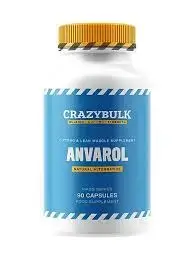
Anvarol — CrazyBulk
Cutting-phase supplement · 3 capsules daily · £49.99 per month
- No hormone, so no suppression — which means no PCT question at all
- Legal to buy and possess, and no prescription required
- Every dose published; PeakATP at 120 mg is the ingredient doing the real work
- No virilisation risk, which makes it usable by women
- Contains soy and milk — worth knowing before ordering
- Won’t reproduce Anavar, and works alongside a deficit rather than instead of one
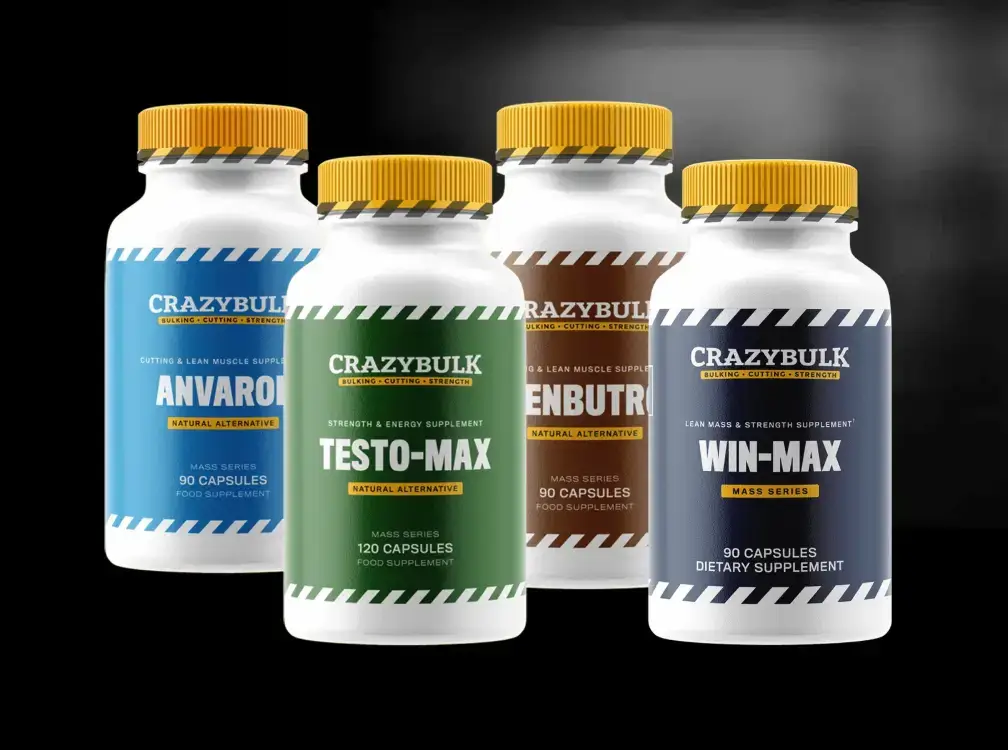
🔥 A note on the Cutting Stack. For a full phase rather than a single bottle, CrazyBulk bundles Anvarol with Clenbutrol, Win-Max and Testo-Max — four weeks per stack, around £179.99 one-time or £116.99 on subscription, cheaper than buying separately.
The point relevant to this page: Testo-Max is a natural testosterone support formula rather than a hormone, so it doesn’t suppress anything and there’s nothing to recover from. That’s a different proposition from a compound that shuts the axis down and then needs help restarting it.
The usual caveat applies: four supplements don’t multiply into a steroid-like result, and Clenbutrol contains 200 mg of caffeine per serving.
View the Cutting StackFAQ
Do you need PCT after Anavar?
Oxandrolone suppresses the pituitary-testicular axis, so recovery is a real question. What you need first is a blood test showing where your testosterone, LH and FSH actually are — a protocol chosen before you know that is guesswork.
Does Anavar really suppress testosterone?
Yes. A clinical study in boys given low doses found it transiently suppressed the pituitary-testicular axis, and bodybuilding amounts are considerably higher. “Mild” describes androgenic activity and aromatisation, not suppression.
Can I buy Nolvadex or Clomid in the UK?
Not without a prescription — both are prescription-only medicines, licensed for breast cancer and fertility treatment respectively rather than post-cycle recovery. Buying them otherwise means the same unregulated supply as the steroid.
How long does recovery take?
Months rather than weeks for most people, and it isn’t guaranteed. In one study, 27% of former users still had testosterone below the reference limit an average of 2.5 years after stopping.
What if my bloods come back low?
That’s information rather than a verdict, and it’s what a repeat panel is for. Low testosterone with low LH and FSH means something different from low testosterone with high LH and FSH, which is why interpretation belongs to your doctor.
Will my GP judge me or report me?
Possession for personal use isn’t a criminal offence in the UK and GPs aren’t obliged to report it. Steroid use is something NHS services see regularly, and several areas run dedicated harm-reduction clinics.
Does Anavar affect fertility?
Suppression affects FSH, which drives sperm production, so the post-cycle trough is also a fertility trough. Sperm output recovers on a slower timeline than testosterone, and semen analysis is a separate test from a hormone panel.
Does Anvarol need a PCT?
No. It contains no hormone, so nothing is suppressed and there’s nothing to restart.
Will over-the-counter test boosters help me recover?
They don’t replicate prescription treatment and shouldn’t be treated as PCT. If you’re genuinely suppressed, the useful step is a blood test and a GP conversation rather than a supplement.
References
- Effect of low dose oxandrolone and testosterone treatment on the pituitary-testicular and GH axes in boys with constitutional delay of growth and puberty. Clin Endocrinol (Oxf). https://pubmed.ncbi.nlm.nih.gov/9135704/
- Rasmussen JJ, et al. Former Abusers of Anabolic Androgenic Steroids Exhibit Decreased Testosterone Levels and Hypogonadal Symptoms Years after Cessation: A Case-Control Study. PLoS One. 2016. https://www.ncbi.nlm.nih.gov/pmc/articles/PMC4988681/
- Anawalt BD. Diagnosis and Management of Anabolic Androgenic Steroid Use. J Clin Endocrinol Metab. 2019;104(7):2490–2500. https://academic.oup.com/jcem/article/104/7/2490/5310131
- Kicman AT. Pharmacology of anabolic steroids. Br J Pharmacol. 2008;154(3):502–521. https://pubmed.ncbi.nlm.nih.gov/18500378/
- Electronic Medicines Compendium (emc) — UK prescribing information for tamoxifen and clomifene. https://www.medicines.org.uk/emc
- NHS — Anabolic steroid misuse. https://www.nhs.uk/conditions/anabolic-steroid-misuse/
- NHS — Erection problems (erectile dysfunction). https://www.nhs.uk/conditions/erection-problems-erectile-dysfunction/
- The Misuse of Drugs Act 1971 (Modification) Order 1996, SI 1996/1300 — legislation.gov.uk. https://www.legislation.gov.uk/uksi/1996/1300/made
This article is for information and harm-awareness. It deliberately provides no dosing or protocol information, does not identify sellers, and is not medical advice — if you’re worried about your hormones or your mood after using anabolic steroids, speak to your GP. NHS services treat these issues without judgement.

Tanveer Quraishi, author of Steroids 101 has extensive experience in the field of bodybuilding and has been writing online on various muscle-building and other health topics for many years now. He is not just interested in bodybuilding but is a great football player too. When he is not writing for his site or training at the gym, he loves to spend his time with this wife and kids.