Low Testosterone and Weight Gain: The Hormonal Connection UK Men Need to Know
You’re eating reasonably well. You’re getting to the gym. But the weight — especially around the middle — just won’t shift. Sound familiar?
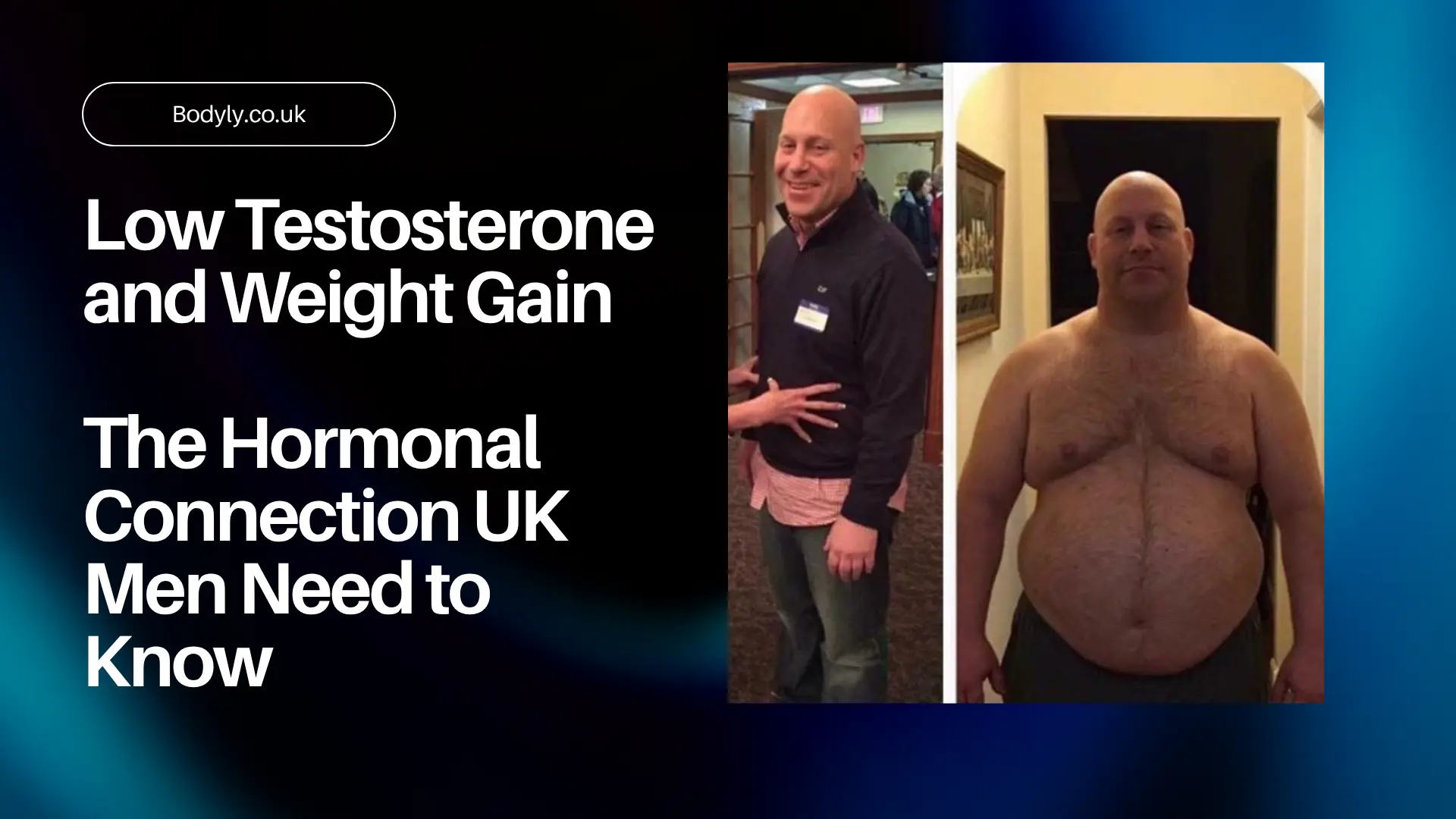
For a growing number of UK men, stubborn weight gain isn’t just a willpower problem. It’s a hormone problem. UK data from over 20,000 blood test results shows that men with obesity have, on average, 23% lower testosterone levels than those with a healthy BMI. That’s not a coincidence. There’s a direct, well-established hormonal connection between low testosterone and weight gain — and understanding it could change everything about how you approach your health.
How Does Low Testosterone Actually Cause Weight Gain?
Testosterone does a lot more than drive libido. It plays a central role in how your body manages fat and muscle.
Testosterone inhibits the creation of new fat cells and encourages the burning of lipids for energy. When levels drop, both of those protective mechanisms weaken. Your body becomes more efficient at storing fat and less efficient at burning it.
When testosterone levels drop, men often experience increased body fat and decreased muscle mass, and this hormonal shift can slow metabolism by up to 20%, making it easier to gain weight and harder to lose it. That’s a significant metabolic shift — one that makes the usual “eat less, move more” advice feel frustratingly ineffective.
The weight gain tends to be concentrated in one particular area. Low testosterone is linked to increased fat storage, especially deep abdominal fat — and hanging onto fat in your midsection increases your risk for heart disease and insulin resistance. This is visceral fat — the dangerous kind that wraps around your internal organs, not just the kind that sits beneath the skin.
Testosterone levels by BMI category
Source: Based on UK data showing men with obesity have on average 23% lower testosterone than those with a healthy BMI (Forthwith Life, 2025). Values are indicative averages across BMI categories.
The Vicious Cycle: How Fat Makes Low T Worse
Here’s where it gets particularly frustrating. Low testosterone leads to weight gain — but weight gain then makes low testosterone worse. It’s a cycle that feeds itself.
The Vicious Cycle Breakdown
| Stage | What happens | The knock-on effect |
|---|---|---|
| Step 1 | Testosterone levels drop | Body becomes less efficient at burning fat and building muscle |
| Step 2 | Fat accumulates — especially visceral belly fat | Visceral fat activates aromatase, an enzyme that converts testosterone into oestrogen |
| Step 3 | Oestrogen levels rise in men | Brain signals the body to produce even less testosterone — compounding the deficiency |
| Step 4 | Lower testosterone means less muscle mass | Reduced muscle slows metabolism further, making fat gain even easier |
| Step 5 | More fat, less muscle, lower T — the cycle repeats | Without intervention, the cycle becomes increasingly difficult to break on its own |
Note: breaking this cycle requires addressing both the hormonal and lifestyle sides simultaneously. A GP assessment and blood test is always the right starting point.
Visceral fat contains high levels of an enzyme called aromatase, which converts testosterone into oestrogen. The more belly fat you carry, the more testosterone gets converted — and the lower your levels drop as a result.
When T levels are low, this enzyme found in fatty tissues converts more testosterone into oestrogen, which further promotes abdominal obesity and creates a vicious cycle of imbalanced hormones. Higher oestrogen levels then signal to the brain to produce even less testosterone, compounding the problem further.
It is a vicious cycle that can be difficult to break — low testosterone causes weight gain, and increased weight reduces testosterone. Many men spend years trying to diet and exercise their way out of this loop without realising there’s a hormonal engine driving it. Once you understand the mechanism, the frustration starts to make a lot more sense.
Related Article: How to Get a Testosterone Test on the NHS in the UK (Step-by-Step Guide)
The Muscle Connection: Why the Gym Stops Working
Weight gain isn’t the only body composition change low testosterone causes. Muscle loss runs alongside it — and the two together make the problem significantly worse. Its highly unfortnate and more and more below 40 are now experiencing low testosterone in the UK.
Without enough testosterone, your body struggles to maintain and build muscle, even if you’re working out like you always have. Men with low T often describe putting in the same gym effort they always have, but getting a fraction of the results. That’s not a training problem. That’s a hormonal one.
Less muscle directly slows your metabolism. Muscle is metabolically active tissue — it burns calories even at rest. So as testosterone drops, muscle declines, metabolism slows further, and fat accumulates more easily. It’s another layer of the same cycle.
A reciprocal relationship is at play: increased adipose tissue, especially visceral fat, can lead to systemic inflammation and insulin resistance — both of which further suppress testosterone production and make healthy weight management harder.
Low T vs Healthy T — Impact on Body Composition
| Body composition factor | Low testosterone | Healthy testosterone |
|---|---|---|
| Belly fat (visceral) | Increased — fat accumulates around abdomen and organs | Reduced — testosterone inhibits new fat cell creation |
| Muscle mass | Declines — harder to build or maintain even with training | Supported — testosterone drives muscle protein synthesis |
| Resting metabolism | Slows by up to 20% — fewer calories burned at rest | Higher — more muscle mass = more calories burned passively |
| Fat burning efficiency | Reduced — body stores fat rather than burning it for energy | Improved — testosterone encourages burning of lipids for fuel |
| Insulin sensitivity | Worsens — higher risk of insulin resistance and blood sugar issues | Better — improved glucose metabolism and metabolic health |
| Gym performance | Diminished — strength and endurance both affected | Stronger — better recovery, strength gains, and stamina |
| Overall weight management | Significantly harder — hormonal headwinds working against you | More achievable — hormones supporting rather than fighting you |
Source: based on published clinical research into testosterone’s role in male body composition and metabolic function.
The Metabolic Knock-On Effects
The testosterone-weight connection doesn’t stop at body composition. It has broader metabolic consequences that UK men need to be aware of.
Low testosterone levels are associated with increased body fat, particularly visceral adipose tissue, and reduced lean muscle mass — and this altered body composition contributes to metabolic dysfunction. Over time, this can feed into insulin resistance, elevated blood sugar, and unfavourable cholesterol profiles.
There’s a close link between metabolic syndrome and low testosterone in men — low T is associated with obesity, insulin resistance, and poor lipid profiles. Metabolic syndrome significantly raises the risk of type 2 diabetes and cardiovascular disease. For UK men already managing weight issues, this hormonal connection makes the stakes considerably higher than aesthetics alone.
The good news is that the relationship works in reverse too. Addressing low testosterone — whether through lifestyle, medical treatment, or both — can set off a positive chain reaction that improves body composition, metabolism, and long-term health markers together.
Can Losing Weight Raise Testosterone?
Yes — and meaningfully so. This is actually one of the most encouraging parts of the testosterone-weight story.
Research suggests that reducing BMI from 30 to 25 kg/m² produces approximately a 13% increase in serum testosterone. That’s a significant hormonal shift from weight loss alone, without any medical intervention.
Men with obesity see improvements in testosterone symptoms proportional to the degree of reduction in excess weight. You don’t need to reach an ideal body weight to see benefits — even modest, consistent weight loss can start shifting the hormonal balance in your favour.
Resistance training amplifies this effect. UK data shows testosterone levels are highest in men exercising 6–10 hours per week, with compound movements like squats and deadlifts being particularly effective at stimulating testosterone production. Getting leaner and lifting weights works on the hormonal cycle from both ends simultaneously.
Foods That Help vs Hurt Testosterone & Weight Management
Let’s have a look at some of the foods that can help boost your testosterone levels as well as some other that need to be avoided:
| Food / drink | Effect on testosterone & weight | Verdict |
|---|---|---|
| Eggs & red meat | Rich in zinc, protein & healthy fats — all essential for testosterone production | Helps |
| Leafy greens (spinach, kale) | High in magnesium — deficiency in magnesium is strongly linked to lower T | Helps |
| Oily fish (salmon, mackerel) | Rich in omega-3 and vitamin D — both support healthy testosterone levels | Helps |
| Nuts & seeds | Good source of zinc, selenium & healthy fats that support hormone production | Helps |
| Cruciferous vegetables (broccoli, cauliflower) | Contain compounds that help reduce oestrogen levels in men | Helps |
| Ultra-processed foods | Drive weight gain, insulin resistance & inflammation — all suppress testosterone | Hurts |
| Refined sugar & white carbs | Spike insulin, promote fat storage, and directly lower testosterone after consumption | Hurts |
| Alcohol (heavy/regular use) | Directly suppresses testosterone production and raises oestrogen levels in men | Hurts |
| Soy products (excessive) | Contain phytoestrogens which may interfere with testosterone balance in large amounts | Hurts |
| Seed oils (vegetable, sunflower) | High in omega-6 fats linked to inflammation, which suppresses testosterone over time | Hurts |
Note: diet alone won’t fix clinically low testosterone. These recommendations support hormonal health as part of a broader lifestyle approach.
Does TRT Help With Weight Loss?
For men with clinically confirmed low testosterone, Testosterone Replacement Therapy can meaningfully improve body composition — though it’s important to be clear-eyed about what it does and doesn’t do.
TRT may modestly improve body composition in men with clinically confirmed hypogonadism, primarily by reducing visceral fat and increasing lean muscle mass — however, it is not a licensed weight management intervention and should only be prescribed when both biochemical deficiency and clinical symptoms are present.
The research is genuinely encouraging though. A 2015 review of 411 obese men with low testosterone found a reduction of 5–10 BMI points and 10–14 cm in waistline following TRT. Those are significant changes, particularly for men who had been unable to shift weight through diet and exercise alone.
Unlike many other weight loss treatments, TRT has shown success in the long term without rebound weight gain — which is a meaningful distinction given how common weight regain is after conventional dieting. That said, TRT works best when combined with lifestyle changes rather than used as a standalone fix.
What You Can Do Right Now
Whether or not medical treatment is on the table for you, there are practical steps that address both low testosterone and weight gain simultaneously.
Prioritise losing visceral fat. Even a 5–10% reduction in body weight has a measurable impact on testosterone levels. You don’t need to lose everything at once — steady, sustainable progress is what matters.
Build in resistance training. Compound lifting three to four times a week builds muscle, boosts metabolism, and directly stimulates testosterone production. The combination of fat loss and muscle gain is the fastest route out of the hormonal cycle.
Fix your sleep. Poor sleep raises cortisol, suppresses testosterone, and drives fat storage — particularly around the abdomen. Getting consistent seven to nine hour nights is one of the highest-leverage changes you can make. Find out more on how lack of sleep can influence your testosterone levels.
Clean up your diet. Cut back on processed foods and refined sugars, which drive insulin resistance and weight gain. Focus on adequate protein, healthy fats, and foods rich in zinc, magnesium, and vitamin D — all critical for testosterone production.
Get tested. If you’ve been trying to shift weight for months without results, and you’re also experiencing fatigue, low mood, reduced libido, or poor gym performance, get a testosterone blood test. The two issues could be connected — and knowing your levels changes everything about your approach.
A Note on Natural Support: Testosil
Sponsored/affiliate content — does not constitute medical advice.
If there’s one thing this article makes clear, it’s that the testosterone-weight cycle is self-reinforcing. Breaking it takes effort from multiple angles at once — and for some men, that includes looking at what they’re putting into their body nutritionally.
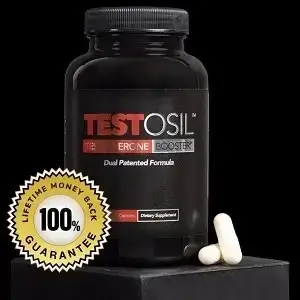
Testosil is a natural testosterone support supplement that’s built around ingredients with a genuine research background. Its headline ingredient, KSM-66 ashwagandha, has been studied for its ability to reduce cortisol — the stress hormone that directly competes with testosterone and drives abdominal fat storage. That makes it particularly relevant for men whose weight gain is tied to chronic stress and hormonal disruption rather than just calorie surplus.
It also contains zinc and magnesium, two minerals that are frequently deficient in men carrying excess weight, and both of which are directly involved in testosterone synthesis. Fenugreek extract and D-aspartic acid round out the formula, supporting the body’s natural hormone production pathways.
To be clear — Testosil isn’t a fat burner, and it won’t single-handedly reverse a hormonal imbalance. But for men who are already doing the work — cleaning up their diet, getting to the gym, fixing their sleep — it may offer meaningful nutritional support to the hormonal side of the equation. Think of it as filling in the gaps rather than doing the heavy lifting.
Not suitable as a replacement for prescribed treatment. If you suspect clinically low testosterone, always get a blood test and speak to your GP first.
Click here to check Testosil complete review
Final Thoughts
Stubborn weight gain — especially around the middle — isn’t always just a diet and exercise problem. For many UK men, there’s a hormonal engine running underneath it, and low testosterone is often a significant part of the picture.
The good news is that the relationship works both ways. Address the weight, and testosterone improves. Improve testosterone, and weight management gets easier. It’s a cycle — but it can run in the right direction just as easily as the wrong one.
If you’ve been grinding away at the gym and the scales won’t budge, don’t just push harder. Get your levels checked. You might be fighting the wrong battle entirely.

Tanveer Quraishi, author of Steroids 101 has extensive experience in the field of bodybuilding and has been writing online on various muscle-building and other health topics for many years now. He is not just interested in bodybuilding but is a great football player too. When he is not writing for his site or training at the gym, he loves to spend his time with this wife and kids.