Testosterone and Bodybuilding in the UK: How to Naturally Optimise Your Hormones for Maximum Muscle
Here’s an uncomfortable truth that most gym content won’t tell you: the harder you train, the more likely you are to be quietly suppressing the very hormone you’re trying to maximise.
Testosterone is the engine behind muscle growth, strength, and recovery. Yet the classic bodybuilder’s playbook — brutal volume, aggressive cutting, endless cardio, five hours’ sleep — reads almost like a list of ways to lower it.
This guide is about fixing that. Not with needles or shortcuts, but by getting the natural levers right so your hormones actually work with your training.
Key Takeaways
- Testosterone drives muscle growth — it directly increases protein synthesis and satellite cell activity.
- Overtraining and under-eating suppress it. Many keen lifters are their own worst enemy hormonally.
- There’s a body fat sweet spot — too fat raises oestrogen, too lean crashes testosterone.
- Sleep is non-negotiable. One week of short sleep can drop testosterone significantly.
- Natural optimisation has a ceiling — and that’s an honest, important thing to accept.
Why Testosterone Matters So Much for Muscle
Let’s start with why this hormone sits at the centre of every muscle-building conversation.
Testosterone directly ramps up muscle protein synthesis — the process where your body turns the protein you eat into new muscle tissue. More testosterone means a more favourable building environment.
It also activates satellite cells, which are essentially your muscles’ repair crew. They help damaged fibres rebuild bigger and stronger after training.
On top of that, testosterone supports strength, recovery speed, and the ability to train hard again sooner. It even helps keep body fat down, which matters for how your physique actually looks.
Here’s the honest framing though. Within the natural range, small differences in testosterone don’t automatically mean huge differences in muscle. Training and food still do the heavy lifting.
But if your testosterone is suppressed — and many keen lifters’ is — you’re training with the handbrake on. Releasing it is what this guide is about.
The Bodybuilder’s Paradox: How Training Can Lower Your Testosterone
This is the part almost nobody talks about, and it’s the most important section here.
The traits that make a good bodybuilder — obsessiveness, discipline, willingness to suffer — are exactly the traits that push men into hormone-suppressing territory. You can absolutely out-train your own testosterone.
Here’s how it happens.
Too Much Volume, Too Little Recovery
Training is a stressor. In sensible doses it prompts adaptation, but chronic excessive volume keeps cortisol elevated, and cortisol sits on a see-saw with testosterone.
Studies on overreached athletes consistently show suppressed testosterone and raised cortisol. If you’re training six brutal days a week and never deloading, you may be in that camp.
Aggressive Cutting and Under-Eating
This is the big one for physique-focused lifters. Severe calorie restriction tells your body it’s in a famine — and reproduction is the first thing a starving body deprioritises.
Prolonged deep deficits reliably lower testosterone. It’s part of why competitors often feel flat, low-libido, and weak in the final weeks of prep.
Cutting Dietary Fat Too Low
Cholesterol and dietary fat are the raw materials your body builds testosterone from. Very low-fat diets — a classic bodybuilding mistake — can reduce testosterone production.
Excessive Cardio
Some cardio is great for health and recovery. But hours of steady-state on top of heavy lifting adds more stress and burns energy you need for building.
Chronic Poor Sleep
Most of your testosterone is produced during deep sleep. Research shows just one week of restricted sleep can meaningfully lower daytime testosterone in healthy young men.
Is Your Training Fighting Your Hormones?
7 quick questions on the classic signs of overreaching. No email, no sign-up.
| The Bodybuilding Habit | ⚠ The Hormonal Cost |
|---|---|
| Six-day brutal splits, no deloads | !Chronically elevated cortisol, suppressed T |
| Aggressive 1,000+ kcal deficits | !Body downregulates testosterone production |
| Very low-fat diet | !Fewer raw materials for testosterone synthesis |
| Hours of extra cardio | !Added stress, drained recovery capacity |
| Five to six hours’ sleep | !Reduced overnight testosterone production |
| Read that again — if three or more describe you, your training is likely fighting your hormones. Fixing this could unlock more than any supplement. | |
The Body Fat Sweet Spot
Here’s a nuance that catches out both ends of the bodybuilding spectrum.
Carrying too much fat is a problem because fat tissue contains aromatase, the enzyme that converts testosterone into oestrogen. The bigger the bulk, the more of your testosterone gets converted.
Getting too lean is also a problem. Very low body fat — think stage-lean, sub-8% — is associated with markedly suppressed testosterone, which is why competitors often feel hormonally wrecked at their leanest.
The Body Fat Sweet Spot
Both ends hurt your hormones — too fat converts testosterone to oestrogen, too lean suppresses it
Illustrative relationship, not precise clinical measurements. Stage-lean is a temporary, costly state — not a place to live year-round.
| Body Fat Range | Hormonal Picture |
|---|---|
| Above ~20% | More aromatase — more T converted to oestrogen |
| ~10–15% | Generally the healthiest hormonal window |
| Below ~8% | Testosterone often significantly suppressed |
The practical takeaway: for year-round hormonal health and steady muscle gain, hovering around 10–15% is the sensible target. Stage-lean is a temporary, costly state — not a place to live.
(For more on the oestrogen side of this, see our guide to oestrogen dominance in men.)
Training for Optimal Testosterone
Right — so how should you train if you want your hormones on side? The good news is it looks a lot like sensible bodybuilding.
Prioritise Big Compound Lifts
Squats, deadlifts, presses, and rows recruit the most muscle mass and produce the biggest acute hormonal response. They should anchor your programme.
That doesn’t mean isolation work is pointless — it’s great for hypertrophy. It just shouldn’t be the foundation.
Train Hard, But Not Endlessly
Sessions of roughly 45–75 minutes of quality work hit the sweet spot. Beyond that, you’re mostly accumulating fatigue and cortisol rather than stimulus.
Use Moderate Rest Periods
Two to three minutes between heavy compound sets lets you actually lift heavy, which is what drives the adaptation.
Deload — Properly
This is the one keen lifters skip. Every four to eight weeks, take a lighter week. It’s not lost progress; it’s when your body consolidates gains and your hormones recover.
| Training Variable | ✓ Hormone-Friendly Approach |
|---|---|
| Exercise selection | ✓Compounds first, isolation after |
| Session length | ✓~45–75 minutes of working time |
| Frequency | ✓3–5 quality sessions weekly |
| Rest between sets | ✓2–3 min on heavy compounds |
| DeloadsMost skipped | ✓Lighter week every 4–8 weeks |
| Cardio | ✓Moderate — walking and some conditioning |
Eating for Testosterone and Muscle
Your diet is where most lifters accidentally sabotage themselves. Here’s how to get it right.
Don’t Slash Calories Too Hard
If you’re cutting, a moderate deficit of roughly 300–500 kcal a day preserves both muscle and hormones. Aggressive crash cuts cost you both.
And if you’re bulking, don’t use it as an excuse to get fat — remember the aromatase problem.
Eat Enough Fat
This is where low-fat dieters go wrong. Keep dietary fat at around 20–30% of your calories to give your body the raw materials for testosterone.
Prioritise quality sources: eggs, oily fish, olive oil, nuts, and red meat.
Get Your Protein Right
Around 1.6–2.2g per kg of bodyweight covers muscle growth comfortably. Interestingly, extremely high protein at the expense of fat and carbs can be counterproductive hormonally.
Don’t Fear Carbs
Carbohydrates help blunt cortisol around training and support recovery. Very low-carb dieting while training hard is a fast track to feeling flat.
| Macro | Target for Lifters | Why It Matters Hormonally |
|---|---|---|
| Protein | ~1.6–2.2g/kg bodyweight | Muscle repair — but don’t crowd out fats |
| Fat | ~20–30% of calories | Raw material for testosterone |
| Carbs | Fill the remainder | Blunts cortisol, fuels training |
| Calories | Moderate surplus or deficit | Extremes suppress testosterone |
Key Nutrients for UK Lifters
| Nutrient | Why It Helps | UK Note |
|---|---|---|
| Vitamin D | Low levels linked to lower testosterone | NHS advises supplementing Oct–Mar |
| ZincLifters | Supports testosterone production | Heavy sweating increases losses |
| Magnesium | Supports free testosterone and sleep | Many UK diets fall short |
| Protein | Fuels muscle repair | Spread across the day |
Recovery: The Most Underrated Muscle-Builder
You don’t grow in the gym. You grow when you recover — and that’s when your hormones do their work.
Sleep Like It’s Part of Your Programme
Seven to nine hours, consistently. If you take one thing from this article, this is competitive with everything else combined.
Research found that one week of sleeping five hours a night reduced daytime testosterone by 10–15% in healthy young men. That’s the equivalent of ageing a decade, from sleep alone.
Manage Life Stress
Cortisol doesn’t care whether stress comes from your training, your job, or your relationships. It all lands in the same bucket, and testosterone pays.
Watch the Booze
This one stings for UK lifters, given how central drinking is socially. Heavy drinking lowers testosterone and increases its conversion to oestrogen.
You don’t need to be teetotal. Staying within the NHS guideline of 14 units a week is a reasonable, evidence-based line.
The Honest Truth About Anabolic Steroids
We need to address this directly, because it’s the elephant in every gym.
Yes, anabolic steroids build muscle beyond what’s naturally possible. Pretending otherwise would be dishonest and would insult your intelligence.
But here’s what matters. We don’t provide steroid cycles, doses, or protocols — not because we’re squeamish, but because supplying that information can genuinely harm people, and it’s not what this site is for.
What we will do is be straight with you about the trade-offs.
- Your own production shuts down. External testosterone tells your testes to stop. Recovery can take months, and sometimes doesn’t fully happen.
- Fertility takes a hit. Sperm production is suppressed, sometimes to zero. That’s a serious issue if you want children.
- Cardiovascular risk rises — including effects on cholesterol, blood pressure, and heart structure.
- Mental health can suffer — mood swings, aggression, and depression during and after use are well documented.
- The legal position in the UK: anabolic steroids are Class C drugs. Possession for personal use is legal, but supplying them, or importing them (including buying from overseas websites) is illegal.
| Factor | Natural Optimisation | Anabolic Steroids |
|---|---|---|
| Muscle ceiling | Lower, but genuinely achievable | Higher |
| Natural production | Preserved and improved | Suppressed, sometimes permanently |
| Fertility | Protected | Significantly impaired |
| Health risk | Minimal | Cardiovascular, hepatic, psychiatric |
| UK legality | Fully legal | Class C — supply/import illegal |
| Sustainability | Lifelong | Requires ongoing cycles and management |
Is Your Training Fighting Your Hormones?
7 quick questions on the classic signs of overreaching. No email, no sign-up.
If you’re already using and want to stop, or you’re worried about your health, speak to your GP — they’ve heard it before and won’t judge you. FRANK and the NHS page on anabolic steroid misuse both offer straight, non-judgemental information.
Natural Testosterone Support Supplements
Once your training, diet, and sleep are genuinely dialled in, a quality supplement can add a useful edge. The order matters — no capsule outperforms fixing a five-hour sleep habit.
The best formulas use clinically studied ingredients like D-aspartic acid, ashwagandha, zinc, magnesium, and vitamin D.
TestoPrime: The Lifter’s All-Rounder
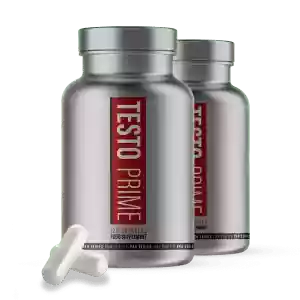
TestoPrime is one of the most popular natural testosterone supplements among UK men, and it suits lifters well. It packs 12 ingredients, including a 2,000mg dose of D-aspartic acid, KSM-66 ashwagandha, fenugreek, zinc, and panax ginseng.
Two ingredients are especially relevant if you train hard: ashwagandha, which lowers the cortisol that heavy training generates, and zinc, which lifters lose through sweat. Transparent dosing and a lifetime money-back guarantee make it a reasonable starting point.
TestoPrime Gold: For Lifters Over 45
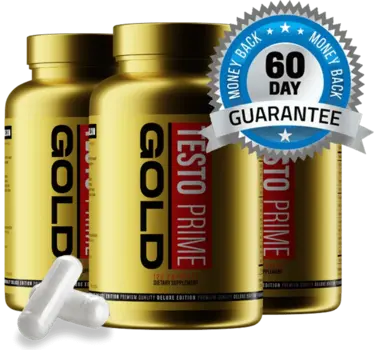
TestoPrime Gold is the upgraded formula with enhanced absorption and extra vitality support. If you’re a masters-age lifter feeling recovery slow down, it’s the one worth considering.
👉 Read our full TestoPrime Gold review here for the comparison.
Quick Comparison
| Supplement | Best For | Standout Feature |
|---|---|---|
| TestoPrime | Lifters wanting all-round support | Ashwagandha for training cortisol |
| TestoPrime Gold | Masters lifters (45+) | Enhanced absorption |
One honest caveat, and it matters here more than anywhere: natural supplements produce modest improvements, not steroid-like transformations. Anyone promising otherwise is selling you something. Used properly — on top of solid training, food, and sleep — they’re a sensible final 5%.
Putting It Together: Your Natural Optimisation Checklist
Here’s the whole article in one place, in priority order. Work top-down — the early items matter far more than the later ones.
- Sleep 7–9 hours consistently. Non-negotiable, and the biggest free win available.
- Stop under-eating. Moderate deficits only; keep fat at 20–30% of calories.
- Find your body fat sweet spot — roughly 10–15% year-round.
- Train hard but sensibly — compounds first, 45–75 minutes, deload every 4–8 weeks.
- Manage stress and cut back the drinking.
- Fix nutrient gaps — vitamin D through the British winter, plus zinc and magnesium.
- Then, and only then, consider a supplement like TestoPrime for the last few percent.
The Bottom Line
The great irony of bodybuilding is that the most dedicated lifters are often the most hormonally suppressed. Too much volume, too little food, too little sleep — all in pursuit of muscle that those very habits prevent.
Fix that, and you’re not just training harder. You’re training with your biology instead of against it.
Be honest about the ceiling, too. Natural optimisation won’t produce a pro physique, and no supplement changes that. But it will get you meaningfully closer to your genetic potential, without trading your fertility, heart health, or long-term wellbeing for it.
Get the fundamentals right for 90 days. Most lifters who do are shocked at how much they left on the table.
Frequently Asked Questions
Does lifting weights increase testosterone?
Yes — resistance training, particularly heavy compound lifts, produces an acute rise in testosterone and supports healthier long-term levels. But excessive volume without adequate recovery does the opposite, by keeping cortisol chronically elevated.
Can overtraining lower your testosterone?
It can. Chronic excessive training without deloads, enough food, or enough sleep is associated with raised cortisol and suppressed testosterone. If you’re training hard yet feeling flat, weak, and low on libido, overtraining is a genuine possibility worth addressing.
Does cutting or dieting lower testosterone?
Aggressive dieting does. Severe calorie restriction and very low dietary fat both reduce testosterone production, which is why competitors often feel hormonally flat at their leanest. Moderate deficits of 300–500 kcal with adequate fat intake protect your hormones far better.
Do natural testosterone boosters actually work for bodybuilding?
Quality formulas with clinically dosed ingredients can offer modest support, mainly by lowering cortisol and correcting gaps like zinc and vitamin D. But they produce incremental gains, not steroid-like results — and they won’t compensate for poor sleep, under-eating, or overtraining.
Reference
- NHS — The ‘male menopause’. Overview of age-related low testosterone and when to see a GP.
- NHS — Anabolic steroid misuse. Risks, side effects, and where to get help.
- NHS — Vitamin D (Vitamins and minerals). Guidance on supplementing October to early March in the UK.
- NHS — Alcohol units. The 14-units-per-week low-risk drinking guideline.
- Leproult, R. & Van Cauter, E. (2011). Effect of 1 week of sleep restriction on testosterone levels in young healthy men. JAMA, 305(21), 2173–2174.
- Hackett, G. et al. (2023). The British Society for Sexual Medicine (BSSM) Guidelines on Male Adult Testosterone Deficiency. World Journal of Men’s Health.
This article is for informational purposes only and isn’t medical advice. Always consult your GP before starting any supplement or training programme, especially if you have existing health conditions.

Tanveer Quraishi, author of Steroids 101 has extensive experience in the field of bodybuilding and has been writing online on various muscle-building and other health topics for many years now. He is not just interested in bodybuilding but is a great football player too. When he is not writing for his site or training at the gym, he loves to spend his time with this wife and kids.